admin
admin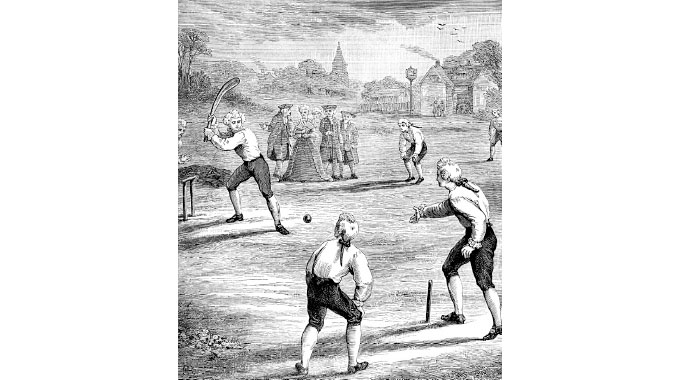
Sharuko on Saturday
WE had a cricket team in Chakari — an All-White side made up of farmers and the mine’s employees.
But, to be frank, we didn’t care about the team because, in the compounds where we lived, there was only one team — the All-Black football side.
Its official name was Falcon Gold but, in the heart of our compounds, everyone called it ‘Bwela Ufe.’
It’s a phrase, in the dominant Nyanja language of our compounds, which means ‘Come And Die.’
Because, more often than not, it’s what happened to visiting sides.
Fancy names are part of the game, when it comes to football, in the Golden Triangle we call home, which stretches to Kadoma and Chegutu.
The nickname for Kadoma United used to be ‘Yematomati,’ a suggestion that this was a club bankrolled from funds the council derived from levies paid by women who sold vegetables at the markets.
Chegutu Pirates are called ‘Dzinza,’ in what is an outrageous claim by their fiercely loyal fans that they are the first competitive football club established in this country.
Others call them ‘Zaire’ in what is an eternal appreciation of the heroics of the first black African nation to feature at the FIFA World Cup.
It’s the same area today where you find a Division One club called ‘Come Again,’ which is now coached by Bigboy Mawiwi.
It was easy for ‘Bwela Ufe’ to appeal to us — the players, Nyundo, Paridza, Mutambarika, Chakumanda, Bhibho, you name them — all looked just like us.
And so did their coach — George Marabishi,
Just like us, they also lived in the compounds while all the white cricketers stayed in their huge farmhouses or in the big company houses, in the so-called KumaYard.
I used to watch the cricketers play their games at Chakari Country Club, on the Saturdays I went to the golf club for caddie duties which, on reflection, was such a good learning experience.
I started my sports journalism adventure at about same time Zimbabwe was awarded Test status.
But, even though we had joined an elite group of just nine countries, in the whole world, it didn’t trigger a euphoric national reaction.
It’s fair to say that, just like us in the compounds of Chakari, cricket didn’t strike a chord with the majority of the people in the high density suburbs of Harare.
Neither did it strike a chord with millions of blacks, around the country, who probably didn’t even care that their nation was just one of nine countries, out of 195 countries in the world, good enough to have Test status.
Just like us in the compounds of Chakari, the overriding feeling was that this was a sport for the privileged white folks, the wealthy farmers and their kids.
The Warriors, yet to qualify for even the Nations Cup, were pulling in 60 000 at the National Sports Stadium, during the wild days, and the crazy nights, of the Dream Team.
Yet, the Chevrons, with the elevated status of playing the best teams in the world, including powerhouse India who were special guests for the inaugural Test, could barely bring in a thousand fans.
The heroes remained the misfiring footballers, despite all the pain they were inflicting on the Warriors’ fans, and monumental failures which can feed content for, at least, 20 best-selling books.
The cricket stars barely had a national profile, despite their heroics, including the vintage show at the ’99 ICC World Cup, in England.
I’m not sure if we ask 20 people in First Street in Harare, as to whether they know a guy called Neil Johnson, we will certainly not get even one of them telling us that he was our hero at that World Cup in ’99.
Well, he was.
He was one of just 11 players to score a century at that World Cup, with his ton coming in an unbeaten 132 against eventual champions Australia, in a Super Six game.
He also took 4/42 in the five-wicket win over Kenya in Taunton and 3/27 in the stunning 48-run win over eventual semi-finalists South Africa, at Chelmsford.
This was a Zimbabwean team which beat India by three runs, with Henry Olonga’s 3/22 the defining performance of the game, but it’s a fact that these Chevrons were not as popular as the Warriors.
IS IT CRICKET OR THE CHEVRONS?
Admittedly, things have changed significantly in the past few years, and we have seen an explosion of interest, from the fans, in the Chevrons brand.
The cricket chiefs are even getting cocky and telling everyone, who cares to listen, that their game is slowly becoming the number one sport in this country.
I’m not sure if what we are seeing right now is an explosion in the interest in cricket or an explosion in the interest in the Chevrons.
There is a world of difference between a love affair with cricket and a romantic flirtation with the Chevrons.
I’m pretty sure that back home in Chakari, there is an army of fans who have fallen in love with the Chevrons, even though I’m not sure whether they have developed a love affair with cricket.
I will also bet my last dollar that these are guys who will not watch, for instance, the intense battle between Australia and England, in the latest chapter of the Ashes story.
These are the guys who will watch the FIFA World Cup, every time it comes along, even though their Warriors have never graced the occasion, because they have a true love affair with football.
These are the guys who watched the AFCON finals, every time it came along, before the turn of the millennium, even though their Warriors had never graced the occasion, because they have a real love affair with football.
They are watching the 2023 AFCON qualifiers, even though their Warriors were banned from taking part in the qualifiers, because they have a genuine love affair with football.
The majority of them didn’t even watch the latest edition of the Indian Premier League, even though a former Zimbabwean schoolboy, Sam Curran, smashed the record for the most expensive player when the Punjab Kings forked US$2.25 million for his services.
Super Sam was the player of the tournament and player of the final at the 2022 T20 World Cup in Australia.
Let’s say Sam doesn’t appeal to them, as one of them anymore because, unlike his late father Kevin, who starred for the Chevrons, he plays for England.
Fair and fine!
But, one of Sam’s teammates, in that Punjab Kings dressing room, was Sikandar Raza, the poster boy of the Chevrons team.
And, one would have thought that this, alone, was enough to woo local interest, towards that franchise.
But, it’s a fact that this didn’t happen.
And, when I talk to the majority of my colleagues back home about this, they tell me that on the occasions they locked into the IPL action, it was largely for betting purposes.
The reality is that they are not the only ones.
And, at Harare Sports Club on Saturday, if we randomly asked a sample of 10 fans, who were the winners of the IPL this year, it’s unlikely we will get at most, three getting it right.
We go to the National Sports Stadium, on any day, and we randomly ask a sample of 10 fans, who were the winners of the UEFA Champions League this year, and it’s likely all of them will get it right.
Why?
Because they are football fans, as much as they are Warriors fans, and they have a deep-rooted love affair, with the beautiful game.
These are people who will watch a Division One football match between Karoi United and Trojan Stars, as much as they will watch a Harare Derby between Dynamos and CAPS United.
They are the same people you will see watching a social football game between Jameson FC and Mupanda at Belgravia on a Saturday afternoon, finding value in seeing the likes of Oscar Hunda and Evans Gwekwerere in action.
To them, it’s about the football, the game itself, and they seemingly have a contract with it, no matter where it is played, no matter who is playing it.
WE NEED TO DO MORE
For us to start claiming that we have developed a genuine love affair with cricket, rather than a beautiful romance with the Chevrons, we need to start seeing some good numbers of fans watching the Logan Cup.
We need to start seeing some good numbers of fans spending a weekend watching the Pro50 Championships and the NPL games.
It doesn’t have to be the fashionable occasions of the Chevrons matches, where it has become something like a carnival, some kind of a fashion show, where we meet long lost friends and relatives, over a beer or two.
It has to be the miserable afternoons, when there are no television cameras, when the boys are battling it out for the Pro50 Championship and the Logan Cup.
Once we start doing that then we can rightly claim that we have fallen in love with cricket rather than fallen in love with the Chevrons.
Cricket is more than Dave Houghton and his troops.
It’s as much for the boy playing for Takashinga as it is for Raza shining for the Chevrons, for the boy playing for Great Zimbabwe as much as it is for Williams dragging the Chevrons home.
It’s for the girl dreaming about playing for the Lady Chevrons, starting her journey for her franchise, as much as it is for Mary-Anne Musonda.
This is a very old game, which started around 1611, with its first laws being written in 1744, and amended 30 years later, when the likes of lbw, a third stump, were added.
The Marylebone Cricket Club at Lord’s became custodians of the game in 1787.
It was not until 100 years later the first cricket game was played in this country, in Masvingo, on August 16, 1890.
It wasn’t until 1898 that we hosted the first English cricket side when Lord Hawke’s team came to play two matches in Bulawayo.
And it wasn’t until July 1981 when we became an associate member of the ICC.
However, domestic cricket is a game that has punched above its weight in this country and the victory over Australia, in our debut appearance at the ICC Cricket World Cup in 1983, was the stuff of dreams.
Duncan Fletcher’s 4-42 broke the Aussies’ spine.
It’s a measure of how much our cricket has developed that we were the first country to provide England with its first foreign coach when Fletcher took over in 1999.
Credited with the resurgence of English cricket after the turn of the millennium, he became the first England coach in 18 years to win an Ashes series after a 2-1 win over Australia.
The second foreign England team coach was also a Zimbabwean, Andy Flower, who took the job in 2007 and guided them to an Ashes series victory and success in the 2012 ICC World Cup T20 in the Caribbean.
We have a rich history in the gentlemen’s game and, it’s refreshing to note that, finally, it’s getting the patronage it deserves.
Football, though, remains the number one sport here.
And, soon, the game is coming back into the international fold and a World Cup qualifier at home, against let’s say Bafana Bafana, will just confirm the obvious.
We don’t have a cricket team any more back home in Chakari.
And, of course, no one in those compounds cares because they still have their Bwela Ufe and it’s all that matters to them.
To God Be The Glory!
Peace to the GEPA Chief, the Big Fish, George Norton, Daily Service, Sitting Bull, Crazy Horse and all the Chakariboys still in the struggle.
Come on United!!!!!!!!!!!!!!!!!!!!!!!!!
Brunoooooooooooooooooooooo!
Text Feedback 0772545199
WhatsApp 0772545199
Email- [email protected]
You can also interact with me on Twitter (@Chakariboy), Facebook, Instagram (sharukor) and Skype (sharuko58)Brunoooooooooooooooooooooo!
Text Feedback 0772545199
WhatsApp 0772545199
Email – [email protected]
You can also interact with me on Twitter (@Chakariboy), Facebook, Instagram (sharukor) and Skype (sharuko58)



 Online Reporter