Online Reporter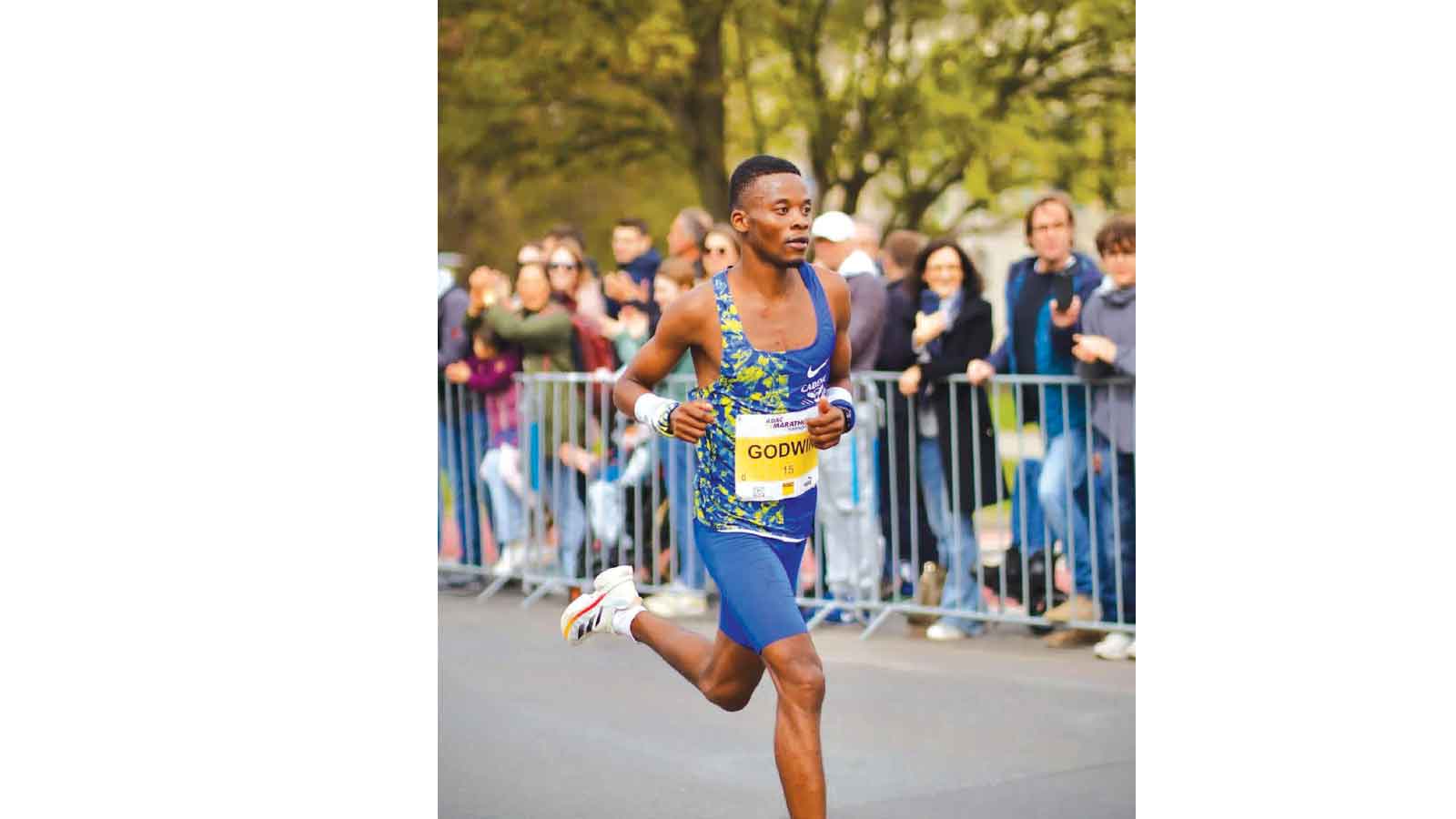
Zimpapers Sports Hub
TWO years ago, Godwin Katakura was on the verge of walking away from athletics.
Today, he stands as Zimbabwe’s second-fastest marathon runner and is steadily closing in on national record holder Isaac Mpofu.
Not long ago, the 26-year-old was simply another track athlete trying to balance training with work in Harare.
Marathon running was not even part of his plans. Now, he has become one of Zimbabwe’s brightest long-distance prospects and part of the country’s vision for future World Championships and Olympic Games.
The transformation was never part of a carefully mapped dream. It began with a chance encounter.
“I would be lying if I told you I ever dreamt of it,” Katakura said.
“I was a track runner, not road. I didn’t even have a good 21km time, so how could I think about a marathon?”
Everything changed in 2023 when Cadence Athletics Club coach Alden Muhoni entered his life — initially not as a coach, but as a customer looking to print club kits.
What followed was a conversation Katakura still struggles to fully explain.
“He told me stories, that if I joined him I would compete with elites from East Africa. I didn’t believe him. I wasn’t even training properly then. I was actually giving up on sport,” he said.
“I still wonder what he saw in me.”
Muhoni, however, saw enough potential to push Katakura beyond his comfort zone. The bigger gamble came a year later when the athlete made a life-changing decision and quit his job.
“It meant believing in results that were not even there yet,” he said.
“I wasn’t even winning local races. Sometimes I wasn’t making the top three. But the coach believed, and I believed. It’s the biggest risk I’ve taken, and it’s paying off.”
The results are now beginning to justify that faith.
Katakura recently finished second at the ADAC Marathon Hannover in Germany, clocking a personal best time of 2 hours 8 minutes 47 seconds.
That performance firmly placed him among Zimbabwe’s elite marathon runners, second only to Isaac Mpofu.
It also sharpened the focus on what comes next.
To secure direct qualification for the World Championships in Beijing, Katakura needs to run 2:06:00. Although he still has a pathway through the World Rankings system, his camp is aiming much higher.
“When I look at Godwin, the qualifying time is an understatement,” said Muhoni.
“That’s not the time we are working towards. We have targets inside that. We are chasing something bigger.”
Those ambitions point towards the 2:03 range — times associated with the world’s elite marathoners.
“The short- to medium-term goal is to push my time as close as possible to 2:03,” Katakura said.
“That’s where the big league is. I also want to win big international marathons.”
It marks a dramatic shift for an athlete who originally built his career on the track. Katakura rose through Taflow Athletics Club under coach Stephen Mujaji between 2017 and 2021, specialising in the 1 500m and 5 000m events. His journey carried him from Chipadze High School in Bindura to Harare, where the realities of life outside sport slowly began to take over.
At one point, that path nearly ended his athletics career entirely.
Now, marathon running has given his career fresh direction and renewed purpose. Last year, he won the Durban International Marathon in 2:11:02 before finishing sixth at the Münster Marathon in Germany with a time of 2:11:53.
Those performances hinted at progress, but Hannover confirmed that his rise was real.
“It takes a lot to run a good time. I only started believing when I saw how quickly my times were improving,” he said. It has taken two good years to get here.”
Katakura’s emergence comes at a crucial time for Zimbabwean athletics.
Isaac Mpofu has carried the country’s hopes in long-distance running for years, earning appearances at both the World Championships and Olympic Games.
Katakura may not yet have reached that level, but the question is increasingly difficult to ignore: Is he
next?
The runner himself draws inspiration from Uganda’s Jacob Kiplimo, another athlete who transitioned successfully from shorter distances into the elite ranks of long-distance running.
“I believe I am following a similar path,” Katakura said. “That’s why I admire him.”
Behind the ambition, however, lies a reality many Zimbabwean athletes know too well.
“I faced a lot of challenges before I met coach Muhoni,” he said.
“A lot of athletes struggle financially. To succeed, you have to be full-time. If you can’t get that support, it becomes very difficult. That’s why some leave the sport.”
Katakura almost became one of them. Instead, he is now chasing something far greater than simply surviving in athletics. He is pursuing relevance on the global stage, fuelled by a decision that could easily have gone the other way.
Two years ago, he was unsure if he even belonged in the sport.
Now, the times suggest otherwise.