admin
admin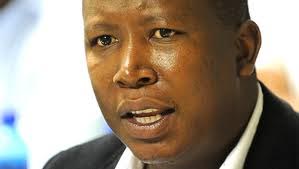
Africa’s ruling party – the ANC – that is trying to extinguish the verbal flames being stoked by their Youth League president Julius Malema and Floyd Shivambu.
Shivambu is Malema’s lieutenant and the Youth League’s Head of Policy, Research and Political Education.
The two are facing allegations of violating the ANC constitution through various utterances they have made at different forums.
Whether the youth wing is on fire or under fire remains to be seen.
However, the fact of the matter remains that the ANC top brass is running out of steam to halt the seemingly larger than life characters emanating from within their rank and file.
For a nation, which is rated 27th in the world in terms of Gross Domestic Product (purchasing power parity), some of the economic problems bedevilling it tells a story of failed policies in the transition from apartheid to a democracy which former president Nelson Mandela is globally credited for.
An average of 79,5 percent of South African population is of black African ancestry and within that composition, almost 35 percent are unemployed but at national level, about a quarter or 25 percent of the population remains unemployed.
This disadvantaged populace of the Southern African state is said to be leaving on less than US$1,25 per day.
The oldest bank in Africa, First National Bank, is domiciled in that country but part of the populace finds it difficult to bank with them.
The Johannesburg Stock Exchange is millions shy of a trillion dollars in terms of market capitalisation but not even a handful of black South Africans boast a stake in those endless zeros. The Black Economic Empowerment programme was mooted a few years ago but it never translated into anything more than just a grandstanding by the privileged section of the ANC, which had to portray a balance of wealth in order to appeal to its electorate.
South Africa remains one of the countries with a high level of social inequality at world level alongside Brazil.
Inflation remains a threat with the spontaneous wage demands by the militant trade unions continuously posing an economic threat with inflation expected to spike from the current 4,2 percent per annum.
Food and fuel inflation lead the pack with the exogenous threat of Libya’s political instability expected to be felt in the near future as barrels of oil remain in reserves.
When the ordinary South Africans were busy toyi-toying in the streets, retail giant Shoprite Holdings Limited was posting a record 3,99 billion rand for the year ending June, representing a 14 percent climb in trading profit.
A demand of an 18 percent salary increment in the midst of an imminent repeat of global recession-cum-an ANC leadership election to be held next year will be a delicate balancing act.
This calls for unanimity not only from Finance Minister Pravin Gordhan and South African Reserve Bank governor Gill Marcus but the whole of the nation.
The emergence of Julius Malema on the political scene could be an embodiment of what those in Khayelitsha, Gugulethu, Soweto, Marabastad, Alexandra and Mamelodi envision as true leadership in South Africa.
His popularity has nothing to do with his persona but rather more to do with what he stands for.
His unpopularity in the Mzansi media is more of a crucifixion for the threat he continues to pose to the establishment which never believed Sandton or V&A Waterfront can be residence to the blacks.
I recall vividly travelling with a Boer businessman early this year approaching the deepest mine in the world located in Vereenging near Carltonville, a debate arose on nationalisation of mines in South
Africa and the “Bok” sounded so amazed when the subject popped up.
He was and is still convinced that failure of South Africans to own their resources is a result of laziness not colonialism.
A couple of black South Africans have been paraded on the forefront of the Boer-controlled media channels to act as analysts lambasting their own brother Malema.
It is the same “black analysts” who had been brainwashed with economic theory of foreign direct investment, property rights and global dynamics who continue parading opinions dislocated from reality.
Almost every news channel in South Africa is hosting a so-called political analyst to try reading into the mind of the young Malema. Some are professors.
Ironically, Malema was born on March 3, 1981 in Seshego and raised by his mother, a single parent who was a domestic worker.
He joined the ANC at the tender age of nine. It took the Pedi descendant four years to complete his Grades 8 and 9 at secondary schools but the professors who are engaged by the world news channels to analyse Malema antics took a pittance of time to earn themselves professorship.
For how long shall Africa continue entrusting its visionary programmes to Western-schooled fellow nationals who seem blind to their true origin, they write voluminous chapters on investments but avoid compiling a chapter on African renaissance.
As Libya is burning, most European news channels are speculating on the amount of oil reserves in the North African country, South Africa seems to be losing an African tag slowly but surely. All is happening in the name of qualifying as a permanent member for G20 roundtable. South Africa’s economic story remains emotive, the vengeance upon Malema smacks of anguish and bitterness on how the Young Turks of the biggest economy fully appreciate the current holders of the South African cake.
“Juju” as Malema is jokingly called, has been so vociferous and blunt on denigrating the willing buyer willing seller principle.
He represents what some leaders in that country are fighting for silently. Mathews Phosa, one of the seniors within the ANC, upset the apple cart through his unconditional support for Malema and the entire ANC Youth League. The economic agenda of the black Zulus, Xhosa and all the other tribes is common knowledge.
They do not enjoy the same privilege of visiting Durban, Cape Town, Port Elizabeth or Pretoria that is enjoyed by tourists from the Atlantic zone. They want a fair share of their motherland.
On April 3 last year, the ANC Youth League president visited Zimbabwe amid speculation of policy clashes with Zuma’s mediation on Zimbabwe’s political conundrum.
His support for our land reform and indigenisation policy did not resonate well with both the old guard and Boer community. At a June 16 Youth Day celebration, Malema accused whites of “stealing land and again advocated for the redistribution of land without compensation”.
His attack on the Botswana government after he was consulted by Kagiso Ntiwe, the president of BDF Youth League, led to a disciplinary hearing which is apt to cause disunity in the ANC. SA President and ANC leader Jacob Zuma’s hands remain tied as he owes the youth so much since it was the same body which was instrumental both in the ouster of his predecessor Thabo Mbeki and the dismissal of rape allegations against him.
The young man’s love for ANC is so unquestionable and no one including the ANC president can challenge him on his political allegiance.
During the April 2009 elections, he was asked to leave Port Elizabeth’s Dora Nginza Hospital after head of the hospital noticed him and other 20 ANC members campaigning in the wards.
He was also listed on Time magazine’s least influential people of 2010. It is definitely going to be a long journey to freedom trying to challenge the status core in South Africa.
The bourgeoisie, the casino capitalists, rabid racists and ultra conservatives will not fold back their hands to watch their ill-gotten wealth being threatened.
The sanctions they imposed on Zimbabwe and our Government were expected to be a scary lesson to daring Africans but the noise of nationalisation of mines is coming as a shock wave to the Afrikaners.
The Democratic Alliance leader Helen Zille and Cape Town mayor Patricia de Lille struggled with the pain to co-opt blacks into their establishment and the only black faces noticeable in the Boer front remains puppets who do not seem to cease singing for their supper.
The World Cup came and went and tenders were awarded unscrupulously, Malema is being implicated on baseless grounds for being a tender-preneur.
If charges against Malema are to hold water, this implies every BEE beneficiary’s hands are not clean.
Prosecuting the young man is tantamount to bringing to book the likes of Cyril Ramaphosa, Tokyo Sexwale, Patrice Motsepe and a bunch of other beneficiaries.
This is not about supporting criminality but the South African media is equally not a prosecutor to lead crimes, they can only follow proceedings from the court galleries.
The empowerment drive will continue facing hurdles such as the recent appointment of the youthful Mogoeng Mogoeng as chief justice to replace Sandile Ngcobo.
Mr Zuma is beginning to see the importance of a black bench in his attempt to address the imbalances in the nation. The white bench castigated the appointment as ill advised and malicious. Mogoeng was born on January 14, 1961 and qualifying as a lawyer in 1983, one wonders on the type of experience the legal fraternity is clamouring for.
Barack Obama is of the same generation but he is at the helm of arguably the most powerful position in the world. This debate on Malema might just be a veil of bitterness and vengeance against the imminent metamorphosis of the incumbent order.
It is time to lift the imperialistic veil and expose the insincerity of those holding the reins the in power corridors.
Thank you and God bless you.
- Christopher Takunda Mugaga
Head of Research
Econometer Global Capital


 Online Reporter