admin
admin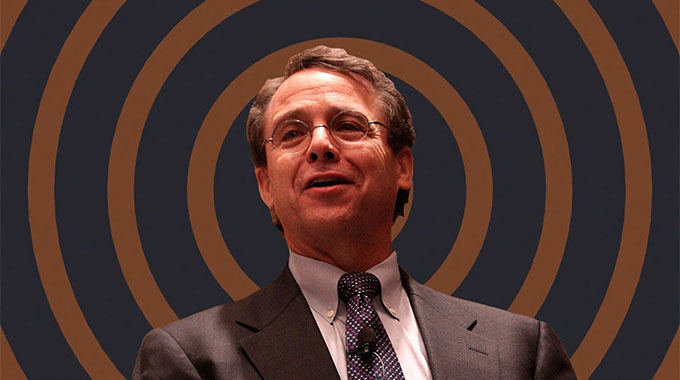
Jacob Hornberger
On the surface of things, it appears that Russia is at war with Ukraine.
But Russian president Vladimir Putin is saying that in actuality it is the United States that is warring against Russia and is simply using Ukraine as a proxy to conduct that war.
That raises an important question for the American people, one that the US mainstream press is loathe to ask: Is Putin’s accusation correct?
Are US officials simply using Ukraine as a way to weaken or even destroy Russia without directly participating in a war against Russia?
It certainly would not be the first time that the US national-security establishment used a proxy army in an attempt to disguise its own role in a war against a foreign regime.
Recall US officials’ use of a proxy army to attack and invade Cuba.
To disguise the fact that it was the United States that was waging a war of aggression against Cuba, US officials used a proxy army consisting of Cuban exiles to undertake the invasion.
While the proxy army was trained and armed by the US national-security establishment, the reason they were using a proxy was so that US officials could deny that the United States was the one that was actually waging war against Cuba. But the fact is that it was the United States that was waging war against Cuba — through the use of a proxy army.
If we place the conflict in Ukraine in a larger historical context, there is considerable evidence that Putin’s accusation is valid and that US officials are doing with Ukraine what they did with their proxy army at the Bay of Pigs.
Throughout the Cold War, US officials were driven by an extreme anti-Russia, anti-Soviet, anti-communist, anti-Cuba animus, an animus that actually never went away.
Instead, this animus has clearly been transferred to each succeeding generation of Pentagon generals and CIA officials.
That’s why the United States still maintains a brutal economic embargo against Cuba, one that targets the Cuban people with impoverishment and death as a way to achieve regime change in Cuba.
It didn’t have to be that way. After the Cuban revolution, US officials could have simply left Cuba alone and not put any economic embargo on the island. They could have left Americans free to travel to Cuba and continue trading with the Cuban people.
Moreover, after the ostensible end of the Cold War, US officials could have lifted their embargo.
After all, why continue it if the Cold War was supposedly over? The reason was that the extreme anti-Cuba, anti-communist animus was so powerful within the US national-security establishment that it exerted an obsessive drive within US officials to continue trying to destroy Cuba.
It has been no different with Russia, which was the principal member of the Soviet Union.
After defeating Nazi Germany in World War II, Americans were told that unfortunately they could not rest.
US officials informed them that America now faced a new official enemy that was arguably more dangerous than Nazi Germany.
Americans were told that there was an international communist conspiracy to take over the world, one that was based in Moscow.
Unless the United States acted to stop this conspiracy, Americans were told, the United States and the rest of the world would end up going Red.
That’s how the federal government ended up getting converted from a limited-government republic to a national-security state, which was characterised by the Pentagon, the vast military-industrial complex, an empire of domestic and foreign military bases, the CIA, and the National Security Agency (NSA), all of which were new to the American way of life.
It’s also how we got ever-increasing taxpayer-funded largess for the national-security establishment and its ever-growing army of “defence” contractors.
It’s also why we now live under a government with omnipotent, non-reviewable, dark-side, communist-totalitarian-like powers, such as state-sponsored assassination, kidnapping, torture, indefinite detention, mass secret surveillance, coups, regime-change operations, sanctions, embargoes, and alliances with extreme dictatorial regimes.
It’s also how we got NATO, a bureaucratic military alliance whose ostensible purpose was to protect Western Europe from an attack by the Soviet Union.
Never mind that the Soviets never had any intention of initiating a war against Western Europe, which would inevitably have involved the United States, a nation with nuclear weapons that had showed a willingness to employ them against civilian-populated cities.
Never mind that the Soviet Union had suffered near-total devastation in World War II, leaving it with no industrial base to wage another major war.
And never mind that the Soviet Union had been a partner and ally of the United States during World War II.
All that didn’t matter. What mattered was the extreme anti-Russia, anti-communist, anti-Soviet animus that was now driving the US government.
Anyone who didn’t come on board and embrace this animus was considered a grave threat to US national security.
As I detail in my new book “An Encounter with Evil: The Abraham Zapruder Story”, there was one man who broke away from this extreme anti-Russia, anti-communist, anti-Soviet, and anti-Cuba animus.
That man was President John F. Kennedy, who decided to put an end to it and move America in a different direction — one that instead established a peaceful and friendly relationship with Russia, the Soviet Union, Cuba, and the rest of the communist world.
Kennedy’s totally different vision for America, needless to say, did not sit well with the US national-security establishment. After his assassination, the United States was placed back on the road toward an extreme anti-Russia, anti-Soviet, anti-communist, anti-Cuba, and anti-North Vietnam animus.
When the Soviet Union unexpectedly withdrew from East Germany and Eastern Europe and dismantled in 1991, everyone thought the Cold War was over.
At that point, it would have been logical to dismantle NATO, given that its ostensible mission was now moot.
But what everyone failed to recognise is that the extreme anti-Russia, anti-Soviet, anti-communist obsession that had driven the Pentagon, the CIA, and the NSA for some 45 years did not suddenly disappear.
Instead, it continued to be a driving force within national-security state officials.
That was clearly manifested by the continuation of the brutal economic embargo against the Cuban people.
But it was also manifested by the decision to keep NATO in existence and, even worse, to begin using it to absorb former members of the Soviet Union, which enabled the Pentagon to install its nuclear missiles ever closer to Russia’s border.
For the past 25 years, Russian officials have objected.
US officials knowingly, deliberately, and intentionally ignored those objections. Instead, they continued absorbing Eastern European countries to install their nuclear missiles ever closer to Russia’s border.
In the meantime, it is now clear that US officials were training and arming Ukraine, knowing fully well that when the day came when they would threaten to absorb Ukraine into NATO, they would be placing Russia in a position of making a choice between letting Ukraine be absorbed into NATO, which would mean US nuclear missiles on Russia’s border, or enter Ukraine to achieve regime change, with the aim of preventing the US from installing its missiles on Russia’s border.
Contrary to popular pronouncements, the conflict between Russia and Ukraine is not about freedom but rather about the US desire to absorb Ukraine into NATO, an old Cold War dinosaur that could have — and should have — gone out of existence when the Soviet Union voluntarily dismantled.
Since Russia entered in Ukraine, US officials, from President Biden on down, have made several Freudian slips regarding the conflict, such as removing Putin from power, trying Putin as a war criminal, weakening and downgrading Russia’s military especially by killing large numbers of Russian troops, destroying the Russian economy, and impoverishing and possibly even killing the Russian people with an extreme set of economic sanctions.
It’s worth noting, of course, that the Ukraine crisis has caused the Pentagon’s and CIA’s invasions and wars of aggression against Afghanistan and Iraq to go down a memory black hole within the US mainstream press, while, at the same time, helped to continued flooding taxpayer-funded largess into the coffers of the national-security establishment.
Through it all, one thing is crystal clear — the extreme anti-Russia, anti-Soviet, anti-communist, anti-Cuba animus that drove the US national-security establishment throughout the Cold War never went away.
It clearly continues to drive the current generation of military generals and CIA officials, as we see not only with Cuba but also with Russia.
Thus, the question naturally arises: Is Putin correct? Are the Pentagon and the CIA doing what they were doing in 1962 against Cuba?
Are they driven by their extreme anti-Russia animus to wage war against Russia through the use of a US-trained and US-armed proxy? And are Americans willing to accept the highly dangerous consequences of such a foreign-policy decision? — CounterPunch
Jacob George Hornberger is an American attorney, author, and politician who was a Libertarian candidate for president in 2000 and 2020. He is the founder and president of the Future of Freedom Foundation.


 Online Reporter