admin
admin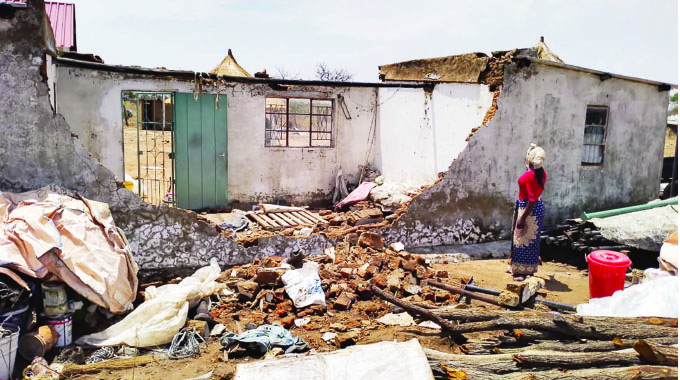
infrastructure, didn’t only reverse development but also raised important questions on our country’s disaster preparedness.
How well prepared is Zimbabwe in handling climate-related disasters? How strong and reliable are the country’s early warning systems, if they exist at all, in mitigating damage from similar disasters?
How seriously is disaster risk management considered in the broader formulation and implementation of national development policies and goals? The questions are many, but in the absence of compelling action, the extent and impact of economic and social damage linked with climate disasters will only get worse.
With adequate warning and efficient preparation, it is possible to significantly reduce loss and damage from the nightmarish hailstorms such as those that hit rural Mberengwa, Rutenga and surrounding areas last month.
Zimbabwe has experienced worse disasters before, like the devastating tropical cyclone 12 years ago and the recurrent droughts. If anything was learnt from these earlier disasters, it certainly did not show in the latest. Response from the Civil Protection Unit was typically slow, coming 36 hours late with little more than a few blankets and food items for 15 000 people left in the cold by the hailstorm, the worst in 50 years.
On the other hand, the Meteorological Services Department only managed, as usual, to give vague and generalised warnings of heavy unexpected rains ahead of the hailstorm. Yet, climate trends are visibly shifting, and people now require fast, relevant and area specific weather and climate information.
The damage expanded to cover even Harare, an area that has hitherto appeared a safe zone, although the effect was minimal. Roadside trees were uprooted and several vehicles damaged due to traffic congestion, meaning higher claims for insurance companies.
Mr Elisha Moyo, a climate expert with the MSD, told a morning news programme on local television recently that the hailstorm events were evidence of climate change. He said the department, together with other partners, had started commissioning automatic and manual weather stations in different areas within the Midlands and Masvingo provinces to capacitate those communities in weather forecasting.
But even then, useful world-standard equipment for precise predictions is still lacking, making disaster preparednessand early warning a nightmare. There still exists manifold inefficiencies and weaknesses in the process of data collection, and eventual dissemination to the end user like farmers and villagers.
Most rural communities still depend on mass broadcast channels like radio for periodic weather updates.
The mobile phone may be a better, effective and more efficient way of delivering such messages.
More than 80 percent of rural people now have access to a mobile phone. The Zimbabwe Traffic Safety Council is successfully utilising mobile technology on a wide scale to deliver traffic advice. But in the meantime the evidence is gathering, climate change is real. Action to build resilience, adapt to and mitigate its impacts should be scaled up significantly, as a matter of urgency.
Strengthening existing disaster risk management systems in the national development framework could help prepare communities, and protect lives and property during times of climate chaos.
To include disaster risk management simply means to build systems concerned with reducing national vulnerabilities to natural catastrophes. This could also help “in reducing mortality, reducing economic losses, preventing impoverishment and protecting and improving health systems”. The climate is showing no signs of letting up. According to the UN Environment Programme Emissions Gap Report 2012, the two degrees Celsius target will not be achievable.
This is the temperature rise limit viewed by scientists as safe to prevent further harm from climate change.
A World Bank report late last year actually said at the current emission rate of greenhouse gases, the world was on course for an unsustainable 4 degrees Celsius warming by the end of this century.
The report also predicts tropical diseases like malaria to worsen in countries such as Zimbabwe and Mozambique due to climate change by 2080. Several families have suffered huge losses due to increased, extreme climate events such as droughts and hailstorms in recent years.
The losses are rarely quantified in monetary terms but run into several millions of dollars.
The health and social impacts are catastrophic as lives are lost, disease spread and public infrastructure like schools destroyed.
God is faithful!


 Online Reporter