admin
admin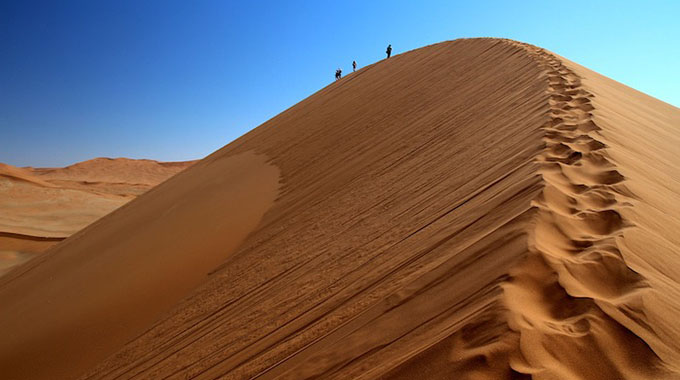
The Rhodesia Herald,
July 29, 1971
THE biggest member of the Botswana police force draws no pay, wears no uniform, and knows no discipline. Yet a more effective “Bobby” for this landlocked State does not exist.
The Kalahari Desert, more than 260 000 sq. km of parched and rolling scrub Veld, is the country’s best potential trap for animals.
Any organised gang planning a raid on Gaborone banks could no more flee to this killing wilderness than to Mars.
Because of it, and its uncompromising Government policy in arresting insurgents, South Africans’ fears four years ago of Botswana becoming a launching base for guerrillas, were dashed almost before they crystallised.
Chances of Africans, brainwashed in “freedom fighter” propaganda and totting FN rifles, successfully infiltrating the country, and crossing the desert were too slim to be even considered a threat.
With this watchdog of security mounting its non-stop 24-hour patrol, Botswana can live peacefully with one of the smallest police forces in Africa.
The Botswana police force has 1 268 men including all branches. They give the country a police coverage of one man to every 550 sq. km of sun-baked territory.
Yet the crime rate is low. There is no organised crime. Johannesburg’s armed hold-ups are unknown. Stabbings are a rarity, and police officials would have to think back a long way to remember a bank robbery.
Ritual murder, the country’s most lurid crime, bothers police at most only three times a year, and stock theft, involving 300 cases a year, is the force’s biggest headache.
“We are not Johannesburg murder and robbery squad or anything like it,” a senior officer explained. “We do not have any running battles in the streets, but our work still involves a lot of careful investigation.”
Botswana police patrol their bits by canoe, Land-Rover, light aircraft, and even by camel in the southern desert.
As the country has no standing army, the Police Mobile Unit fulfils paramilitary duties for State security.
Education standards for entry are High Junior Certificates and they are the minimum entry requirement, but the pay is very low, less than $40 a month for a constable.
But as much as the desert is the policeman’s friend in Botswana, it occasionally turns the tables and laughs at him.
Police readily admit that more cases of ritual murder, the killing and mutilation of a man for ‘juju’ purposes, happen than are detected.
But in a country where a policeman may be 1 600 km from the base, even the long arm of the law cannot argue with the parch land of Kalahari.
LESSONS FOR TODAY
- Some of the best defences do not necessarily cost anything as the case with the Kalahari Desert in the story.
- Having a low crime rate is a positive development for any country because not only does it aid development, but it also gives the country good ratings.
- Controlling crime requires the Government and law enforcement agents to assume an uncompromising position.



 Online Reporter