Chronicle Editor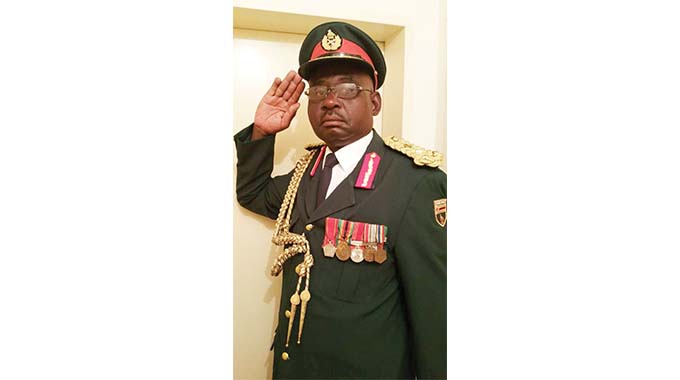
WE continue our interview with former freedom fighter and now Member of Parliament for Umzingwane, Brigadier-General (Retired) Levi Mayihlome pseudonym Cde Lizwe Ndebele.
In our last two instalments Brig-Gen (Rtd) Mayihlome told our Assistant Editor Mkhululi Sibanda (MS) about how he was exposed to politics when he was growing up at his rural home in the Mzinyathi area of Umzingwane District in Matabeleland South Province.
When he moved to Bulawayo he faced racial discrimination at his workplace, a development that triggered him to get into politics. He became very active in the Zapu structures in Tshabalala suburb and his activities attracted the wrath of the colonial government, resulting in his arrest. He went on to spend about six months behind bars. Today Brig-Gen (Rtd) Mayihlome takes us through his journey to join the armed struggle in Zambia via Botswana. Below are excerpts from the interview. Read on . . .
MS: Then you finally left the country to join the armed struggle, take us through that period.
Brig-Gen (Rtd) Mayihlome: When I decided to leave the country the situation had become untenable as the police had been to our house twice looking for me. Twice they came looking for me and twice I escaped. I avoided them. One day I decided this was the end, enough is enough. It was on a funny Saturday morning and I had two friends that I was supposed to go with. We had arranged that we would leave at 4am, catch a bus outside Bulawayo. We had arranged and got identity documents from people from the Plumtree area which we would then use to pass through the roadblocks, we had also learnt a few Kalanga words. If confronted by either the army or the police we would utter a few phrases in Kalanga as a way of escaping the dragnet. But the morning I went to look for these guys so that we leave for the war, one was not at his home, so I Ieft since I didn’t want to ask many questions. The other one I found him stone drunk, I won’t mention his name, he is late now. I tried to wake him up, but failed. I then just left.
MS: On your own?
Brig-Gen (Rtd) Mayihlome: Yes, on my own. I caught up with the Suka Sihambe bus crew outside town whom I knew. Inside the bus was a guy called Jotham Mafu who was a clerk at Mbizo Primary School in Luveve, who later went to Romania for locomotive training, but I never saw him again. We were introduced to each other by the bus crew and that’s how we met. Also on their way to join the armed struggle were four ladies, two from Tshabalala and the other two from Matobo. We were now a team. We were advised to drop off at Khalanyoni as there was a roadblock and it was going to be impossible for us to go through. We were told to drop off just before Khalanyoni Police Station and then catch the bus later after walking around the roadblock. We were told that the bus would be driven into the camp where they would search everyone. The passengers would also be interrogated and so we were told to drop off but the ladies proceeded on the bus. Instead of catching the bus soon after Khalanyoni we missed it and it went on. So from Khalanyoni we walked all the way to the border and we spent two days in the bush. We didn’t even have provisions as we were scared of even buying food. So we were surviving on the little provisions we had brought from Bulawayo. Aaah we walked until we stumbled on Sanzukwe River, which is just near the border. That was a relief to us as we had spent two nights in the bush, it was a relief as after crossing into Botswana, the Tswanas after seeing Zimbabweans were very helpful. When asking for water, they would say “ooh metsi metsi.” They knew that we were refugees trying to get into Zapu camps either at Selibe-Phikwe or Francistown. They gave us food and we continued with our journey, second night they gave us accommodation. We finally arrived at Selibe-Phikwe where we found out that recruits were no longer being kept at the prison camp but a separate refugee camp had been set up. We found guys that had been in our youth structures like Christopher Ndiweni assisting in the camp administration, who is now an opposition politician in Victoria Falls. This made it easy for us to acclimatise. Ndiweni had been our organising secretary in Tshabalala, remember I had worked with a lot of the youth, now some of them very senior people. So because I was already very active, being known and senior in the party I was accorded some bit of respect and responsibility when I got to Selibe-Phikwe and later at Nampundwe, Zambia. I was now assisting with the preliminary background of new arrivals in Zambia.
MS: When you got to Zambia how was the situation there?
Brig-Gen (Rtd) Mayihlome: In Zambia I met more people who recognised me, that was at Nampundwe Transit Camp. I was still with my friend Jotham.
MS: But how was Nampundwe like? A lot has been said about that camp.
Brig-Gen (Rtd) Mayihlome: It was life in hell. You know it was very difficult to acclimatise. We went there with ordinary clothes, civilian shoes. Those clothes and shoes were worn out within a week or two because of the physical training drills. We would wake up at 4am, the latest, otherwise some trained personnel would wake us up at 3am and it was early July, very cold. There was no climate change in those days. It was very cold in July, very chilly but still you would be woken up at 3am or 4am. We would run until daylight that is at first break. They were transforming us from civilian life to the disciplined military life. Instructors we found there were Cdes Mandevu, my former workmate at Supersonic, Cde Teddy, instructor, the notorious one from Plumtree. The camp commander was Cde Killion, logistician was Cde Makanyanga, the security guy was Cde Poso with Cde Tafara who had been a Zapu youth colleague from Old Magwegwe also there. There were many others including Cdes Tonderayi, Lebanon, Finish, Thodlana, as well as other trained personnel or seasoned guerillas who would pass by that camp. The commissars were Cdes Khanda, Marshall Mpofu, Moyo and Chifamba and they worked with Cdes Malandu and Dan Ncube.
They really changed our mindsets philosophically and politically. And just like all the other fitness and tactics instructors, one cannot but marvel at the selfless commitment to duty, to train and keep the morale of recruits very high in spite of the hardships like food shortages which were nevertheless well managed to ensure that we never went hungry, come rain or sunshine. Besides the commitment they were always very tough but also very jovial. That was the strength of the military mentors who moulded the cadres before more rigorous subsequent military training.
Discipline was very strict, I would say stricter than what I even came across later in the Zimbabwe National Army. That was the beginning of the formation of a ZPRA Cadre, a pride of many a force, and envied by even our enemy, the Rhodesian security forces.
λ To be continued next week with Brig-Gen Mayihlome talking about how he was chosen into a team that was screening the new arrivals at Nampundwe, training in intelligence at Mwembesi and later on in the then Soviet Union. He would talk about his deployment into the NSO structures in Zambia.


 Online Reporter