

 admin
admin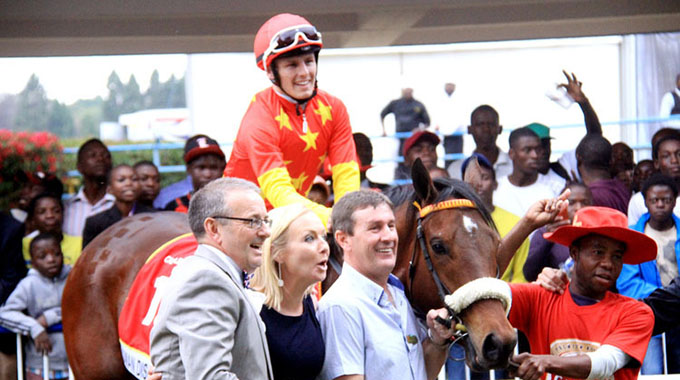
Kundai Marunya Lifestyle writer
Giding, giding, giding, goes the beat.
The ground shakes with every stride.
Vast amounts of air are galloped.
The rush is unexplainable; the beating hearts, breath held, prayers said in silence and finally the cheers of joy and equally audible sighs of disappointment.
To a normal eye it’s just a few minutes of adrenalin an expectation but to racing nerds it’s a satisfying episode worth thousands of dollars invested.
Horse racing is much more than a pastime few hours event but a culture that goes generations back.
It is this culture that Mashonaland Turf Club (MTC) has developed into an enterprise that offers business opportunities to the savvy, quick money to the lucky and most of all, a community built on love and mutual respect, all centred on a shared affection for horses.
The community include breeders, trainers, jockeys, and horse owners among other groups of people.
“We currently have four trainers at the moment,” said Gayle Watson who is part of the MTC marketing department.
“They differ in experience and the number of horses under their tutelage but they are all doing a great job in making sure we have great competition come race day.”
The concept of ‘catching them young’ also applies to horses as they are taught from young ages, building their fitness and mental strength to compete at the top races.
“We have races for young horses that are under two years of age,” said Watson.
“These compete in their age groups while being groomed for bigger races.”
Horses race up to when they become of age and are forced to retire or change careers.
“Most horses retire at 11 or 12 years of age. Luckily for them, they can easily change careers,” said Watson.
“Former race horses because of speed can easily adapt in Polocrosse. Some can also into show jumping.”
Polocrosse is a combination of polo and lacrosse.
It is a team sport played on horseback and players use racquets with a square or round head and loose net to pick up, carry, throw, catch and bounce a soft sponge ball.
Two sections of three players play against each other with the aim to score the most goals.
Locally the sport is popular at country estates especially Bushman Rocks Winery were the game draws a large number of people from different spheres.
Dubbed Ruwa July, their mega annual polo event has largely been turned into a fashion extravaganza.
Show jumping , also known as “stadium jumping”, “open jumping”, or simply “jumping”, according to Wikipedia is a part of a group of English riding equestrian events that also includes dressage, eventing, hunters, and equitation.
Jumping classes are commonly seen at horse shows throughout the world, including the Olympics.
Locally show jumping is held at Borrowdale Country Club and other clubs and centres.
Throughout their racing careers, horses participate in different events.
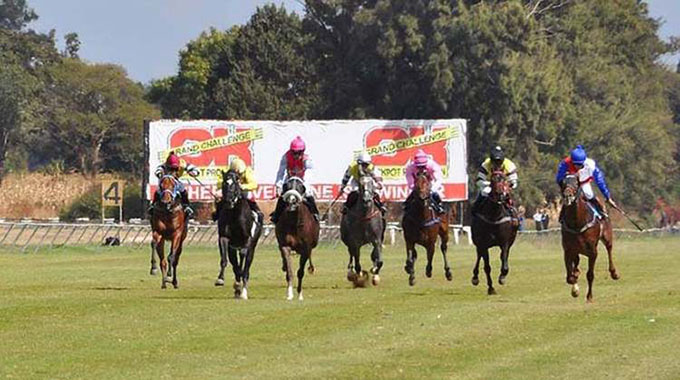
“The biggest local races are Castle Tankard and OK Grand Challenge which draw large numbers of onlookers,” said Watson.
“We however have other smaller races held every fortnight. They do draw a decent turnout though the grandstands are never full.”
The bigger events usually attract foreign horses from different countries but mostly South Africa.
“We still have a good number of local breeds that race on our courses,” she said.
One of the most celebrated local breeds is Ipintombi who has a rich history of winning both locally and internationally.
“Ipintombi won South Africa’s Durban July before travelling to Dubai where it was crown horse of the year before moving to United States where it currently lives,” said Watson.
Genealogy has always been important in horse racing with breeders keeping strict records of parentage.
This has resulted in many horses with good parentage being paired to make great performing horse races.
Records of horse lineage are often found on Racebook, a website that documents genealogy of racing horses.
Though the culture maybe exciting for many, it is often too expensive.
In the past horses were passed from generation to generation but the coming up of ‘new money’ especially among the rising black elites has seen changes in horse ownership.
More and more people, especially celebrities and wealthy individuals are embracing the culture, as to many, the course is not only a place of entertainment but to do business in a relaxed environment.
Horses, especially those with a good lineage are very expensive to buy. Ownership also comes with the great burden of an expensive feed, training and medicines. This has driven a new trend of group ownership of horses.
“We have a growing number of people who own horses as a group, thus an individual or family owning say 10 percent of a race horse,” said Watson.
“This has been crucial in the building of our community.”
MTC has been building a great community that even includes small businesses around their Borrowdale Racecourse.
This has seen more and more people embracing the racing culture.
It’s never too late to join in, maybe not as a horse owner or breeder, but even as a mere spectator.
Whatever leads your feet to Borrowdale Racecourse, you will find a relaxing environment which features a well-manicured lawn, well-kept horses and great showmanship.
Make a date with the culture at the next race day on March 15.



 Online Reporter