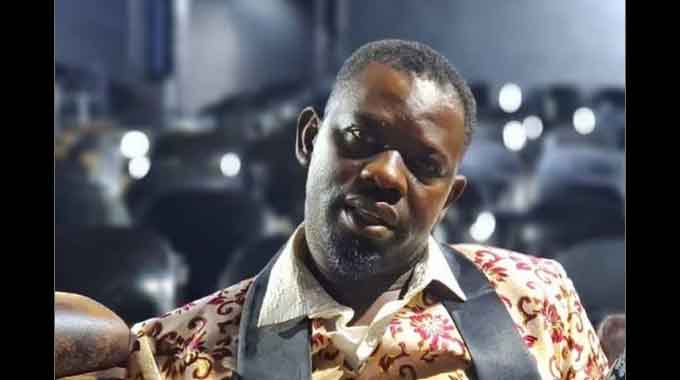
PROPHET Mukanhairi calls himself a Doctor and that gives us an impression that he is an educated man who knows the power of his words.
He should know that when he claims that there are cast gold deposits under the National Sports Stadium, it is going to generate headlines.
It generated headlines in this newspaper yesterday and it was our lead story. We pitched the police reaction that prophet was wrong to claim that there were gold deposits beneath the National Sports Stadium. Zimbabweans deserve honesty, especially from individuals who present themselves as prophets and claim to possess special spiritual insight.
When a prophet makes a statement about something as significant as gold deposits beneath one of the country’s most important sporting facilities, the claim should not be treated as harmless entertainment.
It deserves scrutiny because of its potential to mislead the public and create unnecessary controversy.
The National Sports Stadium is a national asset.
It is a place where Zimbabweans gather to support the Warriors and celebrate the country’s sporting identity.
Its importance extends beyond football because it is where other national events are held.
It represents national pride.
Making unsubstantiated claims about mineral deposits beneath such a facility is therefore irresponsible.
Gold is a valuable natural resource in Zimbabwe, and any suggestion that it exists beneath public infrastructure can attract considerable public interest.
But public interest must never be confused with proof.
If Prophet Mukanhairi genuinely believes that gold deposits exist beneath the stadium, the responsible thing to do is provide credible, verifiable evidence to support the assertion.
Geological surveys, professional assessments and relevant official records are the proper means of establishing whether commercially significant gold deposits exist in a particular location.
Claims of spiritual revelation cannot, on their own, substitute for scientific evidence.
The problem becomes even more serious when a person appears to change the meaning of an earlier statement or attempts to defend it through explanations that do not address the central question. Spinning a claim is not the same as proving it.
Zimbabweans should not be expected to accept every controversial statement simply because it comes from someone who enjoys a following.
Prophets, pastors and other religious leaders are entitled to express their beliefs, but they are not exempt from reasonable questions about statements that concern public affairs.
There is a danger in allowing sensational claims to dominate public discussion without demanding evidence. At a time when Zimbabwe is working to restore confidence in its sporting facilities and attract investment into various sectors, unsupported assertions can distract attention from matters that genuinely deserve national focus.
Religious leaders must also appreciate the responsibility that comes with influence.
Many followers trust their spiritual leaders and may accept their statements without independently questioning them. That makes honesty, restraint and transparency particularly important.
The prophet misfired and that is a fact. He should accept that he made a BOOB instead of suggesting that we got it wrong because we misquoted him. The police reacted to his wayward statement.
He is not someone who is beyond censure. He is human and he makes mistakes, just like he did in this case.