Vusumuzi Dube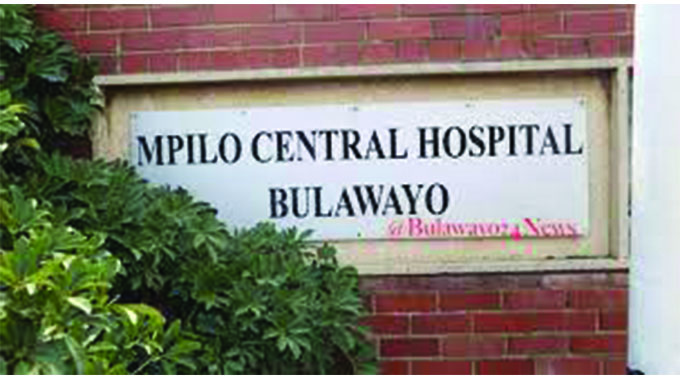
THE cosmos seems to permeate several aspects of our lives. Sometimes we are not that conscious or alert to these heavenly influences and realities.
Agricultural activities for example, are premised on the movements of celestial bodies, the sun in particular. With our rain-fed agriculture, we grow crops in summer when the rains fall. The sun will migrate to the southern hemisphere.
Among the celestial bodies that guarantee our sustenance on planet earth is the sun. In the absence of the sun, our planet would probably freeze, in the process making life impossible. Our food is available courtesy of the sun that provides light that is an important ingredient in the manufacture of food by plants and grasses. The green chlorophyll traps light from the sun.
In terms of thought, cosmology and world-view, the cosmos is instrumental in defining spirituality and providing ideas that make considerable contribution towards the formulation of African Thought.
Spiritual ideas are a source of thought, world-view and beliefs. We have been writing about perceptions relating to the moon. That, in the final analysis informs African communities’ world-view, cosmology and thought.
To a lesser extent, we had begun dealing with African ideas pertaining to the sun in terms of its origin, related spiritual ideas and the rituals that emanate from solar perceptions. In this article, we highlight the link between a cultural practice and how it is linked to spiritual ideas. This will be done within the context of the death and burial of Jack Mlangeni Ncube of Mahetshe near Maphisa, just south of Kezi.
I first met Mlangeni, as he was popularly known in January 1967 at Mazowe Secondary School where I was going to do Form 1. He was already in Form 3 after completing primary school education at Tshelanyemba Primary School run by the Salvation Army’s Semokwe Division.
The Salvation Army, Impi Yosindiso had set base at Mbembeswana, an outstation of Usher Institute. However, the Canadian missionaries soon realised Semokwe River did not provide perennial water throughout the year.
A decision was taken to relocate to a different site where there was strong prospect for perennial water.
The headquarters was then established at Tshelanyemba close to the Shashane River.
Tshelanyemba became the new central primary school serving, among several Salvation Army schools, Manyane (Sihwaba) Kafusi (Manuka), Lubhangwe (Libankwe) and Sankonjana.
The four schools were east of the Shashane River. On the western side of the same river were schools such as Mbuso, Nhlupho, Mambale, Seulah (Nsewula), Lingwe, Mbuya and Lingwe.
Mlangeni had been given that name following an incident when some notorious white police officer got to the homestead of Mtsiwa Ncube of the Sikhethabahle Negwante (Nerwande) of the Ncube clan.
His wife was Ncomi Dube (uGweru). When the police officer, transferred to Kezi Police Station from Gwanda arrived at the homestead of the Ncubes, on the very same day of his arrival the child in Mrs Ncube’s womb decided to get out and see the infamous police officer.
A bouncing baby was born and in typical African tradition of naming, he was named Mlangeni.
Mlangeni, like other boys growing up in Matabeleland, looked after goats and later cattle. Time came when he enrolled at Mahetshe Primary School run by Impi Yosindiso. Mahetshe was a Birwa name corrupted from Moekeji, a son of Chief Kgoatalala (uHwadalala).
Kgotalala controlled a vast swathe of land from the Tuli River in the east to the Shashane in the west, Wovi (Gommfi) River and Silikwe in the north formed the western boundaries with the Shashe River demarcating the southern border.
Mlangeni, after completing primary education at Tshelanyemba, he proceeded to Mazowe Secondary School located on Pearson Farm, just north of Salisbury (now Harare). Mlangeni got to Mazowe Secondary School in 1965.
He would remain there until the end of 1968. I had got there in 1967 after I left Sankonjana Primary School in 1966.
After 1968, Mlangeni proceeded to train as a teacher qualified to teach at F2A secondary schools. The teacher training college was Mutare (then Umtali). After obtaining T2A qualification, he went to teach at Ihlathi Secondary School in Tshabalala Township in Bulawayo.
The F2 schools catered for practical subjects and some academic education. While teaching at Ihlathi Secondary School he lived at the government accommodation at Nkulumane Primary School in Mpopoma. There we lived together during the school holidays.
Mlangeni then left teaching and went to train in another profession that was open to Africans in a racially segregated Rhodesia. He trained as a State Registered Nurse (SRN) at Mpilo Hospital. Then we went together to live at Number 20 in Barbourfields where we shared accommodation with Bernard Dakamela and wife MaSikhosana.
There was also Edward Mguni who taught at Cyrene Mission, an Anglican Church-run school for boys. House Number 20 became a haven for drinking and dancing place. It was because of his dancing antics that Mlangeni earned himself the name Marokobhani.
It was Mguni who gave him the appropriate name. He rocked. We all rocked mad!
Once again, Mlangeni was on the move, although within the same profession. He went to train at Ingutsheni Psychiatric Nursing School and worked there for some time after completing the course.
Now Mlangeni was becoming the proverbial rolling stone that gathers no moss. It was then after independence. Mlangeni left nursing to become an insurance agent with Old Mutual. After some stint there, he became an executor for deceased estate.
The end was nigh. He was no longer happy with being an employee. He quit formal employment. He went back home and set up a hardware business at Maphisa Growth Point. He bought a big lorry that he used to deliver hardware material to his customers.
The business was given the name of Mlangeni. At the same time, he was getting involved in agriculture. He also built a beautiful home, which he electrified and sunk a borehole.
While working at Mpilo Hospital he met Sithembile Ndlovu from Filabusi. They got married and the family had a total of six children, four boys and two daughters.
He was making some impact in agriculture. He operated a small plot between Kezi and Maphisa. There were goats and sheep. The orchard turned out to be envy of many. It was no wonder that several field days were conducted at his homestead with diverse agricultural activities. I attended one of the field days where Simon Khaya Moyo was guest of honour.
Aspiring farmers came to learn from a seasoned farmer who was more than willing to share farming knowledge and skills with the generality of farmers.
Part of his herd was at a farm near Intaba-zika-Mambo and usually went there to keep check on the herd. There were occasions when he was accommodated by Luke Mnkandla with whom he attended Mazowe Secondary School from 1965 to the end of 1966 before Luke left Mazowe to attend Mzingwane Secondary School. One of his very close friends was Roger Muhlwa who used to work for the Rhodesia Railways (RR), now the National Railways of Zimbabwe (NRZ).
I had been driving to Matobo when my mobile phone broke the silence. I pulled off the road to answer the call. The call came from Roger. He was informing me Mlangeni had passed on. I was confused, not exactly knowing how to take it.
I would later learn that Mlangeni and his wife from Mpilo Hospital days visited the Muhlwas and spent prime time with the Ncubes. Offered the pleasure to put up with the Muhlwas Mlangeni decided to proceed home in Killarney.
In the morning, they drove back to Mahetshe. Mlangeni was the village head and his people used to congregate at a site that was known as Mbuya Community Hall. A meeting was planned over which he was going to preside.
He proceeded to the centre that had been bought by the community from Mlangeni’s brother John, uSekaNjabulo. He parked the car and the two of them proceeded to take their seats in the meeting.
Mlangeni had his trademark address where he referred to the people as Bobhoyi.
I was uBhoyi like the rest that the man with a kind heart interacted with. Mlangeni was observed to slump off the chair in which he had sat. He was rushed to Maphisa Hospital a few kilometres away. The treacherous stretch of road delayed in ferrying him to the health facility. Some old woman in the car had realised that Mlangeni had breathed his last.
When the hearse approached his homestead, the elders who knew the appropriate tradition relating to where Mlangeni had died had made a decision. The belief was that his spirit was still hovering over the place. The hearse was guided to where he died.
A branch of isihaqa tree was ripped off from the tree and used to sweep the actual spot where the exiting of the body by Mlangeni’s spirit had taken place.
As the man did the sweeping, he was all the time addressing Mlangeni’s spirit about the need to go home and leave the area where its host had met with death. That done, the branch that had been used in sweeping was taken inside the hearse and placed on the casket.
Then the hearse proceeded home and the casket was placed in one house with the isihaqa tree branch still on the casket.
Overnight the tree branch was left on the casket and would accompany Mlangeni into his grave dug next to those of his father and mother.
It was believed that if that were not done his spirit was going to haunt the court place. Where this happened on a road, the spot was equally haunted and traffic accidents would be the order of the day.


 Online Reporter