

 admin
admin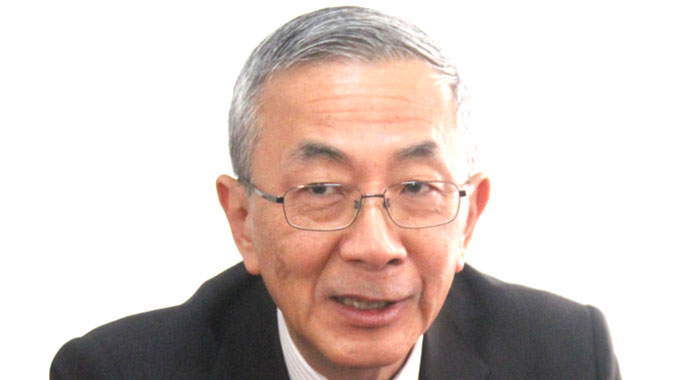
Herald Reporter
Japan has mobilised over US$15,3 million in emergency funding to assist vulnerable communities that were affected by drought and floods in Zimbabwe.
The funds will be channelled through United Nations agencies, namely the World Food Programme (WFP), the United Nations Children’s Fund (unicef) and the International Organisation for Migration (IOM).
The funding includes US$14,8 million to provide food assistance to vulnerable populations through WFP and Government.
The funds will be used for purchasing and distributing around 26 000 tonnes of maize to meet the essential food security needs of 512 000 households in rural areas for a period of six months.
Japanese ambassador to Zimbabwe, Mr Toshiyuki Iwado said Japan relied on the expertise of the WFP to provide food assistance and build the resilience of drought-affected communities for many years.
“We expect this food assistance to support the immediate food needs of many of most vulnerable households,” he said.
WFP country representative and director, Mr Eddie Rowe thanked the Government of Japan for the gesture.
“We welcome the generous and timely contribution from the government and people of Japan to support the food needs of Zimbabwe’s most vulnerable people who are struggling to put food on the table.
“The maize procured to support Government’s efforts will help cushion Zimbabweans at the peak of the hunger season,” he said.
A further US$ 454 545 will also go towards a comprehensive set of life-saving nutrition, HIV and Aids as well as water, sanitation and hygiene (WASH) interventions targeting vulnerable women and children in Binga, Buhera, Chiredzi and Masvingo through unicef.
Through nutrition interventions, 95 000 children will be screened for malnutrition with 3 400 treated while 6 700 pregnant women and new mothers will receive training on preparing safe and healthy food.
For HIV and Aids interventions, 2 400 vulnerable children, pregnant women and adolescents will be supported with information and skills on healthy coping strategies while lifesaving WASH interventions will enable 10 000 children to access clean water by constructing or rehabilitating water points at 25 schools.
“During times of humanitarian crises, it is women and children in rural areas who find themselves the most vulnerable, and yet women are the ones who grow and cook food while children are the future of the country. This assistance will help women and children at risk so that they have the nutrition, health, water and sanitation that they need during this critical time,” Mr Iwado said.
Unicef Zimbabwe representative, Ms Laylee Moshiri also expressed gratitude to Japan for their ongoing support to the children and communities of Zimbabwe.
“As we now focus on tackling the Covid-19 crisis across the world, we must not slow our efforts in ensuring that women and children receive quality nutrition, HIV and Aids support and access to safe water in Zimbabwe,” she said.
Japan has also provided US$96 054 through IOM to support people in Manicaland, who were affected by Cyclone Idai and are still displaced.
This will include the provision of transitional shelters and strengthening of resilience of the displaced people.
This project will be implemented by IOM in close collaboration with the Ministry of Local Government, Public Works and National Housing and local authorities in the province.
It will complement the Japan-funded Shelter Emergency Response Project to assist the victims of Cyclone Idai, which was carried out from April to October 2019.
IOM Zimbabwe chief of mission, Mr Mario Lito Malanca welcomed the timely support from the Government of Japan, saying it was key to supporting IOM Zimbabwe relief operations.
Japan has been consistent in supporting emergency efforts since March 2019 when the cyclone hit Zimbabwe, leaving 50 905 individuals displaced.


 Online Reporter