admin
admin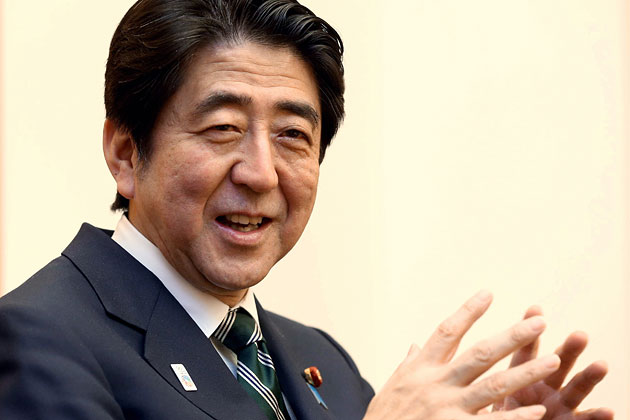
TOKYO. — Japan’s prime minister Shinzo Abe vowed yesterday to press ahead with a sales tax hike seen as crucial to shrinking a huge national debt, although critics fear it would derail a budding economic recovery.
The move marks a big political gamble for Shinzo Abe — previous hikes have proved career-ending for his predecessors — with the 59-year-old leader later yesterday expected to spell out details of a stimulus package aimed at softening the blow.
The tax increase ends months of uncertainty about whether Abe would press on with hiking the levy to 8,0 percent from 5,0 percent, still far lower than in many wealthy countries.
Economists estimate the impact on households at some 8,0 trillion yen (US$81 billion), dealing a blow to consumer demand just as the world’s third-largest economy is picking up.
Abe’s stimulus package is expected to come in at US$50-billion with benefits for low-income earners and corporate incentives to boost investment and wages.
He may also speed up the time-line for getting rid of a special corporate tax ushered in after the 2011 quake-tsunami disaster.
Abe told a meeting of government and ruling party policymakers that the tax hike was aimed at “maintaining the nation’s trust and handing over a sustainable social security system to the next generation”.
The decision yesterday came just hours after the Bank of Japan published its quarterly Tankan business confidence survey which surged to a more than five-year high.
A strong showing in the Tankan was widely viewed as the tipping point for Abe to implement a tax rise passed by the administration he booted out of office, although Japan’s recovery is far from complete.
“Companies are still cautious about investing more and they’re concerned about the negative impact of the tax rise,” said Hideki Matsumura, senior economist at Tokyo-based Japan Research Institute.
Since sweeping December elections on a ticket to jump-start the long-laggard economy, the prime minister has launched an unprecedented policy blitz — a blend of government stimulus and monetary easing dubbed Abenomics. The scheme appears to be taking hold.
Japan is on track for a strong annualised economic growth rate of 3,8 percent, leading G7 nations, while the stock market is up about 40 percent from the start of the year.
But the tax levy threatens not only to sink his growth plans; it could also dim his popularity with voters.
“This is Abe’s biggest political decision since he took office,” Tomoaki Iwai, a politics professor at Tokyo’s Nihon University, said.
“Japan is in the middle of an epic experiment and his decision is a crucial test of Abenomics.”
The country is wrestling with the rich world’s heaviest debt burden, inflated by years of ineffective efforts to stimulate the economy through spending and soaring welfare costs in a rapidly-ageing society.
While the upbeat Tankan survey was sure to be embraced by proponents of Abenomics, a string of data in the past week showed Japan’s battle to turn around years of lacklustre growth has yet to be won.
Inflation figures released last Friday showed price rises driven by soaring energy costs, not the broad-based increase seen as key to dragging Japan out of years of deflation which crimped private spending and growth. — AFP.


 Online Reporter