admin
admin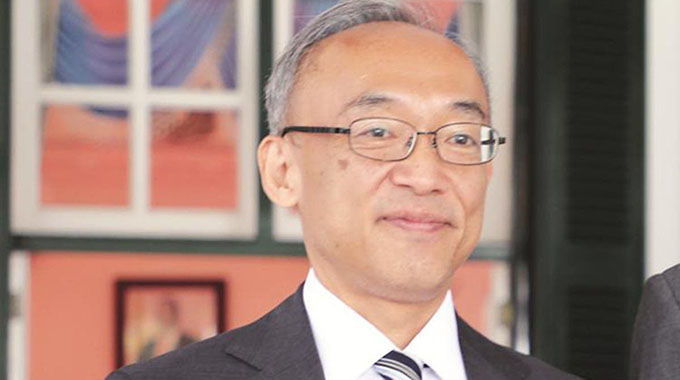
Rumbidzayi Zinyuke Senior Health Reporter
The Government of Japan has provided more than US$300 000 to fund the purchase of ambulances, PCR machines as well as training for medical personnel in a project which will benefit more than 190 000 villagers in remote communities of Manicaland Province.
The project, which is being implemented by the United Nations Office for Projects Services (UNOPS), is set to increase the accessibility of basic emergency medical services.
Hospitals in Chipinge and Mutasa districts will receive ambulances while another in Nyanga district will get a PCR machine.
The three districts were among the districts that were affected by Cyclone Idai in 2019, which damaged many health facilities and disrupted access to health services.
The Ambassador of Japan to Zimbabwe Mr Satoshi Tanaka, said the cyclone had underlined the need for accessible health services, as many communities remained cut off from such access.
In addition, the COVID-19 pandemic has put further strain on the already stretched health system.
“Given that people affected by Cyclone Idai still remain cut off from access to emergency healthcare, I hope that the ambulances will ensure that they can receive life-saving health services and that the PCR machine will allow improved diagnosis and treatment of viruses. I also expect this new equipment to make the communities more resilient to future climate shocks and virus outbreaks in the future,” he said.
Chikore Mission Hospital in Chipinge and Hauna District Hospital in Mutasa will both be provided with a fully-equipped four-wheel-drive ambulance while Nyanga District Hospital in Nyanga will get a PCR and extraction machine.
Further, in partnership with the Ministry of Health and Child Care, UNOPS is expected to facilitate the relevant training of four ambulance drivers in ambulance operations, four nurses in the integration of health services, and two laboratory technicians in operations and maintenance of the PCR and extraction machine.
The project will have a specific focus on ensuring that women and girls have access to health facilities for vital health and support services, as disasters and emergencies have a disproportionate impact on women and girls.
UNOPS country manager Mr Djibrilla Mazin, said the intervention would complement Government’s efforts to restore normalcy in three of the districts.
“Covid-19 brought an additional layer of vulnerability in these communities, which suffered extensive infrastructural damage in 2019 and continue to be hit by climatic shocks,” he said.



 Online Reporter