admin
admin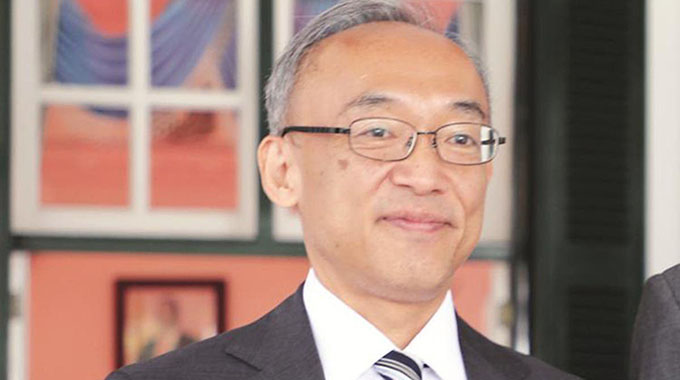
Fungai Lupande-Mash Central Bureau
The Government of Japan continues to support Zimbabwe in addressing maternal death and promoting sexual reproductive health and rights as eight women die each day in the country during pregnancy, child birth and 42 days after giving birth. Japan has channelled more than US$1, 4 million to the United Nations Population Fund (UNFPA) towards improving access and referral to health service.
Through the funding Japan is providing support to improve the provision of maternal care services within the Covid-19 response . The support extends to procurement of ambulances, medical equipment, personal protective equipment (PPE) and expendable supplies to manage obstetric emergencies. Japanese ambassador to Zimbabwe Mr Satoshi Tanaka addressed journalists during a media training on reporting on gender-based violence and sexual reproductive health and rights organised by the Zimbabwe Union of Journalists and partners.
He said development can only take place when all members of society are involved, empowered and contribute towards the good of their own community.
“The Shona say, musha mukadzi (a woman makes a home), women take care of everyone at home and bring up the next generation,” said Ambassador Tanaka.
“And yet women and girls cannot access the necessary sexual and reproductive health services while many find themselves victims of GBV.
“No woman or girl should ever have to experience sexual abuse or lose life during pregnancy or giving birth. Achieving a gender-equal and inclusive society is not only an issue for Zimbabwe but world-wide.”
He said Japan is striving to create a gender-equal society in the business, manufacturing and political sectors.
However, they are experiencing a shrinking population and aging workforce as people in Japan are having fewer and fewer children.
Ambassador Tanaka said there is an urgent need to increase their workforce to sustain the economy.
“One way the Government is doing this is by providing incentives for more women to join the workforce. Having more women playing an active role in all aspects of society will be indispensable for Japan’s long term development,” he said.
“Japan utmost priority is to support Zimbabwe to achieve gender equality. We are funding a centre for women’s safety at Overspill market in Epworth.
“We are supporting the construction of a clinic for GBV survivors at Mpilo Central Hospital in Bulawayo which will be a one-stop child friendly clinic for sexually abused children and women.
“To help in saving the lives of pregnant women, we handed over medical and hospital equipment to ensure that expecting mothers receive the necessary care while giving birth.”
Speaking at the same workshop UNFPA country director Dr Esther Muia thanked Japan’s support in Zimbabwe to avert maternal death and GBV which are a stumbling block to development.
“The Government of Japan is supporting the strengthening of comprehensive emergency obstetric and neonatal care in COVID19 hotspots in Zimbabwe,” she said.
“Your support is valuable and has started making a difference to beneficiaries.”
She said GBV is another pandemic and at the heart of the UNFPA mandate they want to change the lives of women, girls and young people.
“This will change the lives of people in Zimbabwe in a special way. Women bring life into this world but it is sad that women are still dying while bringing forth a life,” she said.
“Although there are signs of a decline in maternal death, the number of women dying while giving birth remains unacceptably high at least eight women dying each day.
“The COVID19 outbreak has made our efforts in ending maternal death and GBV more difficult but we remain committed to ensuring safe motherhood.”
She said GBV remains a huge problem in Zimbabwe and a 2015 Zimbabwe Demographic Survey confirmed that one in every three women aged 15-49 experienced physical violence.
GBV is a grave violation of human rights, particularly the right to dignity, personal security and bodily integrity, she said.
“COVID19 induced lockdown caused women to fail to access SRHR service, GBV cased escalated, and teenage pregnancies increased,” she said.
“The media is the first entry point into information to communities, politicians, partners and to the world. It is important that whatever we do is in the positive limelight.
“Report issues on gender based violence, sexual reproductive health and rights non-sensational. Pick up the negative and report in a positive way so that we give hope and not dismay.”


 Online Reporter