admin
admin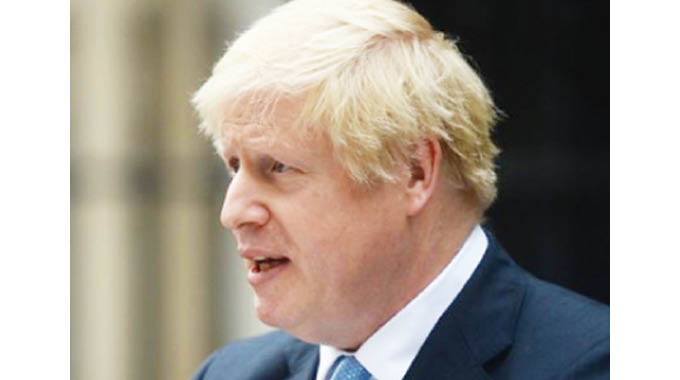
LONDON — Boris Johnson’s call for a Christmas election has finally been granted, with opposition parties agreeing to his demand for a new vote on December 12.
On paper, it might look like the Conservatives will comfortably win the next election, putting them into power for another five years, and giving Johnson the numbers he needs to force Brexit through parliament.
A recent Opinium survey, for example, put the Conservatives on 40%, 16 points ahead of Labour on 24%, with the Liberal Democrats on 15% and the Brexit Party on 10%.
That indicates enough support, in theory, for the Conservatives to win a comfortable majority.
However, in reality, Boris Johnson has taken a huge gamble by calling an election which could end either in triumph or disaster for both his government and the entire Brexit project.
That’s because the Conservatives are almost certain to lose multiple seats as Remain voters who backed them at the last election abandon them and move to support anti-Brexit parties instead. To compensate for those losses, the Conservatives are confident they Labour-held seats where the Conservatives have never won before.
If he fails then Labour leader Jeremy Corbyn will become prime minister and the UK will head for a second referendum which most polls suggest Remain will win. So can Johnson’s strategy work or will it all go badly wrong? Here’s everything you need to know about the key battlegrounds and how they will decide the next election.
There are 13 Tory MPs in Scotland, but the Conservatives could lose all of those seats.
A YouGov survey in September, which was conducted across the 13 constituencies, indicated a 14% drop in the party’s vote share in those seats, from 44% to 30%. The Scottish National Party’s vote share, meanwhile, was predicted to rise from 34% to 42%.
That’s because the majority of Scottish voters voted to Remain in the EU and are increasingly disillusioned with the Conservative Party’s push for a hard Brexit.
The Conservative vote share will also be damaged by the departure of Scottish Conservative leader Ruth Davidson, a popular figure who softened the party’s image and was credited with the party’s unexpected success north of the border in 2017.
The Conservatives are likely to lose seats to the ultra-Remain Liberal Democrats and Labour, who have called for a second EU referendum.
The Lib Dems plan to campaign relentlessly on Brexit and have even pledged to revoke Article 50 altogether if they win a majority. They don’t expect to win a majority but hope the message will help them pick up Remain-voting Conservative seats, as well as traditional strongholds in the southwest which they lost to David Cameron in 2015.
The party also hopes to win ultra Remain-voting seats in urban areas, particularly in London. That is why they have picked high-profile MPs who defected to the party from Labour and the Conservatives this year to run in Conservative-held London seats which voted to Remain. That includes Labour defectors Chuka Umunna running for the City of Westminster seat and Luciana Berger running for Golders Green & Finchley.
Johnson also faces a squeeze on the other side of the political spectrum. Nigel Farage’s Brexit Party, which advocates a no-deal Brexit, is currently polling on as much as 10%.
While Britain’s first-past-the-post system means Farage’s Brexiteers are unlikely to pick up many seats, they could steal enough Conservative votes to deprive the Tories of a majority in seats where they otherwise might have won.
Johnson wants to run a “people vs. parliament” campaign arguing that the current crop of MPs has done everything it can to block Brexit.
He will insist he has negotiated a good Brexit deal while Jeremy Corbyn has delayed and pushed for a second referendum. He is relying on polling that Labour voters who backed Leave could be tempted to back a Conservative leader.
The Conservatives hope that strategy will pay off and have identified between 30 and 40 marginal seats which they believe are key to winning a snap election, the Telegraph reported.
Most of those seats are Leave-voting areas in northeast England and the Midlands. They include Bishop Auckland in County Durham, where Labour has a majority of 502, and Stockton South, where Labour’s majority is 888, as well as Barrow & Furness, Dewsbury, and Wakefield.
Conservative strategists believe that potential gains made in those areas could offset their losses in Scotland and the south.
A split Remain vote between Labour and the Lib Dems could also help them win ultra-marginal seats. — AFP


 Online Reporter