Online Reporter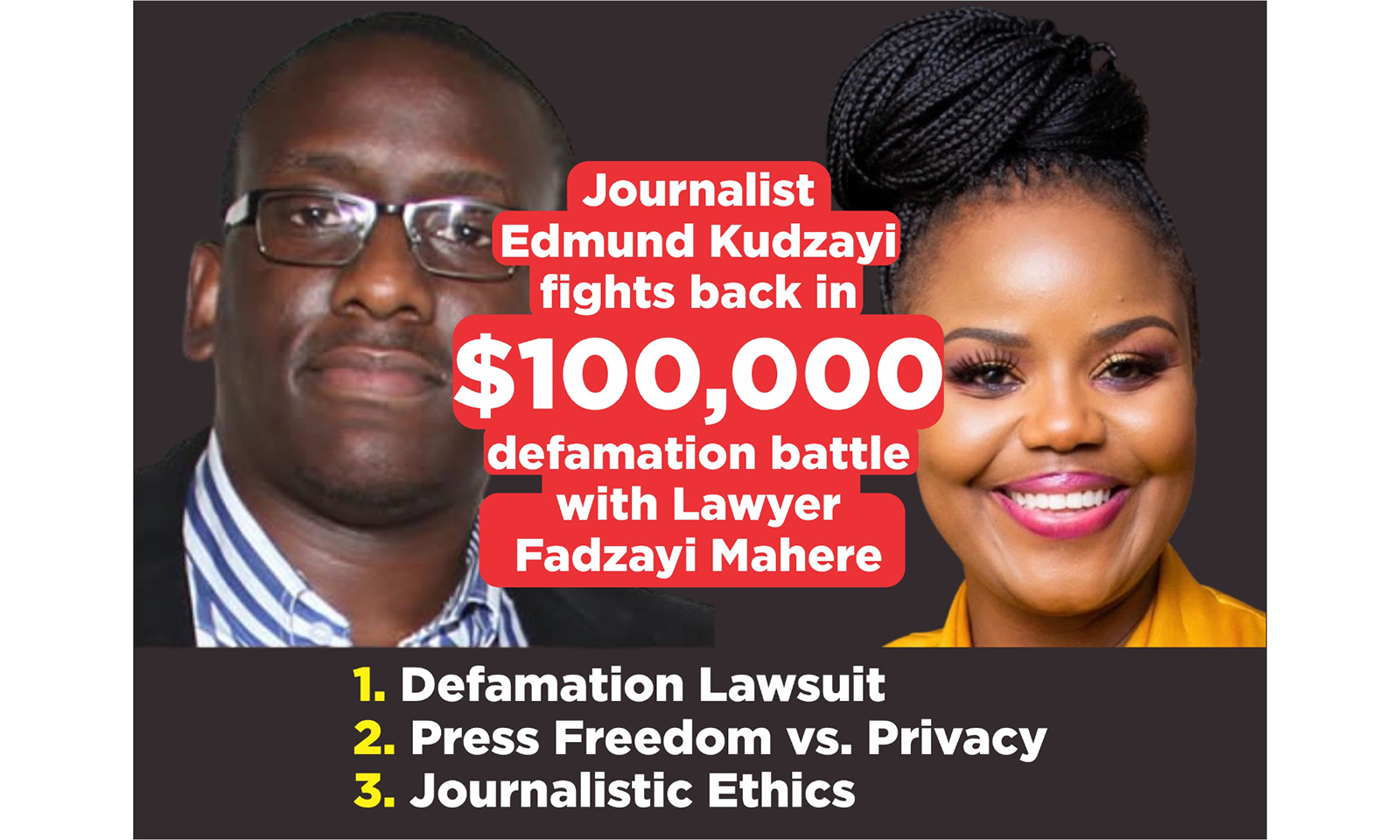
Fidelis Munyoro
Journalist Edmund Kudzayi has vowed to overturn a High Court ruling that ordered him to pay former opposition legislator Advocate Fadzayi Mahere US$100,000 in defamation damages.
The court’s decision, stemming from allegations published on the Kukurigo online news platform claiming Mahere had an affair with businessman Tinashe Murapata, has ignited a fierce war of words and legal maneuvers.
Kudzayi, who was also slapped with an order to pay legal costs, has come out fighting, warning Mahere against celebrating too soon.
“That episode is past. We now enter the real legal contest in Zimbabwe’s High Court” Kudzayi declared.
The journalist said he will file an urgent application for rescission, promising a fierce legal showdown.
Kudzayi’s main contention?
He alleges that Mahere misled the court in her condonation application by swearing under oath that she had applied for a pre-trial conference, a claim he says is unsupported by court records.
“The High Court record shows no such application. The Rule 49 documents that must accompany a pre-trial conference request are absent; that silence is conclusive evidence of fabrication,” Kudzayi argued.
He claims Mahere’s “misrepresentation” revived a case that had already been struck off the roll twice.
The defamation case against Kudzayi is centred on a story published by Kukurigo, which he runs.
The article accused Mahere of having an affair with Murapata, a businessman whose marriage allegedly collapsed as a result. The story included pictures of Mahere and Murapata at public events and claimed that WhatsApp messages between the two exposed their alleged relationship.
Mahere has categorically denied the allegations, calling them defamatory, baseless, and not in the public interest. In her court filings, she argued that the article sought to tarnish her reputation, portraying her as unethical and unprofessional. She also emphasised her right to privacy and insisted that public figures are not fair game for baseless speculation about their personal lives.
Kudzayi, however, is not backing down. He insists that the article was a legitimate piece of investigative journalism grounded in truth and professional ethics.
“This was no speculative piece,” Kudzayi said in his spirited High Court defence. “It was a carefully crafted narrative supported by solid evidence.”
He also dismissed claims of malice, pointing out that Mahere had been given an opportunity to respond to the allegations prior to publication. According to him, this open channel of communication undermines any suggestion that the article was driven by spite.
The battle is far from over. While Mahere has secured a default judgment, Kudzayi’s planned application for rescission could reset the legal stage. Under Zimbabwean law, default judgments cannot be directly appealed but can be challenged if the defendant can show valid reasons for failing to respond to the lawsuit.
Should Kudzayi’s rescission bid fail, his only recourse would be to appeal to a higher court.
As the courtroom drama unfolds, the case has gripped public attention, raising critical questions about the subtle balance between press freedom, privacy and accountability.