Online Reporter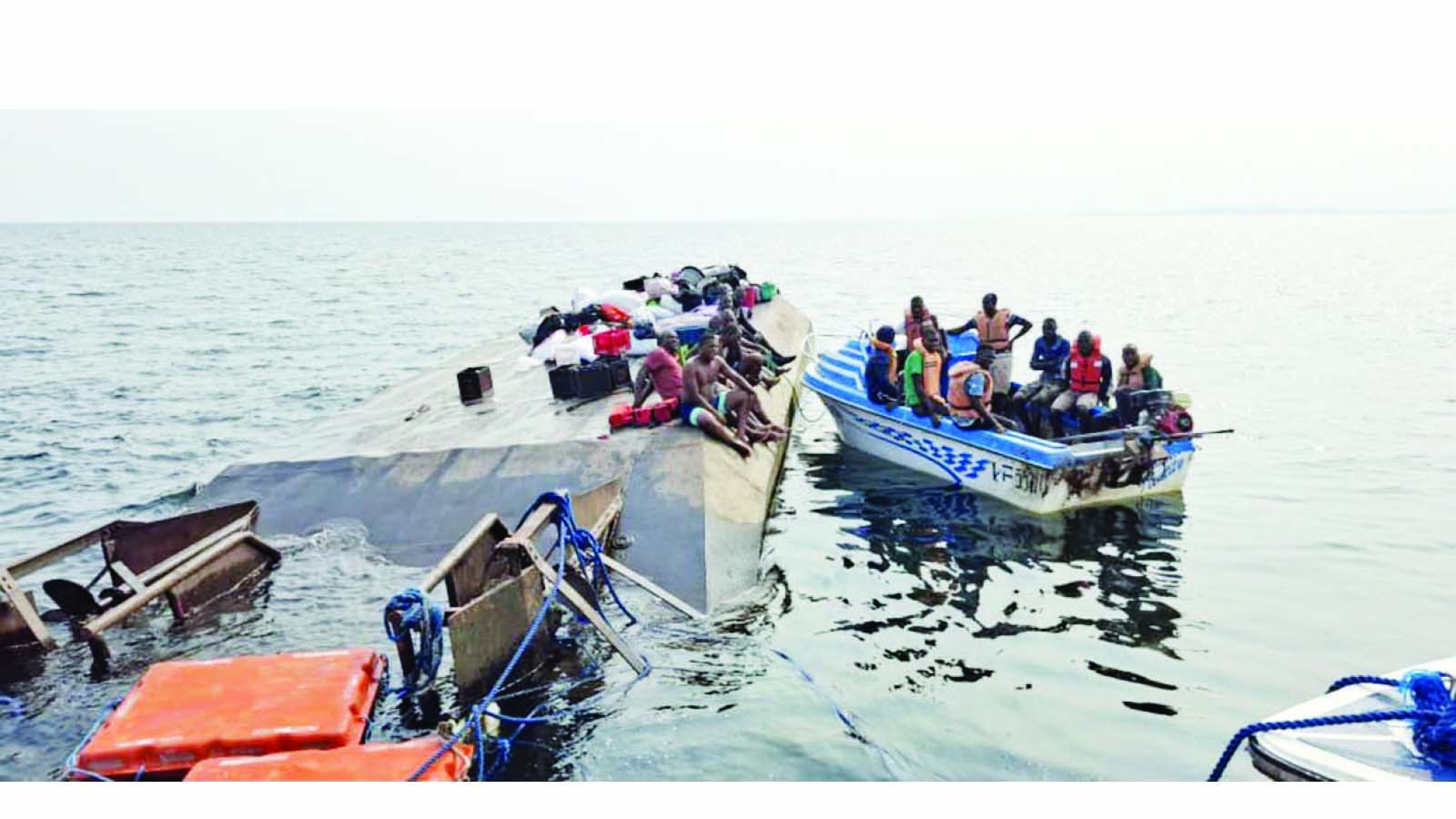
Walter Nyamukondiwa
Mashonaland West Bureau Chief
THE tragic Kariba ferry disaster made headlines across the world as the death toll reached 44 at the close of efforts to account for missing passengers yesterday.
The tragedy has sent shockwaves far beyond Zimbabwe, dominating coverage across some of the world’s leading news platforms, turning a local disaster into an international story of heartbreak, loss and unanswered questions.
Police were still ascertaining the exact number of passengers on the ferry, which a member of the crew put at 153 in an interview with ZBC yesterday morning.
Thirty-one bodies were recovered yesterday alone as subaqua units from the Zimbabwe National Army and the Zimbabwe Republic Police intensified efforts to locate and retrieve the victims’ remains.
Rescue teams worked around the clock to pull bodies from the water, but officials say the chances of finding anyone alive are now slim.
The identities of the deceased have not yet been released pending notification of next of kin.
Rescue personnel spent much of the day combing the waters and the teams will regroup and assess the situation before resuming search and recovery operations this morning.
The sunken boat was drifting with the wind as shown by increased depth from when divers started rescue efforts in the morning.
“We started at a depth of 51 metres in the morning but by end of day the boat was now at a depth of 74 metres,” said a diver at the scene.
Diver Craig Hall assessed the position of the boat and determined that it could be towed to Long Island, which is now further from where the boat is.
Goods and wares recovered from the scene were loaded into boats and transferred to mainland Kariba.
Meanwhile, it has since emerged that long before the Mbuya Nehanda Ferry tipped over in the dark waters of Lake Kariba, its passengers had already read the signs.
The winds were up. The lake was restless. And one by one, as if the water itself was giving warning, the boat began to lose its cargo – a battery and inverter destined for Mola, swallowed by the waves even as passengers were still boarding.
It was the first of several omens that survivors say went unheeded, in a tragedy that has now claimed 44 lives and left dozens more mourning missing relatives.
A warning ignored
Itai Marumisa, who had travelled to Harare to buy groceries and wares to resell in Mola, said she and fellow passengers confronted the boat captain even before the vessel left the harbour, unsettled by the strength of the wind and the loss of the battery and inverter into the water.
“We just felt that there was something wrong with the journey because the winds were already strong,” said Marumisa.
She said the captain brushed aside their concerns, telling them he had worked on the lake for many years and knew the winds would subside.
“A box containing a battery and inverter fell into the water and we told the boat captain that we should not proceed with the journey, but he went on to say a prayer for journey mercies. He ignored our plea, and that was to be the same thing along the journey,” she said.
The lake, it seemed, was not finished sending its warnings. As the wind strengthened further, a bag was swept overboard. Then a case of opaque beer. Each time, passengers grew more anxious. Each time, the captain urged calm, insisting the journey would continue.
By the time the ferry was still at the harbour, water had already begun seeping into the hull – a detail Marumisa said should have been the clearest sign of all that the vessel was not fit to sail into the deteriorating conditions.
Fellow survivor Friday Munenga, of Dobe Village in Mola, said passengers had repeatedly pleaded with the captain to turn back or seek shelter at a nearby island as the lake grew rougher.
“We left the harbour and before long we highlighted to the captain that the conditions were not suitable for us to continue with the journey. We suggested that we dock at a nearby island, but he insisted on continuing with the journey, saying that he had traversed the lake for many years,” said Mr Munenga.
The final moments
As the ferry pressed on into worsening weather, a passenger identified as Mrs Magadaire began making frantic calls for help – first to African Parks, then to Tiger Bay, then to Bumi Hills – pleading for assistance as the vessel took on more water. Even as the boat began to sink beneath her, she kept calling, repeating her appeals to an African Parks representative until the very end.
Then the boat tipped over.
In the chaos, the few life jackets on board had mostly been handed out to passengers on the upper deck. Those below, with no time and no equipment to save themselves, had little chance of escape – among them, Mrs Marumisa fears, are many of those still unaccounted for.
She herself was swept away from the sinking vessel by the current, but stayed afloat in the open water for close to an hour before a helicopter found her.
“I was one of two people to be rescued by the helicopter, which pulled us out of the water,” she said.
How the alarm was raised
Kariba District Development Coordinator Mr Rodwell Mutetwa said the distress call had reached authorities around 1pm, prompting the district Civil Protection Unit to move quickly to mobilise a response.
“We quickly mobilised the Zimbabwe National Army Boat Squadron and other stakeholders. We are grateful that African Parks provided a helicopter which helped in the rescue of several people,” said Mr Mutetwa – the same helicopter that would later pull Mrs Marumisa from the water.
At Kariba District Hospital, medical officer Dr Godwin Muza said 12 survivors remained admitted and in stable condition, with clinical tests underway to assess their full health, while a further 67 people rescued from the wreck are being housed at Mahombekombe.
Mashonaland West Provincial Affairs and Devolution Minister Cde Marian Chombo said Government had mobilised a whole-of-Government, whole-of-society response to support those affected, and confirmed that President Mnangagwa had since declared the tragedy a national disaster.
“A death is one too many, and having 44 people of varying ages losing their lives is a bitter experience we are struggling to cope with as a province and country,” said Cde Chombo.
Picking up the pieces
For Marumisa, survival has come at a devastating cost. The groceries and wares that were her livelihood – bought in Harare to sell in Mola – are gone, swallowed by the same lake that nearly claimed her life.
“I am a single mother and shudder to think how I will be able to pick up the pieces and look after my children – getting wares in Harare and selling them in Mola was my source of livelihood,” she said.
Her story is one of dozens now emerging from Kariba, as survivors like Tatenda Sianjeme of Mola and 18-year-old Tanaka Marire give their own accounts of a journey that many say they knew, almost from the moment it began, they should never have taken.