admin
admin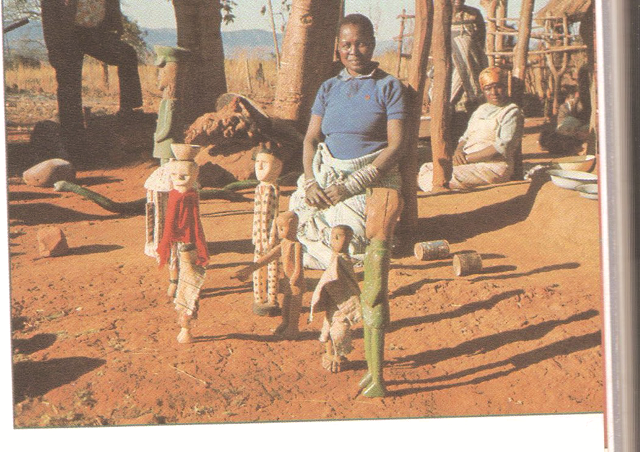

Phathisa Nyathi
WE are quite alert to the fact that there are people out there who may never appreciate that so monumental a cultural edifice such as Great Zimbabwe had some link or association with the fertility complex. This is quite understandable when African Cosmology, African Thought and African Worldview are not centred. Equally, least appreciated is the importance and role of fertility in guaranteeing the continuity of the human species within both the earthly (material) and cosmic (spiritual) realms.
The two realms together constitute the sites where the unending cycle of life is played out. As pointed out in an earlier article, there are critical stages that power the life cycle to unendingness, namely birth, attainment of puberty and death. The threesome stages complement each other and power continuity of life, provided it is appreciated that death is not the end of life but an important transitional stage to more eternal life in the spiritual realm.
Unless African ideas regarding fertility or eternity of humankind are taken on board in the interpretation of the Great Zimbabwe Monument, it simply will not make sense of the overarching theme or the fertility complex, a fertility complex that is expressed in various aspects of the monument; ranging from unearthed figurines, architecture, decorative motifs and sculpture.
All these artistic expressions complement and reinforce each other. It would, for example, be naïve to identify the fertility complex only in figurines and fail to go beyond and identify same in architecture, the design of stone walls, sculpted objects such as the soapstone Zimbabwe Birds and lithic artefacts which are the subject of this installation.
We continue exploring the arts of the Venda as we hope to derive clearer understanding of Great Zimbabwe with the former having more explicit links with attainment of puberty and its related rituals. Related figurines were retrieved during excavations at Great Zimbabwe but their presence is generally not organically linked to the other representations and expressions resident at Great Zimbabwe.
Edward Matenga (Dewey 1997) eloquently and in our view, accurately interprets the significance and meaning of the figurines. He however, confines the fertility complex he posits to the figurines and does not identify same beyond the figurines. It is our view that what Matenga (Dewey 1997) has unpacked regarding the figurines is expressed elsewhere within the Great Zimbabwe cultural edifice. For now, we shall explore expressions of fertility within the context of figurines as found and used among the Venda. It is our argument that Great Zimbabwe is thematically linked.
Nettleton in Dewey (1997) identifies three phases in the initiation for women. The first phase known as Vhusha marks attainment of puberty. This is when a girl has attained biological maturity when women’s lives are characterised by the menstrual cycle which, in cultural terms, is linked to the lunar cycle, making women more natural than their male counterparts.
Whereas this stage is natural, it is nevertheless rendered in cultural terms by being so understood and interpreted. There is thus, as expected, cultural diversity in the manner in which diverse communities deal with the stage of puberty. This applies to both girls and boys.
Attainment of the puberty stage is critically important in powering the unending cycle of life. Attendant rituals and ceremonies should be viewed and appreciated against this background. If, at the end of the day, a culturally moulded being is to be produced, there has to be so well thought out educational curriculum to go together with an otherwise biological process. As expected, there is indeed cultural pedagogy that is crafted for initiates.
Only when puberty has been attained can there follow the next phase known as Tshikanda which marks the transition from puberty to womanhood. The bridge between puberty and womanhood is important. It is women who, through the womb, bring forth the young who provide the link between the departed ancestors and the living.
It is women who nourish growing babies in their wombs and continue to do so after birth by suckling them. The processes that we are referring to here are biological and yet they are infused with cultural content. Individuals are both biological and cultural entities.
After puberty a woman enters marriageable status when the Domba phase is reached. “At these initiations clay figurines were used to educate girls in various aspects of women’s duties of marriage, sex and childbearing as well as to teach respect for their elders and Venda cosmology and history. The clay figurines were generally made by women and shown to initiates in secluded ceremonies and from which uninitiated women and men were barred (Dewey 1997:171).
What emerges quite clearly here is the fact that the stage of puberty was accompanied by teaching and learning. The Venda knew the role of aids in pedagogy. The figurines ought to be understood as pedagogical instruments to facilitate easier grasp of otherwise abstract ideas and concepts.
Figurines reduce the abstract to the concrete, a level that facilitates ease of learning as concepts are better grasped when reduced to that level. Teaching aids are usually of a life size. Sometimes they are miniatures of their real life. It would be unimaginable to teach sex without recourse to concrete miniatures of sex organs.
Should we therefore wonder that among the Venda there were miniature figurines with exposed sexual organs? Equally, should we wonder about the presence of phallic (relating to or resembling a phallus or erect penis) objects at Great Zimbabwe? Should we be surprised to find a soapstone cylinder with a central hole? There simply had to be representations and expressions of male and female figurines to cater for both male and female elements.
Effective, sustainable and meaningful teaching which guaranteed learning had to have these figurines all related to the puberty stage when roles of womanhood and manhood were taught to the initiates.
Great Zimbabwe was unique in that structurally the sexual ambience was captured. The Conical Tower was a bigger than life representation of a phallic object which was used as a teaching aid.
The fertility complex was symbolised and expressed architecturally through the Conical Tower while an enclosure symbolised and expressed the female element. This may suggest that the structural male and female elements were not explicitly taught to the initiates.
As the content of the subject being taught was culturally taboo, it is not surprising that the figurines were hidden away and only revealed to the initiates during reaching. Sex never belonged in the public domain among Africans. Ethics and morality forbade it. Thus at the structural and architectural levels sexuality was camouflaged and hidden, just as was in the rendition of the fertility complex through the image of Zimbabwe Birds which artistically concealed their true nature, representation and expression; all to do with the fertility complex which is the overarching and overriding theme expressed in several aspects of the Great Zimbabwe Monument.
The macro and micro levels complement and reinforce each other in expressing the fertility complex resident at Great Zimbabwe.
John Mbiti aptly expresses the stage that initiates have reached, “During that period a person goes through physical, emotional and psychological changes, which take him from childhood to adolescence and adulthood (Mbiti 1975: 86). Mbiti goes on to identify one of the rites that takes place after attainment of puberty, namely circumcision among boys and clitoridectomy for girls.
The former involves the cutting of the boy’s foreskin and the latter involves cutting of part of a female organ, the clitoris. Both are accompanied by excruciating pain and, in this regard, remember the funnelling narrow passage, the razor and forceps. Despite the pain, all individuals who reached puberty had to undergo the ritual which integrated then into the community, where they played their part in adult life including the powering of the unending cycle of life.



 Temba Dube