Chronicle Editor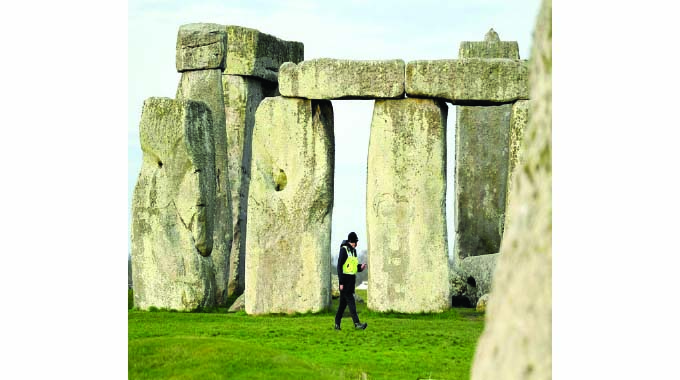
TODAY we conclude the story of the link between water and spirituality. Our interest lay in seeking to understand African ideas regarding water and spirituality. This we did as a way of approaching a cultural feature at Stonehenge, namely a ditch which contained water.
When we seek to interpret the presence of a deep ditch surrounding and being an integral part of Stonehenge cultural heritage, we should be having some requisite interpretive arsenal to have a go at interpreting and deducing the presence, not so much of the ditch, but of the commodity in the ditch and that is water.
This answers the question we posed about the importance between the contents and container, the water and the ditch.
In the first article that sought the link between water and spirituality, water was perceived as the source and support for the sustenance of life on earth. This critical role of water convinced some communities to view it as a sacred and divine commodity.
It was also viewed as the realm for the spirits and God. There are other roles, bordering on spirituality that water plays. For now, we are interested in African experiences which we argue, the ancients in other parts of the world also shared.
Representations of water are embedded in spirituality, religion, rituals and legends. With that given, what remains now is to demonstrate the applications of water in the various domains where its representations are manifested. Its role goes beyond it being the source and sustenance of life. There are communities who, in their spiritual reckoning, view a world with spiritual impurities, defiling conditions and malevolent forces.
These are conditions that militate against the proper functioning of spiritual power. As a result, the negative conditions ought to be eradicated to allow for the proper manifestation and articulation of spiritual power and potency. The one substance that has the power to achieve this is water, in particular blessed water. On altars, water is sprinkled in order to rid them of spiritual impurities prior to sacrifices, offerings and libations being presented to the deity or spirits.
During initiation, water is used to rid initiates of any internal impurities that they might have. In next stage the individual should be spiritually pure, uncontaminated and unpolluted. They must undergo spiritual cleansing to accompany their spiritual transformation. Spirit operates within an environment that is free from impurities.
Sprinkling of water during burial rituals is part of cleansing the spirit before it embarks on a journey to the world of spiritual beings. When a corpse is cleansed, the idea is not to rid it of physical impurities but rather the spiritual impurities that may hinder the advance of the spirit to the realm of other spirits.
Among the Bambara, the initiates, once they have completed the process of initiation, are sprayed with water from a sacred pond near the chief’s village. Upon return to their homes, they are further sprayed with water from a local sacred well. Spiritual impurities may render an individual susceptible to attacks by illnesses and visitations by malevolent forces with disastrous consequences.
Spiritual initiates in Africa resort to frequent bathing in medicated water as a way of clearing impurities that hinder communication with the world of ancestors and God. This is done in conjunction with other methods of purification such as the use of smudging, the burning of herbs which produce cleansing and purifying smoke. The ambience surrounding the area of operation for the spirits must be free and pure in a spiritual sense. Water comes in handy in facilitating that process.
For its spiritual potency water has found its way into use during Voodoo ceremonies in Benin, Togo and Nigeria. Magical qualities are associated with water. Blessing water adds to its potency to create a spiritually conducive ambience for maximum operation of spiritual power. The positive spirits must be capacitated to fight and conquer the evil and malevolent spirits.
The Law of Opposites posits that where there are good spirits there are of necessity, evil spirits. In some Christian churches, baptism involves immersion in water. Water has a cleansing and purifying quality so that at the point of emergence above water the individual is transformed. He/she is purified and ready to enter the community of Christians.
Another quality of water is its perceived quality to heal. Research among adherents of the Zionist Christian Church (ZCC) water is used in the healing processes. The same is true among the Apostolic churches and indeed other non-syncretic Christian churches in Africa. Guta Ra Mwari (GRM) is one such religion which, in its spiritual healing, makes use of water in the subsequent, continuing and protracted process of healing, a method used to deal with illnesses of a spiritual kind. Their religion is viewed as a spiritual hospital.
Water derives from rain. Water as rain is an essential ingredient in the unending and eternal cycle of life processes. The environment undergoes a process of wake and sleep cycle. The period of rest, that is winter, is the period of accumulation of energy to be used during the period of maximum activity (wake). Accumulated energy is then released, to power the life processes which are operating at their maximum.
Water drives the cyclical processes which are rhythmic, periodic and regular. Winter is characterized by the absence of rain (water). The life processes are at their weakest in terms of activity. Grass shrivels, trees lose their leaves. Some cold-blooded animals go into hibernation. Death is being approximated where life is minimised and energy is reserved for maximum activity in summer.
This is a process of regeneration that is captured in the cosmos by the lunar cycle. The crescent moon waxes, and acquires potency in the process. It expresses regeneration through birth, growth, decay and death which is followed by rebirth and the cycle ensures the continuity of life. This is like regeneration which is initiated by rain.
The process of regeneration is important at the cultural level too. This is all the more important where spirituality is involved. I would have been surprised if Stonehenge, exhibiting spirituality the way it does, would be without water, not to facilitate the movement of wood posts or stone orthostats, but to augment the spirituality that is symbolised by a lot of things including stone, erect stones, stone circles, spirits in association with graves. Further, there is nearby the Avon River which seems to be an integral part of Stonehenge.
The one other complementing trait in a cultural landscape of that kind is sound. Unfortunately, sound is difficult to pin down in archaeological research. We shall refer to it when we return to Stonehenge.


 Online Reporter