Chronicle Editor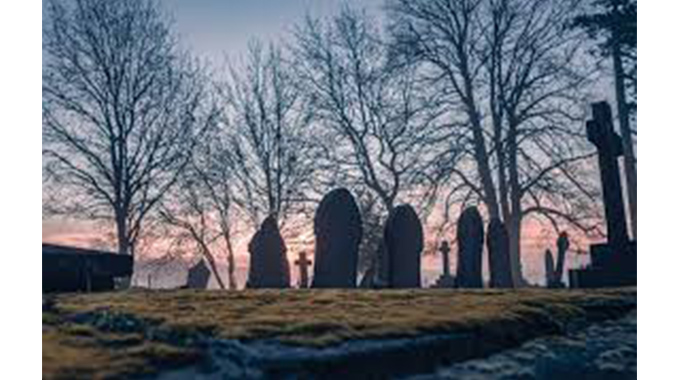
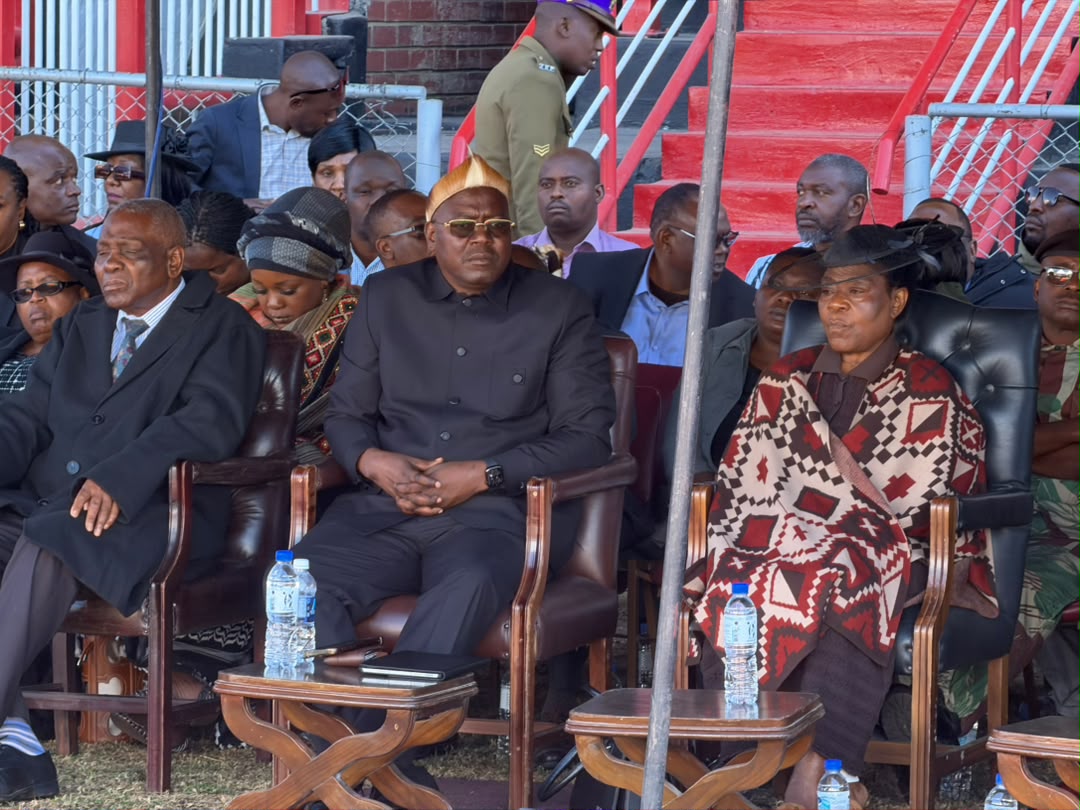
THE funeral lasted seven hours. Normally funerals commence and end in the early hours of the morning. Cars get to the communal cemetery with their lights on. This time it was not so.
The parched earth received some blessings from the heavens that led us all the way to Nswazwi Village under Mokelebela Ward in the Central District of Botswana. The heavy rains marked the end of a prolonged, hot and dry season.
Interestingly I had foreseen the heavy rains coming and consoled some few souls. Indeed, in two days’ time the heavens opened up. Even during the burial service, the rains continued pounding the parched earth and only ceased when the hearse transported the body of the deceased to the cemetery for interment.
I did comment that if such a funeral took place in Zimbabwe there would be several buses transporting mourners. It was not so here where several cars were available and transported those without cars to and from the cemetery.
I had been to this cemetery before when my nephew Dothodzo passed on. This time it was the funeral of his father, Thomas Mbise Chilambampani who married my sister Fideliah, also known as Jeranah, in 1964. Thomas, of the Shoko/Ncube totem was born in then Southern Rhodesia (Zimbabwe) in 1938 at a place called Jetjeni near Maitengwe in Bulilima-Mangwe District.
They originally had lived at Nswazwi in the then Bechuanaland (now Botswana). Their chief, John Madawu Nswazwi of the BaKalanga had picked some quarrel with the BaNgwato chief. That prompted him to seek exile in Southern Rhodesia (now Zimbabwe).
The colonial boundary separated people belonging to the same ethnic group — the BaKalanga. Chief Nswazwi died and was buried at Jetjeni. Only after Zimbabwe’s independence were his remains exhumed and repatriated to his ancestral home at Nswazwi in Botswana.
Some of his followers who had lived with him in exile accompanied his remains. One of these people was Thomas Chilambampani who together with his family relocated to Nswazwi Village.
I documented the history of the Nswazwi people originally of the BaPedi group some years ago and I tapped into the archives of my father’s son-in-law who himself was passionate in the same subject.
Each visit to Nswazwi turned out to be a lively lesson in history. The man was very fanatical about history to a point where before his demise, he had written down his biography that covered his birth, growing up at Jetjeni and attending school until he went to train at Empandeni Mission where he obtained a Primary Teachers’ Higher Certificate (PTH).
Proceeding to teach at Connemara Catholic School, there he met my sister who stole his heart. At the time, our school, Sankonjana in Kezi, did not offer education beyond Standard 3. In 1964, they tied the knot.
I need not belabour his history and that of the Nswazwi people. This time around, my mind was focused on the theme that I am pursuing these days, namely African Cultural Astronomy.

My sister informed me that her late husband had written down a will where he gave instructions that four head of cattle were to be slaughtered to accompany him when he passed on. I have argued before that language is a repository of a community’s cosmology, worldview, thought, beliefs and philosophy.
Language is a vehicle for communication and expression. What it stored was for a purpose, to benefit future generations in terms of knowledge, technology and skills. What was archived in the form of language is retrieved through the same medium-language.
This takes us to the belief system that Thomas Chilambampani embraced. To him death was not the end but rather the beginning of a journey to the spiritual realm. The material component is interred in the ground or disposed of according to a community’s cultural practices, traditions and thought.
What is relevant here is the fact of travelling and that the travelling spirit must be accompanied. Quite often, there are grave objects that constitute part of the possessions that the deceased used in life.
When the body lay in state, I observed some elderly women who carried some plastic container in which was a cup and spoons. These were grave or funerary objects meant to accompany the spirit of the deceased.
The voice of a dead person is a voice of the spirit and should not be disobeyed. Indeed, four beasts were slaughtered as per instructions of the man who knew that there would be scores upon scores of people coming to console the bereaved family.
I also had the privilege to partake of the meat when we returned from the cemetery. The BaKalanga at Nswazwi have copied the traditions of the Batswana people. Among the Babirwa smaller game was treated the same way. Isiswayi, the mincemeat, is quite tasty.
The idea of a journey that commences after death is African. Spirit is perceived as eternal and undergoing a cyclical life in more than one realm.
The shorter part of that cycle is lived on Planet Earth. However, the real eternal aspect is beyond the earthly realm. Incarnation facilitates continuing life beyond the grave on earth.
Thomas was a practicing member of the United Congregational Church of Southern Africa (UCCSA) that formerly was known as the London Missionary Society (LMS) that was the oldest Christian missionary establishment in Matabeleland. Reverend Dr Robert Moffat was instrumental in securing a mission site at Inyathi from King Mzilikazi.
Death is the prerequisite for entry into eternal life. There are several rituals that attend death, as it is the exit from the earth and entry into the spiritual and intangible realm where life is eternal, passing through numerous stages of incarnation into life forms such as animals such as cattle, snakes (izinyoka). Ultimately, the spirit heads for a particular star after several processes of incarnation. In the bird stage there is flight to the targeted cosmic body. Birds become important as links or emissaries between the earth and the cosmos.
There is belief that there are conditions that may inhibit the smooth transition from the material realm (tangible) to the spiritual (intangible) realm. I remember well when some grandmother advised wailing women to stop the practice otherwise they were going to block the advance of the departing spirit.
The idea of transitioning from material earth to the spirit world is common among several African communities. This is true even among those who have embraced the Christian faith.
If Thomas were a king, we would have been saying the sun had set. A king takes the metaphor and symbol of a sun with its brightness, glamour and glitter. Further, the sun is a source of life. A world cut off from the sun that gives light is unimaginable. The link and connectedness between the earth and the cosmos is important. Food, as pointed out in some earlier article, contains energy from the sun. The green chlorophyll intercepts light, absorbs it and uses it in the process of food manufacture.
Simultaneously, an exit may serve as an entrance. In our case, that dual phenomenon is best expressed through death that doubles as exit and entrance. Interestingly, entry into the world is through the womb in the case of human beings and other animals. The positioning of the foetus in the womb is the same as that of exiting the material realm. This realisation and perception attend several rituals associated with death.
For example, at the communal Nswazwi Cemetery, virtually all graves were provided with materials to provide shade. In the majority of cases, there were metal frames that provided roofs of metal, some green synthetic sheeting and even tiles.
Once again, this is a material expression of a belief in the Duality of Being. It is not the bones and decomposing flesh that some shade is provided for. It is the spirit being that is being catered for. The spirit and body lived in marriage and from time to time, the spirit visits its former partner.
In traditional African communities, shade (umthunzi), was provided through planting trees that perpetuate themselves through vegetative reproduction/propagation. Branches of such trees develop roots. It is important to note that some dual purpose was served. The first was explained above, and related to the provision of shade where the spirit was being rested. There was yet another purpose. The tree branch did not dry up. Instead, it continued to grow.
The idea being embraced here is one of symbolic regeneration, from life to life. The spirit lived in the human material body. After death, it continues to live independently or as incarnated in various mediums, including human beings. In the next article, we shall seek a more elaborate explanation of the idea of transitioning and transforming that occur at death.
Within the segment of the earthly component of the unending cycle of life, there are marked stages that indicate transformation and transitioning. Birth is one such stage that was necessitated by a community’s belief systems and perceptions of life. Many ceremonies and rituals attend birth including its registration in terms of the lunar month and the year that gets its name from associated events that have taken place. We have previously written on these ideas and practices. We need not belabour the same issues.
As already explained above, the position in the womb of arriving individuals are repeated at death. It is positions or alignments within mothers, the main drivers of continuity, perpetuity, eternity and unendingness. Graves are dug into the earth, Mother Earth, the super Mother who nourishes not just the human beings but all living things on earth. Mothers. Mini and macro—mothers facilitate entry into the world and do the same during. In the latter case, the grave is the womb for the macro-momb.
The womb for the ephemeral or transient life, the foetus, is circular. The womb of eternal life (the grave in the earth) is also circular, at least among the Ndebele people. It is also true of other African communities who share the same cosmology that dictates embracement of comparative cultural designs. Perceptive minds are needful if such manifestations and expressions are to be realized.
Thinking along these lines posits pregnancy at birth and at death. Both result in life. It may not be that obvious to some people that the pregnancy of Mother Earth leads not to ephemeral or transient life but to eternal life that is expressed as unending cycle of life.
It all adds up and ends up to some unity where energy, science, spirituality and art combine and coalesce to express unity at the apex and pinnacle of being. In the next article, we shall revisit the idea of wombs as seen through some cultural practices of the BaKalanga at Nswazwi. This we shall unpack through observation of graves and what occurs soon after burial. I will argue that the cultural practices are underpinned and informed by Kalanga thought, worldview and beliefs. Indeed, other African communities posit what the BaKalanga posit.


 Online Reporter