peter
peter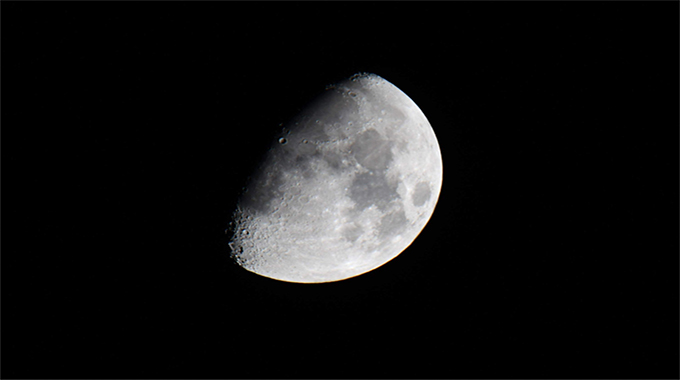
IT seems the moon loves to “die” in style. Dying may have different meanings and layers. In the first instance, the moon disappears from the sky. The day when this happens is said to be a black day, ngelimnyama.
The day is attendant with many observances and taboos (amazilo). That death refers to least potency, the lowest level of life for the moon. These lunar states inform and underpin various cultural taboos and limitations.
This kind of death is related to the lunar cycle and its waxing and waning, which translates to increasing or diminishing potency. On that, in that day, the moon that does not emit light of its own, is not reflecting light from the sun to places where it is not visible.
It is this invisibility due to its movement and relative position to the sun and earth that makes some African communities to regard the moon as having died. We could term it symbolic or figurative death.
Then there shall come a time when the moon will die literally. It will cease to exist by whatever means. The moon is inanimate but in African conceptualisation, it is considered as having a life of its own.
This is life in a stone, in glass, in a car and indeed, in all objects in the universe. This concept is brought out in African languages. “Khulu, who killed your car?” My nephew Londisizwe Vusamakhumalo posed the question when one day I returned home without my car.
He was viewing things through African cultural lenses where everything is regarded as having a life of its own, be it animate or inanimate. In IsiNdebele, a glass of water may drop and die. Similarly, a car dies.
My nephew was thinking as an African but using a different language, English, which does not share the same concept of death. A stone, a car, a glass all die in the African context. One day the moon will die literally after its several symbolic deaths. “Imota ifile,” we say in IsiNdebele.
From the question posed to me it suggests that death has some agency. It just does not happen. Hence the question, “Khulu, ngubani obulele imota yakho?” No wonder, when a family member died, the relatives took steps to find out who was behind the witchy act. It seems to me there are several layers in the concept of death according to the worldview, cosmology and beliefs of a given community.
Language expresses a people’s beliefs and perceptions regarding their immediate environment, both human, flora, fauna and a lot more. The extraterritorial world is not excluded. Where a language is imposed on a people, the imposition is far reaching and deep-seated.
Back to the moon which “dies” every lunar month. At the time of death, some communities have observed associated changes in weather. In fact, during the summer months, rain may fall. That was expected and when that did not happen, it was suspected the season would be characterised by rain.
The expectation was that the death of the moon would be shrouded in rain-bearing clouds as if the clouds were condoling the moon’s relative. Only when the moon was advanced in its waxing, would the moon become visible when the rainy conditions subsided. The moon would be white clean. The rains bathed the moon. “Liyigezisile,” the Ndebele people would say.
The period associated with lunar death is attendant with several cultural taboos, observances and limitations. Lunar potency is low. Reflected solar energy is low. People depending on spiritual work are not at their best performance. Rituals are held in a manner that shows some direct proportion between the moon, and the timing for the performance of rituals. The waxing moon is gaining more life, and more energy.
The behaviour of the moon as it waxes and advances from a crescent towards a full moon is reminiscent with the advancing pregnancy in a woman. After all, the link is already existent in terms of the lunar and menstrual cycles. Their rhythms are comparable regarding their periodicity and regularity.
Even in the dry winter season when the moon dies there is evident change in weather, if one cares to observe. Temperatures may drop. Windy conditions may prevail for the duration. The moon seems always to announce its impending death with accompanying changed weather conditions.
When the moon continues to wane those in the know in terms of Ancient African Science (AAS) may link that progressing state with the life of a targeted individual. The linking of a declining lunar state and that of an individual targeted by persons (witches/wizards and traditional doctors) endowed with spirituality is a very important principle in AAS.
Waning of the moon leads to its certain death. Every month it wanes and ends up dying. This analogy is used symbolically to effect death. This is an important principle in AAS. When the moon is waxing the opposite applies. A gifted spiritualist will link the health condition of a person to the waxing moon. As the moon waxes it gains life, it gains potency.
It gains health. Its waxing status, when linked to the health condition of a sick person, there is positive development health wise.

A setting cosmic body may portend declining life and even death. For example, the Ndebele people will say, “the sun has set” to refer figuratively to the passing of a king. In the early 80s, I interviewed one Ndlumbi Mahlangu who was young at the time King Lobengula deserted his capital.
He was in the party that followed the king. Word came to them, “Do not proceed any further, the sun has set.” Indeed, they returned to face the ugly face of colonial domination. Of course, we know that the sun had not set. It was a simple way to convince the followers of the king to return home.
Sunrise is the opposite. The condition symbolises life. Reference to the installation of King Mzilikazi was couched in terms of a rising sun. “Ilanga seliphume endlebeni yendlovu…” Sunset is bad news whereas the same goes for the sun in terms of timing to tap into solar potency. When the sun rises and that cosmic phenomenon is linked to one’s power search, the chances for success are high.
The rising sun brings hope, of course if at some stage it will set. The setting sun as already pointed out signifies declining circumstances. The opposite is true of sunrise which enhances the circumstances of one whose situation has been linked to the changing condition of the sun — this time its rising.
“Ulibambe lingatshoni,!” This is a reference to the setting sun and some fatal warning to a targeted person. When it sets, it may mark the decline of the circumstances of the targeted one.
The setting of the sun is a given. Should one have one’s circumstances linked to the setting sun, one’s only hope for survival is to hold the sun and make sure it does not set. Its setting is tantamount to the setting of one’s life.



 Online Reporter