Vusumuzi Dube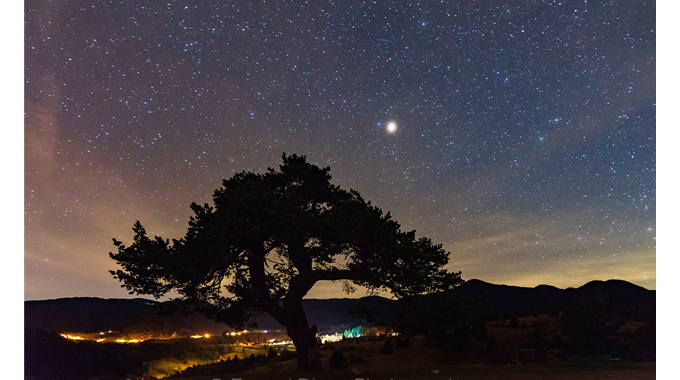
Cultural heritage with Pathisa Nyathi
Journey to the stars: The sun and royalty compared
KUSINWA kudedelwana. Dancers give each other chances to dance. This is a loose translation of the Ndebele saying given above. African dancers occupy the central enclosure within a circle. There comes a time when dancers get tired and have to exit the dancing arena to join others in the circle.
As has been said repeatedly, Africans had the circle in most of their physical structures, artifacts and performances. Here they were imitating the heavenly order and structure. The heavenly bodies are circular in design and move along elliptical paths. The circular design has thus defined African architecture, sculpture and indeed the performances.
This imitation or replication of the heavens on earth is what led to the well-known African adage, “As above, so below.” The observed cosmic designs were adopted in the African arts. Indeed, these constitute the elements of African aesthetics. The heavens are beautiful. The arts are equally beautiful since they mimic the heavens in terms of design. The heavens set the standards of beauty.
The likes of Pablo Picasso soon began to appreciate the beauty of African art. They realized that it was geometric and was informed by the cosmic design. The Picassos and other European artists adopted a naturalistic art tradition. They soon realized that African art embraced the intangible world that was important in African Thought. Spirituality had to be embraced and this presented challenges to interpreters of art.
This is what I argue in my latest book, “African Body Art: Aesthetics or Functionality?” What we see as San rock art is much more than just art, but functionality buoyed by art, In fact, there are many layers of meanings in rock art. That is the case with other African peoples. Some, I argue in the book, play the role of fortification in addition to primary embellishment.
Another book that I published a few days ago is titled, “Mhande,” a dance of the Karanga people. There again we come across the circle as influencing the arrangement of dancers and participants. In African dances, there are no spectators. Everyone has a role that they play. This sometimes presents challenges to African dancers when they have to perform to audiences that have assumed western traditions.

This is the case when dancers face drummers and give their back to the audience. However, for the purposes of this article the focus is on the central dancers. In some African communities, a dancer moves off the arena and touches a dancer in the circle. They actually swop positions. The dancer plays a different role and gives a chance to another person to move on to the arena and show off his or her skills.
Besides, as they dance, they do not compete. The fear was that competition led to jealousy, hatred and envy. Africans knew their abilities in terms of what they could do to a proud person who dwarfed them in performances. Ancient African Science (AAS) was resorted to and the one who sought to shine was fixed, jinxed and pulled down.
Yes, there were individuals who were adjudged as in a class of their own, “onkone abavele ngobuso emdibini.”
It was in consideration of such capabilities that drawings avoided close similarities to actual individuals including facial frown lines. That picture represented an individual and became his/her replica or identity. In a way, that was akin to genetics, that Africa has had knowledge and application of for millennia before Europeans discovered the subject of genetics. Such an identity is no different from one’s fingerprints, blood, hair and fingernails.
These are an individual’s DNA and can, using AAS, be manipulated to harm or heal an individual.
There were times when one died; his/her photograph was hastily removed from a wall where it used to grace the lounge. Africans are not stupid as some people are wont to think.
They knew the danger that would result when a skilled enemy got hold of that image that was unique to a particular person. An identity could be manipulated to inflict harm on the spirit of the deceased with serious repercussions on his relatives.
Well, we could go on and on with this genetic theme and how it has affected African ways of life. The less schooled in this subject see no more than superstition and paganism where I see craft, science and technology. Our focus in the current series of topics is African cultural astronomy. We are back to “kusinwa kudedelwana.”
In the night sky we see in the heavens numerous galaxies and constellations of stars. These are innumerable. They dance altogether as if they are in defiance of the Ndebele saying. “Kusinwa ndawonye,” seems to be the going adage. However, wait, and see a different picture emerge when a dissimilar adage dominates.
The dominant star takes over following dawn. It emerges as a scintillating and glaring look enticing crimson red stellar phenomenon. In due course, it discards the tolerable ambience and assumes a very bright, dazzling and glittering appearance.
When a king assumes the imagery of the sun, the sun has shed its sunrise allure and tolerance. It is now fearful and takes a unique and frightening appearance. At the same time, it invokes respect. Given the speed at which the other suns that we prefer to call stars exit the dance arena, the royal image is apt and relevant.

I arrived at this after observing that during the day the sun demands and gets attention after chasing all less bright suns. It is the king of the skies, of the heavens and the firmament. Kings cherish that, being a cut above the rest. They were not too far off the mark when they assumed that practical image of the sun.
When the king sun emerges, it is soft, quiet and is like a king who has just been inaugurated and is learning the royal ropes. Like the sun, the king performed a solo dance. Was it not King Mzilikazi of the Ndebele people who, among his numerous royal praises had this line, “unkone ovele ngobuso emdibini?” The others paled into cheering, chanting and ululating crowds. Like the sun, he was a cut above the rest.
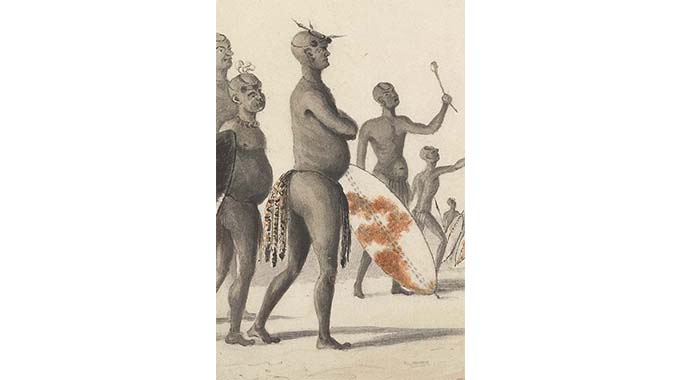
When he appeared on the dance floor, the lesser suns retreated. Even before the sun emerged above the eastern horizon, the other suns gave room to the domineering sun
Therefore, it was with the king. He emerged and transformed into one who assumed a powerful role, one both feared and respected just like the sun. Once he became powerful, he discarded the image of meekness.
He consolidated his power and built a large army of admirers and loyal followers. He was the white and glaring sun. He soon attained the zenith of his power before the inevitable decline.
That was marked by the loss, albeit slow in advance, of the white glare. He soon acquired the traits and characteristics of a rising sun. The warm, friendly crimson colour returned. Now the sun was lookable, at its best in terms of aesthetics and affability.
Accompanying the new image, was the loss of power and approaching sunset when metaphorically the sun was about to die. That marked the end of a king’s reign. The beginning and the end are comparable.
When the crowds that followed King Lobengula heard that the sun had set, the image and meaning were clear.
It was never said that the king had literally died. The imagery of the sun was once more applied. When a king ascended the royal seat, it was like a sun rising.
Towards the end of the king’s reign, the image was that of a setting sun. Indeed, that is how the Ndebele people perceived the fate of their king in December 1893. Hat is the image that I adopted when giving the title of a book that I wrote in relation to the flight of the “Ndebele monarch. Setting of the Sun: The Fate of the Last Ndebele Monarch, “that draws on various narratives relating to what happened to King Lobengula.
The narratives range from the fatalistic view of whites adopting a wishful stance to an ebullient Ndebele view that the king crossed the mighty Zambezi River to join his compatriots the Angoni of King Mpezeni I in Chipata, Zambia.
Therefore, we see some comparison between the sun and a king. Every year the Ndebele attended Inxwala rituals and ceremonies. The symbolism in these is captured in the book, “Journey to the Stars: Seeking to Understand African Cultural Astronomy,” which was published at the same time with “Mhande,” and “African Body Art: Aesthetics or Functionality,” which were published last week. During Inxwala, the king took centre stage. He was the centre of focus, just like the sun.
However, some compromise recognized where natural power resided-in women. The woman who took that honour was the chief queen, uMdlunkulu. During the time of King Mzilikazi, that honors rested on Queen Mwaka Nxumalo, the mother of Princess Zinkabi and Prince Nkulumane. F Following the complicity of the Khondwane Ndiweni-led chiefs, Queen Mwaka was killed and her role was played by Queen Loziba kaPhahlana Thebe, mother of Princess Lobhitshi King Lobengula was initially dancing with her sister Princess Mncengence, uNcence while awaiting the marriage of a senior queen. Queen Xhwalile the daughter of King Mzila of the Shangani.
Unfortunately, she did not conceive and the heir to King Lobengulas throne became Prince Njube, daughter of Mpoliyana whose father was Mabuyana the chief of Ezinaleni/Ezisongweni. King Mzilikazi, through Queen Cikose Ndiweni, okaNdlovu, but was by default, the senior Queen in King Lobengula’s isigodlo.



 derick.khumalo