admin
admin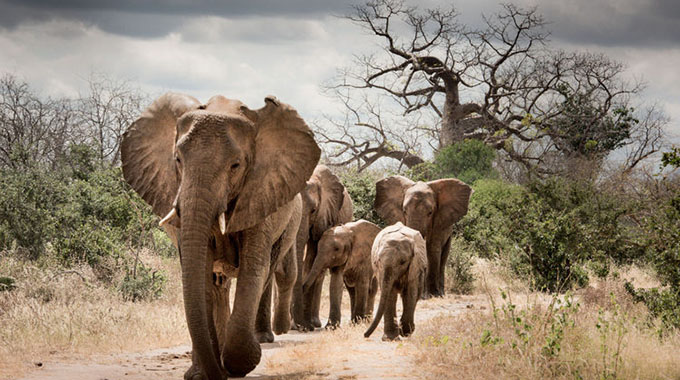
Sifelani Tsiko
Agric, Environment & Innovations Editor
Both species of African elephants have been placed on the International Union for Conservation of Nature (IUCN) Red List of Threatened Species owing to poaching for ivory and loss of habitat, the global conservation body says, although populations of the savannah species in Southern Africa now exceed the carrying capacity of their range.
Before the latest assessments by the IUCN, African elephants were treated as a single species and this was listed as vulnerable, with very stringent regulations that prohibited trade in registered ivory, even from Zimbabwe and most other SADC countries where there are high populations.
The red listing of the elephants will now make it harder for Zimbabwe, Botswana, Namibia and Zambia to make any headway in their battle over the years to get the ICUN to allow them to sell ivory acquired through natural deaths, confiscations and culling.
At the last conference of the Convention on International Trade in Endangered Species of Wild Fauna and Flora (Cites), member states failed to agree on proposals to reopen trade in registered raw ivory.
The vote loss at the conference meant most SADC countries remained stuck with hundreds of tonnes of unsold ivory that under controlled trade could have generated revenue that could support animal welfare and protection.
It is now possible to use genetic markers to identify which population ivory comes from, so it would be possible to differentiate from populations hit by poaching and those what were growing.
“Africa’s elephants play key roles in ecosystems, economies and in our collective imagination all over the world. Today’s new IUCN Red List assessments of both African elephant species underline the persistent pressures faced by these iconic animals,” said Dr Bruno Oberle, IUCN director general.
“We must urgently put an end to poaching and ensure that sufficient suitable habitat for both forest and savanna elephants is conserved. Several African countries have led the way in recent years, proving that we can reverse elephant declines, and we must work together to ensure their example can be followed.”
Under the new assessment, the savanna elephant was catergorised as “endangered” and the much smaller, lighter forest elephant was “critically endangered” – placing it under risk of extinction in the wild.
In the past, the IUCN treated both elephants together which it considered as “vulnerable” but following the accepted modern split of species, made essential once genetic evidence that they are very distinct different species they have listed them seperately.
WWF conservationists said this means that both of these species are now recognized as moving to a more threatened status.
“The African forest elephant is now listed as critically endangered, and the African savannah elephant as endangered. Following this reclassification, WWF and Wildlife Conservation Society are both calling for continued and renewed vigilance, enforcement, anti-poaching, anti-trafficking, and habitat protection efforts for all elephants in Africa – and particularly for the critically endangered forest elephant,” the WWF said.
The WWF further noted that in some parts of Africa the crash in tourist numbers due to the Covid-19 pandemic has presented a new threat of increased poaching because of the reduced income to maintain law enforcement efforts.
“Besides the threat of international trade in ivory, an emerging threat for forest elephants is the decline in fruit production in the forest in Central Africa leading to a 11 percent decline in elephants’ body condition between 2008 and 2018.
The global conservation body said that the populations of Africa’s savanna elephants found in a variety of habitats had decreased by at least 60 percent over the last 50 years while the number of forest elephants found mostly in Central Africa had fallen by 86 percent over 31 years.
It estimates that around 415,000 remain for both types of elephants.
The red listing deals a heavy blow to Zimbabwe, Botswana, Namibia and Zambia which still hold healthy elephant populations especially in the Kavango–Zambezi Transfrontier Conservation Area, a region of Southern Africa where the international borders of five countries, including these four, converge.
Southern Africa is now home to half of Africa’s elephants and Zimbabwe’s population of more than 84 000 against a carrying



 Online Reporter