Emmanuel Kafe
As Zimbabwe steps up preparations to cushion livestock against the looming El Niño-induced drought, farmers are turning to drought-resistant fodder varieties that could help protect the national herd from pasture shortages and losses.
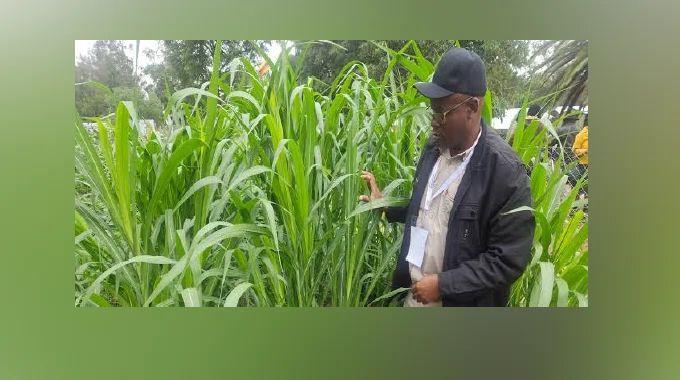
At TN Livestock Trust Farm in Featherstone, Mashonaland East, the cultivation of Juncao grass is emerging as one of the practical solutions to livestock feed shortages, offering farmers an alternative that can be grown, harvested repeatedly and stored for use during dry periods.
The Chinese-developed grass, which can be fed to cattle, goats and chickens, is gaining attention for its ability to provide a reliable source of feed when natural pastures begin to deteriorate under prolonged dry conditions.
Farm manager Mr Patrick Chizengeya said Juncao grass was a fast-growing variety that could provide farmers with repeated harvests, making it suitable for livestock feed planning.
“Juncao grass is one of the best Chinese varieties. It takes about three months to mature, and the best thing about it is that it also grows again after every two months and is then harvested, which provides a good yield for farmers. It is an alternative feed that suits times of drought,” he said.
The grass can also be preserved for future use, helping farmers reduce their vulnerability when pastures deplete and feed becomes scarce.
Mr Chizengeya said the farm was using the grass both for livestock feed production and to manufacture pellets for poultry, while supporting surrounding farmers through the sale of feed.
“After harvesting, we store the feed underground but also use the grass to manufacture pellets that can be fed to chickens. In times of drought, we also sell the feed to neighbouring farms so that they are not affected by a lack of pasture,” he said.
The model reflects Government’s broader push to strengthen livestock resilience through alternative feed production, fodder conservation and preparedness ahead of anticipated dry conditions.
With the El Niño threat raising concerns over pasture availability and livestock survival, Agriculture, Mechanisation and Water Resources Development Minister Dr Anxious Masuka has called on wheat farmers to conserve crop residues for animal feed rather than allowing them to go to waste.
Dr Masuka said wheat stalks could be baled into hay and contribute towards building feed stocks to sustain livestock during drought.
“The threats posed by El Niño to our livestock herd are so real, and our aim is to ensure that all those wheat farmers utilise the remains in their fields as hay so that we have sufficient feed for our livestock,” he said.
The call forms part of efforts to mobilise farmers across the country to adopt practical measures that can reduce the impact of drought on livestock, including preserving available crop residues and expanding alternative feed sources.
Zimbabwe’s livestock sector remains an important pillar of rural livelihoods, household incomes and agricultural production, making protection of the national herd a priority as the country prepares for possible weather-related shocks.
While drought can place pressure on grazing land, water supplies and livestock condition, initiatives such as Juncao grass production, hay baling and feed conservation are helping farmers prepare before shortages become acute.