Chronicle Editor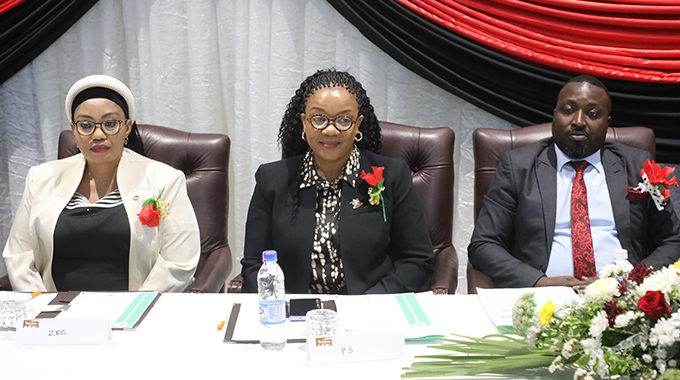
Raymond Jaravaza, [email protected]
TO make legal services more accessible to vulnerable members of society and those that cannot afford representation, the Ministry of Justice, Legal and Parliamentary Affairs has expanded the Legal Aid Directorate (LAD) by decentralising the services across the country.
The LAD decentralising programme aims to set up district offices to provide free legal representation to those who cannot afford such services as part of efforts to enhance access to justice for the less privileged.
The State provides legal representation for both criminal and civil cases, as well as any quasi-judicial tribunals. Legal advice provided is for labour disputes, matrimony cases, deceased estates, general civil matters and criminal issues, among others.
“We have taken significant steps to expand our Legal Aid Directorate, making legal services more accessible to those who cannot afford them,” Deputy Minister of Justice, Legal and Parliamentary Affairs, Nobert Mazungunye, told participants at a Strategic Plan Review workshop at a Bulawayo hotel yesterday.
“The capacitation of the directorate ensures that a greater number of our people receive the assistance they need whether it is legal representation or advice.
“This initiative has not only closed the gap for many but has also empowered some of the most vulnerable individuals in our society. This underscores our belief that true justice must be accessible to all, regardless of socio-economic status,” said Deputy Minister Mazungunye.
He said while progress has been made in decentralisation, some challenges persist.

“Access to justice remains uneven, with rural communities facing the greatest barriers. These disparities threaten the very essence of equal justice.
“To address this, our strategic plan must include further decentralisation of legal services, ensuring that district offices of the Legal Aid Directorate are increased and adequately resourced.”
The ministry looks to extend beyond legal representation to fostering a culture of legal literacy and active civic participation.
“To this end, we must continue to reinvigorate our public outreach programmes, demystify legal processes and encourage public engagement.
“By fostering an informed citizenry, we empower individuals to hold institutions accountable and advocate for their rights. This is essential in building a participatory democracy where every voice matters and every right is protected,” he said.
The Justice Ministry has embraced technology to modernise and digitalise the Deeds, Companies and Intellectual Property Department for enhanced access to critical documents.
“However, embracing technology is not without challenges. As we move forward, we must ensure that our workforce is equipped to navigate and maximise these new tools.
“Training programmes for legal and administrative staff are essential for fostering a seamless integration of technology. Moreover, cyber security measures must be prioritised to protect sensitive data and ensure the integrity of our systems,” he added.
In May, the Government announced that it was working on establishing four new Legal Aid offices in Beitbridge, Kariba, Karoi and Mt Darwin by the end of the year.
Previously, LAD offices were only available in provincial capitals, but new stations have been opened in Chivhu, Gokwe, Chiredzi and Chipinge.
In future, the Government plans to ensure that where there is a Magistrates’ Court, there is also a LAD office. In South Africa, the Legal Aid Department provides state-funded lawyers to anyone who earns less than R5 500 per month after tax, while in criminal cases, children automatically qualify for legal aid.



 Online Reporter