


 Online Reporter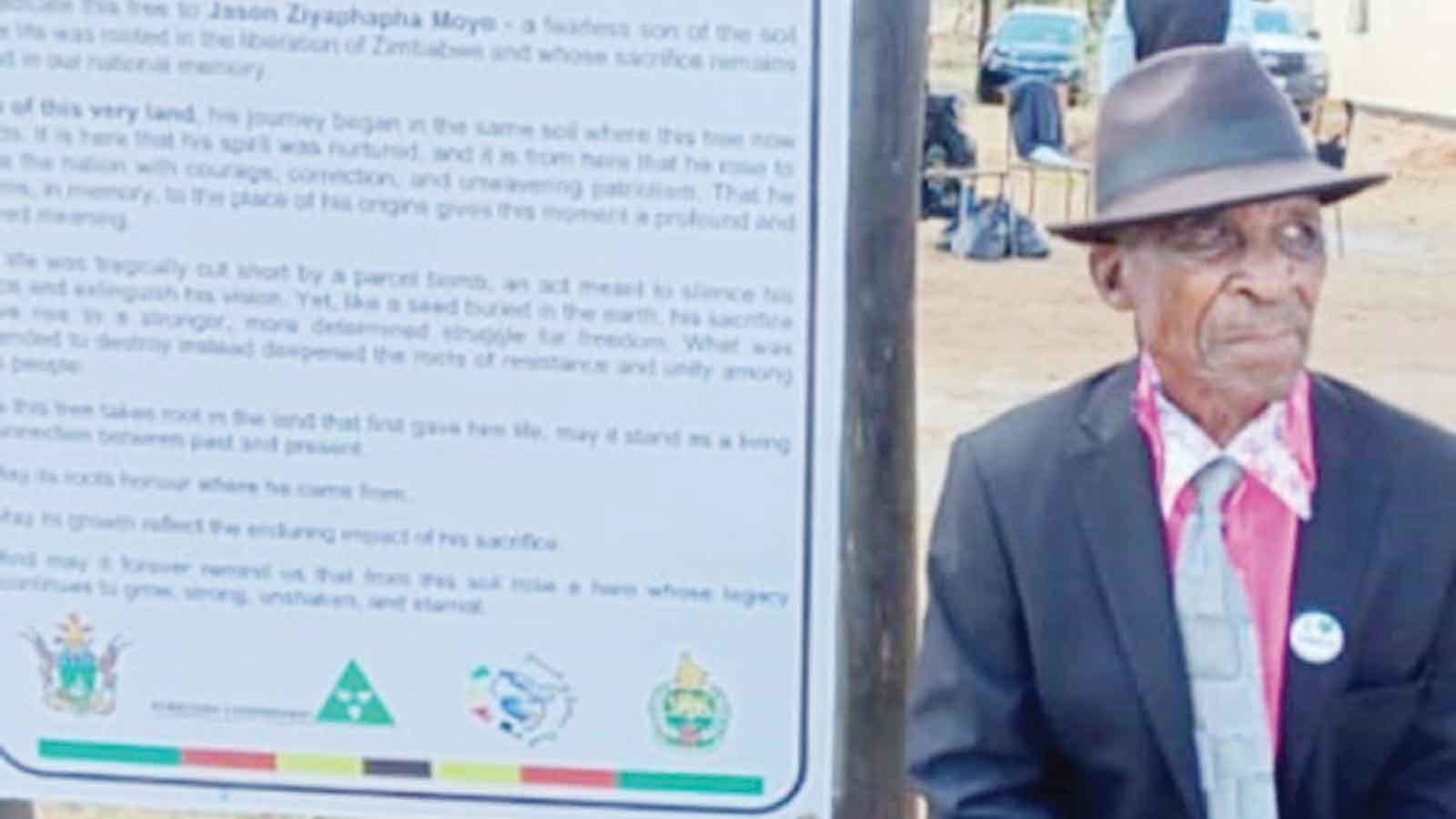
Gibson Mhaka
Zimpapers Politics Hub
FOR nearly half a century, Mr George Moyo (80), of Donkwe-Donkwe village in Kezi, Matobo district, Matabeleland South province, has carried not only the famous surname of one of Zimbabwe’s foremost liberation icons, but also the responsibility of preserving the legacy of a father whose sacrifice helped secure the country’s independence.
Now the only surviving child of the late nationalist Cde Jason Ziyaphapha (JZ) Moyo’s five children, he speaks with emotion and gratitude as Zimbabwe prepares to commemorate Heroes Day.
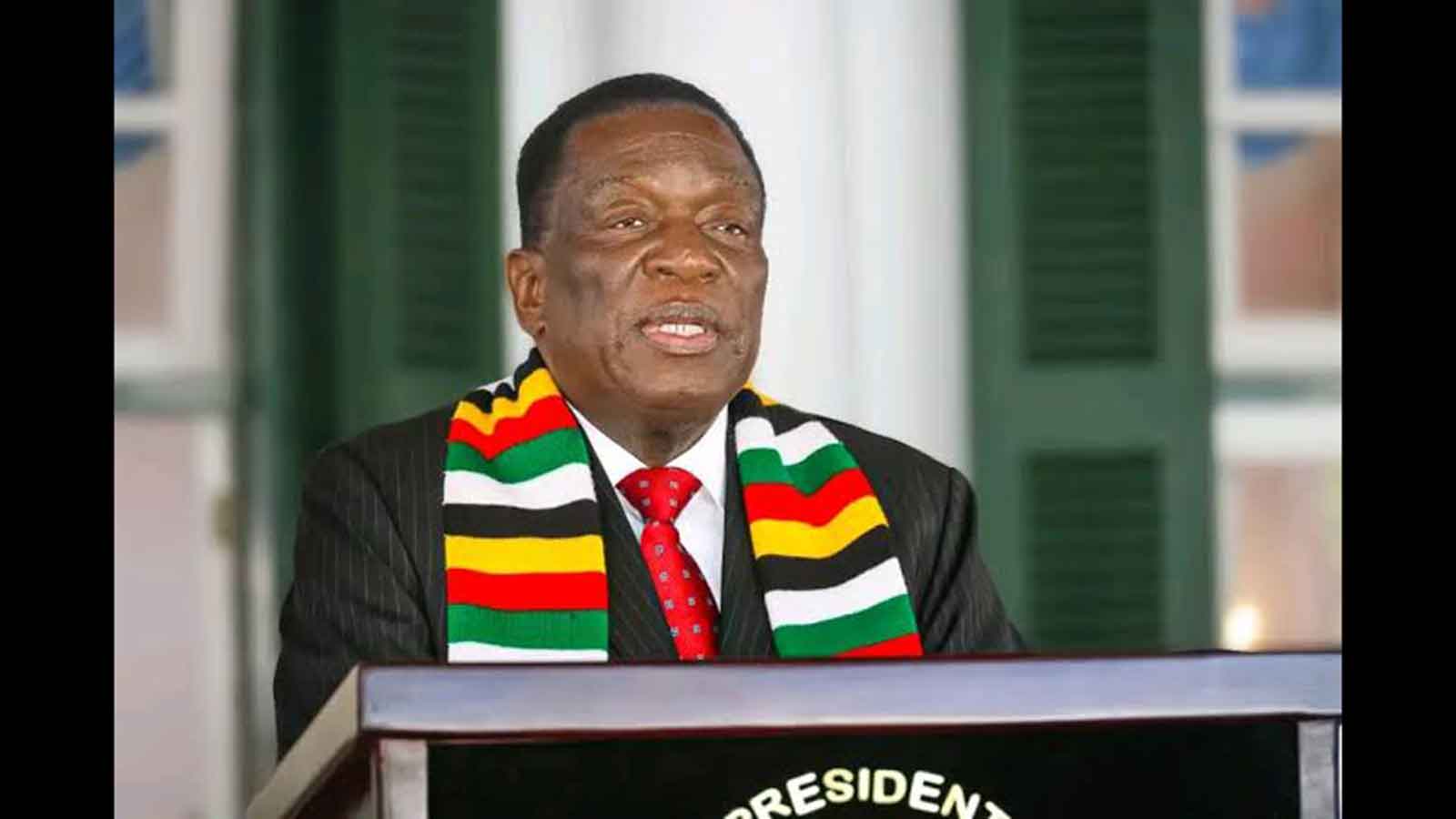
He is highly appreciative of President Mnangagwa and the Second Republic for recognising his father’s enduring contribution to the liberation struggle.
Those feelings were reinforced during this year’s Independence Day celebrations at Mahetshe Primary School in Matabeleland South, where President Mnangagwa unveiled the historic Memorial Tree Park and planted 46 Natal mahogany trees to mark Zimbabwe’s 46th independence anniversary.
The trees were also meant to honour both living and departed liberation heroes and heroines from the province, as well as promote environmental conservation as part of the national development agenda.
Among those immortalised in the memorial park was Cde JZ Moyo, one of the architects of Zimbabwe’s liberation struggle.
For Mr Moyo, the occasion was deeply personal.
He had the rare opportunity to briefly meet President Mnangagwa during the commemorations and joined other families of liberation heroes in planting commemorative trees at the park.
Although the President’s demanding programme left little time for an extended conversation, Mr Moyo said the brief encounter renewed the family’s hope after the President assured him that arrangements would be made for a follow-up meeting.
“I am still expecting to meet His Excellency after we met at Mahetshe Primary School during the independence celebrations,” Mr Moyo said in an interview.
“The President told me that people would get in touch so that we could have an opportunity to sit down and discuss the family’s position. I am still looking forward to that meeting because I believe he wants to hear us.”
The family, he said, remains immensely grateful to President Mnangagwa for honouring Cde JZ Moyo’s legacy and ensuring that his contribution to the liberation struggle continues to be recognised.
“We felt honoured when the President recognised our father as one of the liberation icons during the tree-planting ceremony.
“Seeing his name remembered alongside other national heroes meant a lot to us as a family.
“It showed that the Government has not forgotten the sacrifices made by our father and his generation,” he said.
Mr Moyo said while the family appreciates the many gestures extended by the Second Republic, including the allocation of a 300-hectare farm in Kezi, there are still challenges they hope to share with President Mnangagwa.
“As a family, we are grateful for everything that the Second Republic has done for us. We thank President Mnangagwa for giving us the farm because that was something we had sought for many years after independence,” he said.
“However, the farm is not productive because we simply do not have the resources and inputs needed to utilise it. That is one of the issues I would like to explain to the President when I finally meet him. I believe he will understand our situation.”
Painful upbringing
Reflecting on his father’s life, Mr Moyo’s voice softened as childhood memories came flooding back.
As the eldest child, he spent much of his early life alongside Cde JZ Moyo in both Makokoba, Bulawayo, and their rural home in Kezi.
One memory, in particular, has remained etched in his mind.
“I remember when my father was constantly being harassed by the colonial government because of his political activities.
“The authorities sent him back home, believing that his father would discipline him and persuade him to abandon politics.
“But when my father spoke to his father, he told him to report him to the police because he did not want to put the family at risk. My grandfather actually took his bicycle and went to make the report.”
While his grandfather was away, Mr Moyo and his father walked to Tshatshane River to bathe.
“When we came back, the police were already waiting for him. They took him away, and that was the last time I saw my father alive. We never met again. When he died in Zambia in 1977, we travelled to Leopard’s Hill (Memorial Park in Zambia) to bury him.”
The assassination of Cde JZ Moyo by a parcel bomb in Lusaka robbed Zimbabwe of one of the liberation struggle’s most gifted strategists and left his young family facing enormous hardship.
Mr Moyo said life after his father’s death was extremely difficult.
“He loved his family dearly, but because he had devoted himself to the liberation struggle, we grew up under the care of our grandparents. They did everything they could, but life was very difficult. When our father died, we were still very young. Our grandparents struggled to feed us, let alone pay our school fees. We could not continue with our education because they simply did not have the means.”
Sacrifices made by liberation fighters, he said, extended beyond the battlefield, often leaving their families to endure years of hardship.
“People know my father as a national hero, but many do not know the struggles his children went through. We are proud of his contribution to Zimbabwe, but growing up without him was painful.”
Mr Moyo said although numerous institutions and landmarks bear his father’s name, the family continues to face numerous challenges.
“There are schools, roads and institutions named after JZ Moyo, and we are proud that Zimbabwe continues to honour his legacy. But as a family, our circumstances remain difficult.
“Our wish is not for luxury. We simply want the opportunity to make the farm productive so that it becomes a sustainable source of livelihood for the family. That is what I hope to discuss with His Excellency when we finally meet.”
He commended President Mnangagwa’s open-door policy, saying it has demonstrated the Second Republic’s willingness to engage with families of liberation heroes.
Mr Moyo cited the meeting between President Mnangagwa and the widow of the late ZPRA commander Rogers “Alfred Nikita” Mangena, Mrs Sikhubekiso Madeya Mangena, and her son, Lotshe, at State House as evidence of the Government’s commitment to ensuring that the families of liberation heroes are not forgotten.
Born in 1927 in Kezi, Cde Jason Ziyaphapha Moyo emerged as one of the architects of Zimbabwe’s liberation struggle.
He rose through the trade union movement before becoming chairperson of ZAPU and leader of its external administration, playing a pivotal role in coordinating the political and military dimensions of the armed struggle.
As Second Vice President of ZAPU, he worked closely with the late Dr Joshua Nkomo and the late former President Robert Mugabe in forging the Patriotic Front that ultimately negotiated Zimbabwe’s independence.
On January 22, 1977, Cde JZ Moyo was assassinated in Lusaka when a parcel bomb exploded in his office, just weeks after returning from the Geneva Conference.
He was initially buried at Leopard’s Hill Memorial Park in Zambia before being reinterred at the National Heroes Acre on August 11, 1981.
Nearly five decades after his assassination, his son says the family’s greatest source of comfort is knowing that the nation continues to honour the ideals for which his father gave his life.
“As long as Zimbabwe remembers our father and the sacrifices he made, we will always remain grateful,” Mr Moyo said.


 Bongani Ndlovu