Online Reporter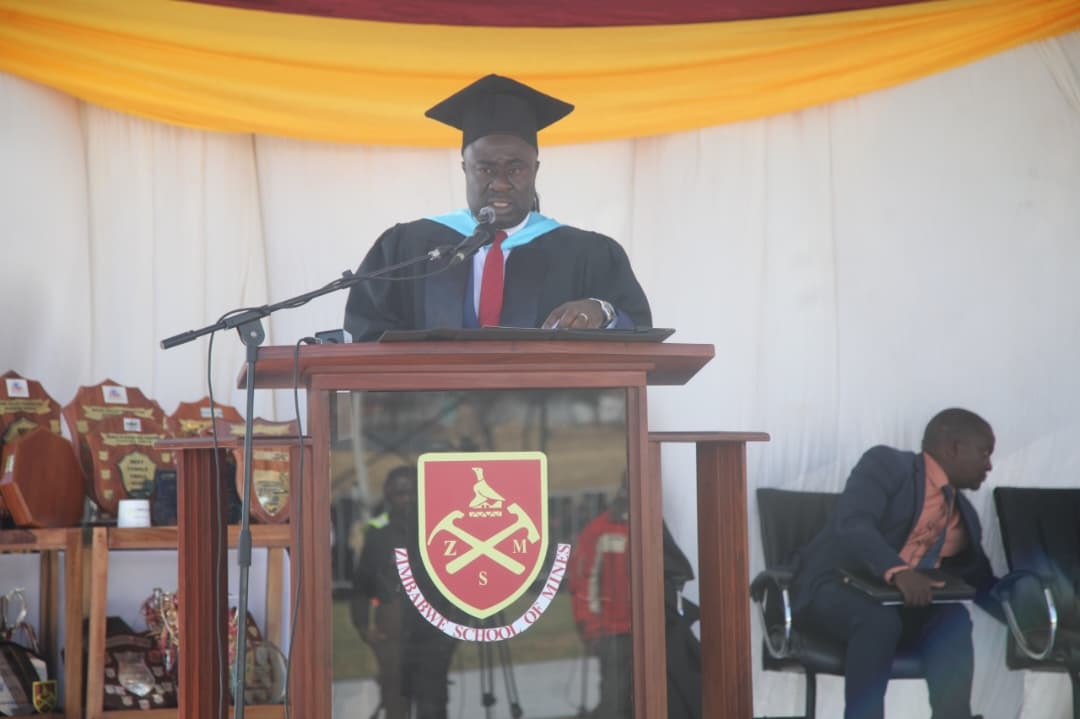
Judith Phiri, [email protected]
KAMATIVI Mining Company (KMC) and the Zimbabwe School of Mines (ZSM) have signed a Memorandum of Understanding (MoU) aimed at strengthening skills development, scholarship support and talent cultivation for Zimbabwe’s mining sector.
The agreement marks a significant milestone in KMC’s efforts to invest in local human capital development while advancing its corporate social responsibility commitments in the communities where it operates.
In a statement, the company said ZSM remains one of Zimbabwe’s leading institutions for mining-related diploma and vocational technical education, having played a critical role over the years in producing skilled and industry-ready professionals for the country’s mining sector.
“The newly signed MoU establishes a long-term, stable cooperation framework between the two parties covering scholarship support, internship and employment pathways, staff skill development and knowledge transfer.
“As well as joint curriculum development, scientific research and innovation and community empowerment, pursuant to which a training center and bases for mining industry managerial professionals will be set up,” read part of the statement.
“Through this deeper integration of industry, academia, and research, the partnership aims to supply outstanding technical talent to Zimbabwe’s mining sector while providing strong talent support for the sustained, stable operation of the Kamativi Lithium Mine project.”
The agreement comes at a time when demand for specialised mining skills continues to grow, particularly in the lithium sector, where Zimbabwe is positioning itself as a key player in the global energy transition value chain.
KMC’s scholarship programme, established in 2025, focuses on supporting students from communities surrounding its mining operations, with priority given to academically gifted learners from disadvantaged backgrounds.
For the 2026 academic year, the company increased the number of beneficiaries from eight to 10 students. The scholarship recipients are pursuing studies in key areas such as mining engineering, metallurgical engineering, mining geology, metallurgical analysis, mine surveying, and occupational health and safety.
Highlighting ZSM’s ongoing efforts to modernise its training programmes, KMC said the institution had shared details of several major developments aimed at enhancing practical and industry-relevant learning.
KMC added: “ZSM also outlined its latest academic development plans, which include construction of an experimental mine, upgrades to its international-standard analytical laboratory, integration of drone pilot certification into the full curriculum, and secondment of lecturers to mining enterprises for practical, hands-on training.”
The agreement also provided an opportunity for KMC representatives to outline the company’s strategic vision and future growth plans.
Company officials briefed stakeholders on the shareholding structure of Yahua Group and Defold, KMC’s international footprint, and the strategic significance of the Kamativi Lithium Mine project within Zimbabwe’s mining sector. “As the company’s planned lithium sulphate processing plant moves forward, the scale of local employment is expected to keep increasing,” said KMC human resources manager Mr Joseph Tshuma.
“KMC has encouraged the school to proactively incorporate technical teaching related to the lithium salt industry chain. At the same time, we will rely on the school’s support to advance employee skills enhancement and localisation training, while increasing assistance to communities in North Matabeleland Province and around the project area.”
The planned lithium sulphate processing facility is expected to create additional employment opportunities while strengthening local participation in the lithium value chain through skills transfer and workforce development.
ZSM principal Engineer Edwin Gwaze welcomed the partnership and expressed appreciation for KMC’s continued investment in education and skills development. He thanked the company for its long-term support and commended the sense of responsibility it has demonstrated as a Chinese-owned enterprise operating in Zimbabwe.
Looking ahead, both institutions have committed to expanding their collaboration through deeper industry-academic partnerships and initiatives aimed at promoting sustainable mining development.
The two parties said they would continue working together to build a green, sustainable and mutually beneficial mining model that supports skills development, innovation and long-term growth within Zimbabwe’s mining sector.