Online Reporter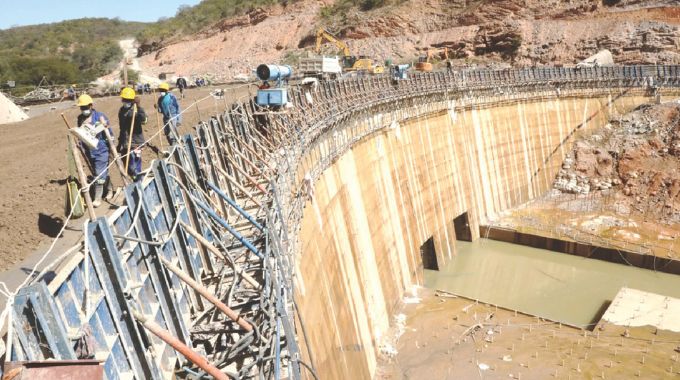
Fairness Moyana in Hwange
MATABELELAND North must position itself to turn the anticipated benefits of Lake Gwayi-Shangani into jobs, businesses and new industries rather than viewing the project solely as a water infrastructure development, a senior Government official has said.
Speaking at the farmers and business conference held on the sidelines of the 2026 Matabeleland North Provincial Agricultural Show in Hwange on Friday, Ministry of Agriculture, Mechanisation and Water Resources Development director for training and information Mr Sibangilizwe Dlodlo said the province was entering a pivotal stage in its economic development trajectory.
He said major infrastructure investments, particularly the Gwayi-Shangani Dam and the rehabilitation of the Bulawayo-Victoria Falls Road, were creating opportunities with the potential to transform key sectors of the provincial economy, including agriculture, mining, tourism, energy and manufacturing.
Mr Dlodlo said the Gwayi-Shangani project should be regarded as a driver of broad-based economic transformation rather than merely a response to water shortages.
“The critical question is not whether water will arrive. The critical question is whether we are prepared to convert water into wealth,” he said.
Mr Dlodlo said the true success of the dam would be determined by the economic activity it stimulates, including irrigation schemes, livestock production, agro-processing, fisheries, business development, employment creation and investment. “The dam itself is not the destination. Economic transformation is the destination,” he said.Gwayi-
Shangani Dam is a key component of the National Matabeleland Zambezi Water Project and is expected to supply water to Bulawayo and surrounding areas while supporting irrigation and industrial development in Matabeleland North.
Mr Dlodlo said the province should therefore begin preparing now to maximise opportunities expected to emerge from improved water security and increased economic activity.
He said the rehabilitation of the Bulawayo-Victoria Falls Road would complement the dam project by enhancing connectivity and improving the movement of people, goods and services across the province.
“Roads connect people, markets, businesses and opportunities. Together with Gwayi-Shangani, this infrastructure is helping lay the foundation for a more integrated provincial economy,” said Mr Dlodlo.
He challenged farmers and businesspeople to proactively position themselves to benefit from the opportunities created by ongoing infrastructure development rather than waiting for investment opportunities to materialise.
Mr Dlodlo said hotels and lodges should prioritise sourcing agricultural produce locally, while mining companies should deliberately integrate local enterprises into their supply chains.
“When tourism grows, local farmers should supply hotels and lodges. When mining expands, local businesses should participate in supply chains. When energy generation increases, industries should locate closer to sources of power.
When irrigation expands, agro-processing and manufacturing should follow,” he said.
Mr Dlodlo said economic development could not be achieved through isolated sectoral growth, stressing the need for agriculture, mining, tourism, energy, manufacturing and services to complement and reinforce one another.
“Development cannot happen in silos. Every sector must become a partner in the success of the other,” he said.
Mr Dlodlo also warned that climate change and the potential emergence of another El Niño-induced drought posed a significant threat to the province’s economic prospects.
He said current forecasts indicated an 88 to 93 percent probability of a significant El Niño event during the forthcoming agricultural season, warning that its effects would extend beyond agriculture to businesses and communities.
“When agriculture suffers, rural incomes decline. When rural incomes decline, businesses suffer,” said Mr Dlodlo.
“When businesses suffer, employment opportunities diminish. Climate resilience is therefore not merely an agricultural issue. It is an economic issue.”
Mr Dlodlo called for increased investment in water harvesting, irrigation infrastructure, livestock feed security, climate-smart agriculture and business continuity planning.
He said stakeholders needed to adopt a proactive approach by preparing for climate-related shocks before they occur rather than responding after livelihoods had already been affected.
“Resilience is built before a drought, not during a drought,” said Mr Dlodlo.
He also underscored the importance of good governance and effective leadership in creating an environment that attracts investment and supports sustained economic growth.
“Good governance attracts investment. Good governance builds confidence. Good governance unlocks opportunity,” said Mr Dlodlo.
He said Matabeleland North was entering what could prove to be a defining period, with major infrastructure projects, emerging investment prospects and improved connectivity converging to create favourable conditions for economic transformation.
“The water is coming. The roads are improving. Investment opportunities are emerging. The future is approaching,” he said.
Mr Dlodlo challenged Government, business, farmers, communities and other stakeholders to ensure that ongoing investments translated into sustainable economic opportunities, jobs and improved livelihoods for the people of Matabeleland North.