admin
admin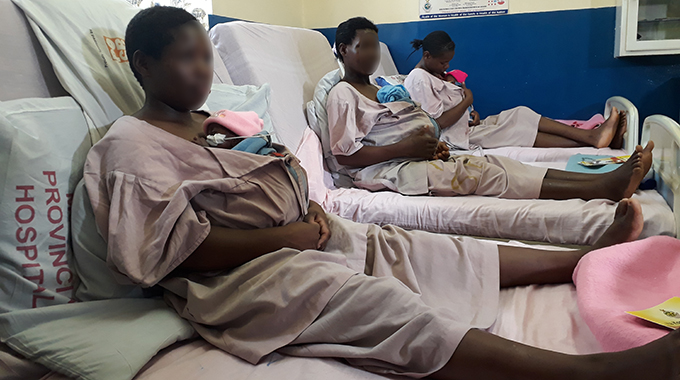
Roselyne Sachiti Features, Health and Society Editor
During pregnancy, women experience various complications.
These include, but are not limited to pregnancy induced hypertension, teenage pregnancies, malnutrition as a result of poor diet, working too much in the fields or housework when pregnant and not attending to ante natal classes.
As a result, most women with the above complications deliver prematurely, with some giving birth to underweight babies.
Weight at birth is a good indicator of a newborn’s chances of survival, growth, long-term health and psychological development. Low birth weight carries a range of grave health risks for children.
In the absence of proper care, low birth weight babies risk physical or mental delays or impairments in life. They also risk death if specialised care and support lack.
In Zimbabwe most maternity wards in rural and urban areas have incubators that are either not enough or have not been functioning.
In some cases, power cuts result in incubators also not being able to keep warm the preterm and underweight babies.
In the absence of incubators, Kangaroo Mother Care (KMC) has come in handy and proved efficient. It is cheap and readily available alterative to putting preterm and underweight babies in incubators.
With KMC, the preterm naked baby is put on the mother’s bare chest with skin-to-skin contact at birth or soon afterwards. This is an effective method to help mother-infant bonding, breastfeeding and keep infant warm as well as protect infant from stimulation and infection, according to the World Health Organisation (WHO).
To be discharged the babies have to first reach 2500 grams.
In KMC wards, the special section of the maternity wards, babies born too small for the world further stay with their mothers as they undergo KMC.
The success rate has been good.
For example, since inception of the programme at Mutare Provincial Hospital in April 2013 a total of 71 babies came through KMC, 87 in 2014, then 100 in 2015. Another 84 babies came in 2016, then some 82 in 2017 and 78 by November 2018.
With the emergence of the novel coronavirus 2019 (COVID-19) questions have been raised on the safety of KMC in the event a mother of a new born pre-term or underweight baby tests positive.
How safe is it for Covid-19 positive mothers of premature babies to do KMC since the process involves close contact?
Unicef Zimbabwe, responding to questions by The Herald, said in light of the current evidence, WHO has concluded that mothers with suspected or confirmed COVID-19 should not be separated from their infants.
“Mother-infant contact and holding enhances thermoregulation and other physiological outcomes, significantly reduces mortality and morbidity, and improves child and parental attachment.
“Overall, the recommendation to keep mothers and their children together is based on several important benefits that outweigh the potential (and likely mild) harms of COVID-19 transmission to the child,” said Unicef Zimbabwe.
Additionally, Unicef Zimbabwe says mothers should not be separated from their infants unless the mother is too sick to care for her baby.
“If the mother is unable to care for the infant another competent family caregiver should be identified. Mother and infant should be enabled to remain together while rooming-in throughout the day and night and practice skin-to-skin contact, including kangaroo mother care, especially immediately after birth and during establishment of breastfeeding, irrespective of whether they or their infants have suspected or confirmed COVID-19 virus infection.”
In Zimbabwe one pregnant Covid-19 positive woman has delivered through a caesarean section.
This raises the question, what are the trends world over in terms of breastfeeding, KMC during the Covid-19 pandemic?
Unicef Zimbabwe adds that globally, relatively few cases have been reported of infants confirmed with Covid-19; those that have been reported experienced mild illness.
“Of 115 mother-child pairs from 17 articles where the mother is confirmed to be infected with Covid-19, 13 children had Covid-19 (4 breastfed, 5 formula-fed, 2 mix-fed, 2 unreported feeding practice).
“Twenty mothers had breastmilk samples tested for the presence of SARS-CoV-2 RNA particles by RT-PCR; 7 of them had children with Covid-19 (2 breastfed,1 formula fed, 2 mix-fed, 2 unreported)”
Unicef Zimbabwe adds that globally, of the 20 with breastmilk tested, 18 had negative results and two had positive results.
“One of the two mothers whose breastmilk sample was positive for SARS-CoV-2, had a mix-fed child who was not infected with Covid-19; the other one had a child with Covid-19 (feeding practice was not reported)”
Unicef Zimbabwe said breastfeeding recommendations consider not only the risks of infection of the infant with Covid-19, but also the risks of serious morbidity and mortality associated with not breastfeeding. In addition, the inappropriate use of breastmilk substitutes as well as the protective effects of skin-to-skin contact and KMC are also considered.
In Zimbabwe, the KMC programme is supported by the Health Development Fund (HDF), which is a multi-donor fund, that seeks to support the Government of Zimbabwe to provide equitable access to high quality health services for women and children. Managed by Unicef, HDF is funded by the European Union, the United Kingdom’s Department for International Development (DFID); the Irish Government’s Irish Aid; the Swedish Government and GAVI.



 Online Reporter