admin
admin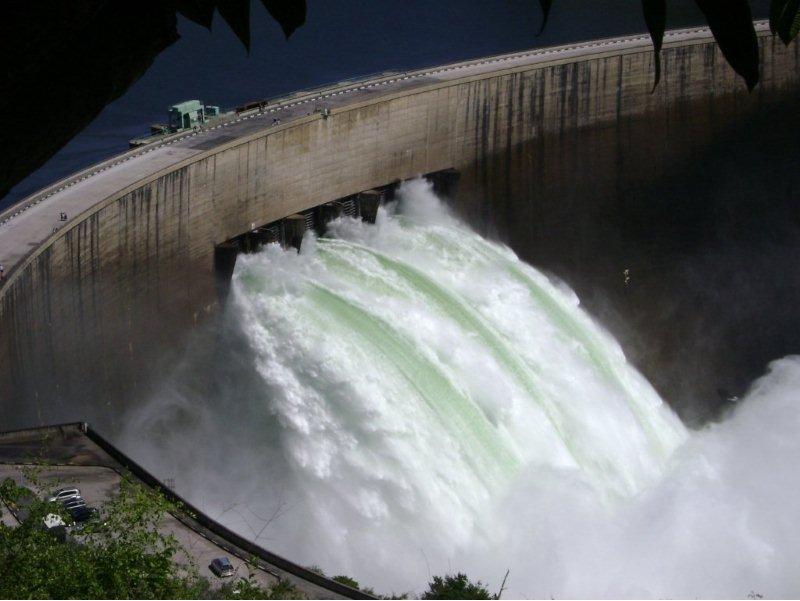
Dr Gibson Mandishona
The Energy and Power Development Ministry is addressing the spectre of power shortages by way of augmentation: energy imports, demand-side management, clean energy development, …
Energy is a key enabler of socio-economic development.
Last week’s commissioning of the 300MW Kariba South Power Station by President Mnangagwa should be applauded by all sectors of the economy.
The project, which cost in excess of US$500 million and employs 1 500 people at peak levels, will partially offset the country’s 400MW monthly power imports from South Africa and Mozambique.
Zimbabwe’s demand for electricity is about 2 030MW while average supply is 1 200MW.
However, the country will need additional power due to factors such as the rapid rate of natural increase of the population needing electricity, exponential increase of industrial and manufacturing sectors envisaged in the near future, and gradual expansion of electrical services into rural and farming areas.
Zimbabwe’s access to electricity is estimated at 50 percent of the total population (78 percent urban population and 40 percent rural population).
Within the framework of the Southern African Power Pool, the country faces power shortages, with a deficit of 60 percent; hence power imports.
Sapp has a regional power deficit of 5 000MW.
The Zimbabwe Power Company manages Hwange Thermal Power Station (920MW), Kariba Dam Hydroelectric Power Station (750MW) and smaller thermals.
The power plants have had challenges due to obsolete generation equipment and inadequate capitalisation.
Hwange has an installed capacity of 920MW, but only averages 450MW output. Mention should be made of smaller contributions from stand-alone solar plants and mini-hydros.
National generating capacity is 1 400MW, with peak demand at 2 400MW (40 percent of power demand being driven by mining and heavy industries).
The Energy and Power Development Ministry is addressing the spectre of power shortages by way of augmentation: energy imports, demand-side management, clean energy development, energy mix, carbon credits, new power plants, liberalising the energy sector (independent power producers) and formulating new energy policies (the Rural Energy Masterplan and Biofuels Policy, and others).
Demand-side management/clean energy has the unique potential of creating a virtual power station.
Augmenting the power sector may be achieved by harnessing renewable energy resources or renewables (solar energy, mini-hydro, wind and biomass).
Whereas fossil fuels (coal-based) are blamed for global warming and greenhouse gas emissions, renewables are a benign and pollution-free source of energy.
Renewables have inherent attributes which include equitable distribution of energy, reduced dependence on fossils, small ecological footprints, decentralised mode, being modular (easy to replicate) and user-friendliness (energy for the poor).
The Zim-Asset development blueprint “recognises renewable energy (biogas, solar energy, wind, biofuels) as an essential development strategy for the country”.
Zimbabwe is no stranger to harnessing solar energy for households, farms, institutions and industry.
In the mid-1990s, the country hosted the GEF Solar Project, which oversaw installation of several solar systems mostly in rural homes and at growth points.
The GEF project culminated in the hosting by Harare, of the World Solar Summit (1996). The country has a vast untapped solar potential, with an enviable average irradiation of 6kWh/m2/day. The northern and western regions are most favourable.
Bioenergy consists of harnessing energy from biogas plants and biofuels from jatropha, forestry and sugar plantations. Government, through the Rural Electrification Agency, and some NGOs are popularising adoption of biogas digesters in rural areas and remote communities.
Zimbabwe is land-locked and has low wind speeds averaging 3,5 metres/sec.
Favourable wind turbines would be those of the hybrid vertical axis type which activate at low speeds as opposed to conventional horizontal axis wind machines.
Viable winds are generally in the south-eastern mountainous region bordering Mozambique, which is also home to well-functioning mini-hydro IPPs.
Rural Zimbabwe has favourable exposure to off-grid solar products, but practical implementation of energy policies is limited.
Lack of a clear policy and regulatory framework has led to an off-grid market with sub-standard products.
Import tariffs have been removed for solar products.
However, value-added tax of 15 percent still applies. Companies in the sector have limited access to public financing channels.
Mini-hydros have been financed by private developers and NGOs, and challenges remain with respect to renewable energy adoption/integration. There is need to integrate renewables into the conventional energy mix. What is the feasible RE optimal mix?
Other challenges relate to energy storage in renewables, in addition to adoption of innovative upcoming renewables (gas turbines, solar hydrogen, fuel cells).
I omit nuclear energy for now!
Dr Gibson Mandishona is a renewable energy expert. He wrote this article for The Sunday Mail


 Online Reporter