admin
admin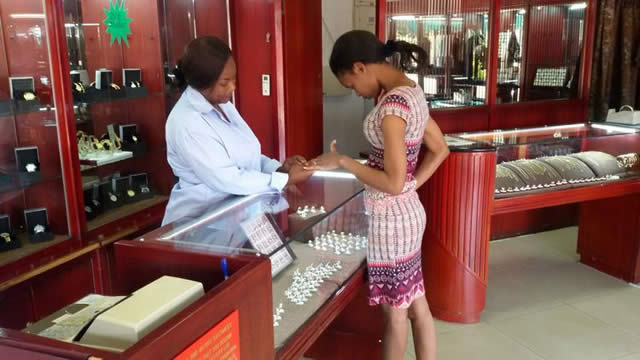
Tafadzwa Zimoyo Lifestyle Writer
“Diamonds are Forever”, the song by Shirley Bassey in a way explains the importance accorded all precious stones. So valuable are some pieces of jewellery that even their owners do not have the pleasure of handling and looking all the time as they are kept in safes far away from the sticky fingers. Celebrities, royalty, the rich and famous, soccer stars, politicians, models, you name them, are known to accessorise with jewellery which in most cases fetches millions of dollars!
If one were to value all the expensive jewellery in the world the figure would be in trillions, enough to feed the whole of Zimbabwe for years. Although jewellery in Zimbabwe is common, with jewelry shops operating from main centres like Sam Levy, Joina City, Westgate and Eastgate Shopping Centre and other places in Harare’s CBD, little is known about the jewellers who make these fine pieces of art.
Behind the sparkle and bling of jewelry are the smiths like Jacob Arabo popularly known as Jacob the Jeweler who founded Jacob & Company famed for making jewellery for celebrities in the United States like P Diddy, among others. Zimbabwe has Patrick Mavros father and son among its notable current jewellers. But they are not the only ones.
Meet Shiraaz Kassam one of Zimbabwe’s jewellers who also runs a a jewellery shop together with his family, whose clientele includes the who-is-who in Zimbabwe. If you catch some of the well known socialites in the country resplendent in the glittering accessories, chances are that they might have come from Kassam’s “anvil”.
“We started this jewellery shops as a family out of our passion for the superb pendants we saw some of the famous guys the world over wearing. I grew up and learned the business of all precious stones. We make some of the pieces, which include wedding sets, rings, watches, custom made jewellery, engraving and chains among others,” he said.
This is one business that requires finesse and an eye for precious stones which make the pieces and therefore it took us years of study to understand what makes the best of jewellery,” said Kassam. He said as a jeweller he is inspired by craftspeople from the Middle East, Asia, France and Italy who are masters of the craft. “It takes one to be a good artiste and one who appreciates beauty in order to excel in this trade.
“As a jewellery designer you will plan the style and pattern of jewellery, silverware and other decorative products.
“If you are creative, can work accurately with your hands and would love to work with gemstones, metals and different materials, this job could suit you well. Drawing and computer design skills will help you to visualise your ideas and share them with your clients and customers. You have to pay close attention to detail. There is no fixed entry route to become a jewellery designer – your skills and experience can be more important than qualifications,” he said.
However, with the minerals trade being fickle, this has also had spill-over effects into the trade of jewellery. “Jewellery, as you know, involves these precious minerals and when the prices skyrocket, this then affects out industry, thus forcing us to raise the prices of the pieces, which ends up affecting our clients’ flow,” he said.
Among their outlets are Mystique Jewels, Shiraaz Jewellers and Westgate Jewellers. Kassam said to take up jewellery as a profession is not easy, as it not like most other professions.
“Being a jeweller is not easy like a driver, doctor or lawyer where you have to work with the principles. It is about first appreciating art. Sometimes it takes up to minimum of 20 years to understand the business and even then you still make some mistakes so you are always learning. To become a jeweller of the bench takes a minimum of five years and then after that it is about experience to grow,” he explained.
Lavender Muchemwa, manager for Shiraaz Jewellers said they have been in the business for over 60 years, working with diamonds, emeralds, sapphires and rubies among others. She said because of the quality of stone that is used to make the jewelry, the pieces range in prices, with those that were cut from stones which are most precious fetching highest.
“The jewelry ranges according to how precious the mineral used is. Basically our prices range from as low as $5 to hundreds of dollars with gold taking the highest stake from $35 upwards. This can go into hundreds of thousands of dollars for the most expensive. Then there is what is called ersatz, which is a substitute for real or pure gold and these fetch less. This is what people commonly know as artificial but will be coated with gold to make it look like the real thing,” she said.
Muchemwa said diamond jewellery is normally favoured by those who are romantic at heart while gold is for those who deem themselves as royalty or businessmen. “There are other types which include emerald and sapphire, among others, which are often encrusted on rings. Watches are also included in this area,” she said. The manager said they manufacture design according to the client demands.
“One thing I am happy about is business is not bad in Zimbabwe, especially with clients coming in to buy wedding and engagement rings, because one way or the other those getting married need the rings. There are those who also buy jewellery for fashion and this maintains the stream of business flowing, although jewellery is not bought like hot buns owing to cost,” she said.
However, when examining the role jewellery with meaning plays in modern and ancient society, it’s important not to overlook the cultural significance it holds for people all around the world.
For some, necklaces, earrings and the like are simply physical adornments that add interest and personality to an outfit. But for others, the impact of such trinkets and baubles runs much deeper, reflecting significant milestones and even representing spiritual beliefs. In Africa, different nations each have their own jewellery story to tell, but many themes ring true throughout this majestic continent.
The history of jewellery on the continent dates back some 75 000 years, with traditional objects made from materials such as bone, amber, ivory, shells, metal, wood, stone and even hair.


 Online Reporter