

 admin
admin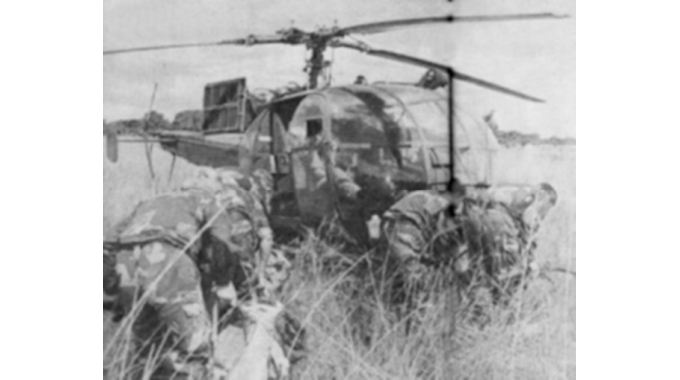
Victor Maphosa Mashonaland East Bureau
THE low flying, but fast war jet zoomed past the Mukuruanopamaenza Mountain early morning on March 24, 1979.
This was when the liberation struggle in the then Rhodesia had reached a tipping point, a climax.
On top of this mountain in Katiyo Village, Murehwa, Mashonaland East Province was a hidden base, where freedom fighters would converge and have an interface with community leaders to discuss and map the way forward, strategise and restrategise on how to defeat the oppressors and free the motherland.
It was on this mountain that 11 girls, all from Katiyo Village, were assigned to assist the freedom fighters with various chores that included cooking and doing their laundry.
The girls commonly referred to as Chimbwidos were between the ages of 15 and 19.
On this particular morning which had started just like any other day in the mountain, the girls were busy carrying out their duties, some were cooking, others were doing laundry, while others were fetching firewood.
No one knew or least expected that even though they had seen the rising of the sun, they were not to see it set.
On this fateful bloody day, soon after the fighter jet had flown past, helicopters followed and in a split of a second bullets were sprayed directly on the Chimbwidos.
Before the bombing, the freedom fighters had left earlier to meet parents in the village.
Two girls survived the massacre, cheating death by a whisker.
However, their comrades in arms, Gladys Chenje (19), Rose Dzemwa (18), Jecha Chasakara (18), Loveness Dera (18), Chipo Chimwaza (18), Sophia Nyakabangwe (17), Rumbisai Magora (16), Taurai Zhanda (16) and Mazviita Mandaza (15) perished.
But what bothered everyone in Katiyo on that unforgettable day was how the base was discovered?
Who had sold out?
Who had caused the Katiyo Massacre?
The Herald tracked down a survivor of this deadly attack, Mrs Tambudzayi Mukubvu who was 16 at the time of the massacre.
She is now married to a former headmaster of a primary school in Uzumba and is now staying in Manyika, Uzumba Maramba Pfungwe district.
She is now a mother of 6.
When The Herald crew arrived at her homestead, she was tending to her garden in the company of her husband.
She tearfully narrated her ordeal on the fateful day.
“The freedom fighters had gone to the village, we were at Katiyo base and suddenly a chopper appeared and sprayed bullets on me, and I took cover under a fig tree, but I was a bit late because I was hit on my left side and was injured.
“In an instant, I saw Rhodesian soldiers who had painted their faces black for disguise. They were heavily armed. They were on foot walking slowly to our base, heavily armed. While under cover, another fighter jet came at high speed and dropped a bomb.
“Immediately, I saw one of my colleagues Getrude, also near me, under cover. After the soldiers had passed us, we took to the Eastern side of the mountain, as our escape route.
“The helicopters kept on roving and circling on top of the base, searching for more people or survivors but they found none. They then disappeared, and only one was left, together with the ground force, which was also searching also for survivors.”
The two girls, after they succeeded in evading the enemy, started to argue on the safe direction and route to take once on the foot of the mountain, and they parted ways.
“I took a narrow foot path which was heading to the village. Ndiri munzira ndichifamba kudaro, ndakatanga kunamata nemoyo wese ndichiombera maoko zvandaiva ndisati ndamboita.
“I came across some herd boys with cattle and we walked together, they were frightened of me since my clothes were all stained with blood. I arrived in the village and went straight to a house belonging to a relative where I got assistance.
“Later, I proceeded to my homestead. People were now asking me about the other nine girls and all I could tell them was that the last person I saw was Getrude. A few minutes after I arrived at home, my brother came running and said I should leave our place at once because word was circulating that I had escaped from the bombings.”
Tambudzayi was then relocated to a safe place where she also received medical attention.
But what remained a puzzle for the Katiyo community is how the enemy knew of the comrades’ base.
Soon after Tambudzayi and Getrude parted ways on the foot of the Mukuruanopamaenza Mountain, Getrude was unlucky and she went straight into the enemy’s hands.
She was captured.
It was when she was airlifted in a chopper, heading for the enemy’s base somewhere near Mashambanhaka business centre that she met face-to-face with the sell out.
Getrude was later released and after the liberation struggle she got married, but later died.
Gogo Kudyarawanza (69) of Katiyo Village who was also in the village on the same day said the entire community was plunged into deep mourning.
“We came to know of the sell-out through Getrude who was captured and airlifted to Mashambanhaka. Inside the helicopter was one of our own, Sekuru Simon Katiyo.
“Katiyo was heartbroken after his wife, who was a village treasurer and would oversee all the transactions and cash distributions for the welfare of the comrades who were based in our village mountain, was murdered on witchcraft allegations.
“His wife’s death at the hands of the comrades angered him. He then decided to go straight to Shamva where Rhodesian soldiers were based and told them where the comrades were based. His intention was for the Rhodesian soldiers to wipe out all the comrades, it was a revenge for the death of his wife.
“Later, the comrades got wind of the information to the effect that Sekuru Katiyo was the one who had sold out. They went mad. Sekuru Katiyo was then hunted down and captured. He was brought at Mashambanhaka Hall during a Pungwe night where he was beaten to death.”
What pained the community was that after the bombing and the killing of nine girls, the Rhodesian soldiers did not just leave the bodies intact.
They reportedly chopped all the parts and made a heap of body parts.
“Vakacheka cheka vana ava ndokuvabvisa musoro, makumbo, maoko nezvimwe. Vaibva vaisa musoro weumwe neumwe pane mamwe ma parts ake kuti mhuri dzevafi ava dzizive vana vavo vasati vanova fushira.”
To date, the families of the Katiyo Massacre victims converge every year on Heroes Day in Katiyo village, to commemorate the day when the young girls died in line of duty, contributing with their everything for the liberation of their motherland.
Even to this day, families of the deceased, and the community at large, recall vividly the Katiyo Massacre, with streams of tears in their faces.
Today, the nine girls rest in honour and power, for what they had died for has been achieved.


 Online Reporter