Chronicle Editor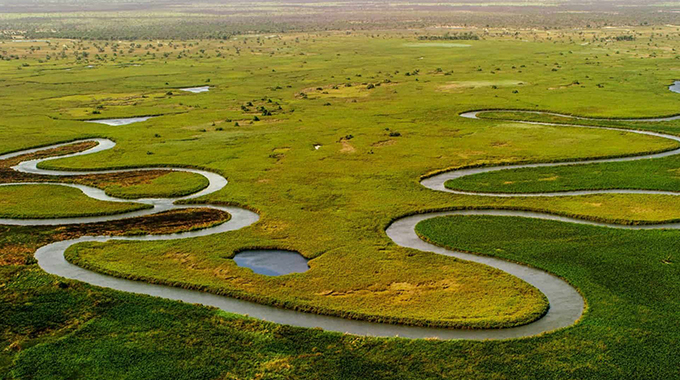
Leonard Ncube, [email protected]
THE Kavango-Zambezi Transfrontier Conservation Area (KAZA-TFCA) could become the first smart tourism destination in the world if plans by the five member states to jointly upgrade infrastructure towards meeting tourists needs materialise.
The KAZA-TFCA is a vast conservation area spanning over 520 000 square kilometres, encompassing parts of Angola, Botswana, Namibia, Zambia and Zimbabwe and boasting a population of over two million people and a staggering 227 900 elephants.
The landscape stretches along the Kavango and Zambezi Rivers, around the Caprivi-Chobe-Victoria Falls corridor, with roughly 70 percent of the land designated as conservation areas and over 100 wildlife management areas, 85 forest reserves and three Unesco World Heritage Sites.
The member states’ commitment to collaboration has roots in a 2006 Memorandum of Understanding, which later culminated in the 2011 Kaza Treaty.
Both initiatives aimed to create a seamless region for tourism and conservation.
The KAZA states last week held the 2024 KAZA Heads of State Summit in Livingstone, Zambia, where it was resolved to harmonise activities and policies, open borders and implement a number of outstanding issues to make the region a single tourism destination.
Heads of State and Government who included President Mnangagwa pledged leadership and instructed technical teams to use their managerial positions to implement resolutions and only seek endorsement from higher offices. While resolving to expand the KAZA Uni Visa beyond Zambia and Zimbabwe, the partner states signed a historic pledge, marking a new era of co-operation by establishing the “KAZA Rivers of Life” brand, which replaces competition with collaboration.
Tourism and conservation experts said there is need to jointly address the needs of tourists if the KAZA destination is to become competitive.
Representing the private sector, Ms Lilly Rakorong, chairperson of the Hospitality and Tourism Association of Botswana called for public-private partnerships in tourism.
“While the Uni-visa is key, we need a destination marketing strategy. We should find ways of making movement smooth. We need to move with speed to modernise our infrastructure by upgrading tourism roads and signage for ease of navigation if we are to become efficient.
“Tourists are in need of working traffic lights, parking and cyclist pavements. We need pedestrian spaces. Tourists love cycling but motorists consider them a nuisance, so as we plan, let’s consider them and think about it,” she said.
Ms Rakorong said the Kaza region is still lagging behind in terms of internet connectivity.
“The cost of touring is high because it takes longer to navigate the landscape because of the state of roads. The traveller is demanding from us operators to break the barriers of travelling,” she said.
Tourism and Hospitality Industry Permanent Secretary, Dr Takaruza Tanyanyiwa concurred on the need to include private players for inclusive green growth.
Victoria Falls City Council, administering the Mighty Victoria Falls, which is part of the Kaza region, has through its five-year strategic plan, started efforts towards becoming a smart city with installation of solar-powered street lights, while plans are underway to have pedestrian and cycle tracks as well as electric cars in its envisaged zone that aims for less gas emissions and congestion in the city centre.
The city’s ambitious plan, follows Sweden’s port city of Gothenburg, which has set sights on becoming the world’s first climate-neutral city by 2030.
KAZA’s economy is largely anchored on tourism, hence the need to conserve the environment and the region’s vision is to become Africa’s leading green destination with plans to mainstream global warming and climate change issues in the new normal following a successful summit last week.
Ms Nomsa Chitsaka, the director for commercial services in Zimbabwe reiterated the need for collaboration as opposed to competition across the borders saying together the member states stand to gain more.
Chairperson of Tourism Wetland Group in Namibia, Mr Simone Micheletti said focus should be more on opening tourism corridors to find the commercial side of tourism and build the KAZA brand for tourists. “We need to understand what the consumers want, we should understand the demand side of tourism. We can bring numbers if we provide what tourists want,” he said.
The KAZA Uni Visa was piloted in Zambia and Zimbabwe in 2016 to allow free movement of people across borders and with the aim of expanding to the other three member states.
Partner states have agreed that the opening of boundaries should not end on animals and conservation but also encompass immigration and travel sectors.
Speaking at the Heads of State official meeting last Friday, the Heads of State expressed commitment to seeing the KAZA dream come to fruition and lead in the world.
They said KAZA is a Sadc project. Botswana Vice President Slumber Tsogwane who was representing President Mokgweetsi Masisi pledged to join Zambia and Zimbabwe on the Uni Visa system.
“We must position ourselves as a destination of tourism. I don’t know how we missed it as Botswana on the Uni Visa, probably we were misinformed. So, Botswana will implement the KAZA Uni Visa as soon as yesterday,” he said. —@ncubeleon.



 Online Reporter