admin
admin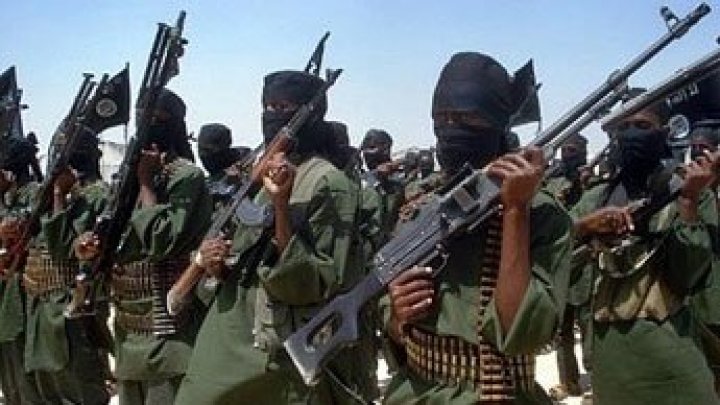
KENYA launched airstrikes against fighters from the armed group Al-Shabab in Somalia after an attack on Garissa University College in eastern Kenya that killed 148 people, a military spokesman said yesterday.
In the first major military response to last week’s attack, warplanes attacked two camps of Al-Shabab on Sunday afternoon and early yesterday morning, said Col David Obonyo of the Kenyan military.
Al-Shabab, which is based in Somalia, claimed responsibility for the April 2 attack in the Kenyan town of Garissa. Four gunmen died in the assault, which ended after a 15-hour siege. The group has killed more than 400 people in Kenya since April 2013.
The airstrikes occurred in the Gedo region of Somalia, Obonyo said. “This is part of continuing operations, not just in response to Garissa,” he said.
Jets pounded the camps in Gondodowe and Ismail, near the border with Kenya. Cloud cover made it difficult to establish how much damage the bombings caused or to estimate the death toll.
Kenyan President Uhuru Kenyatta had vowed harsh measures against Al-Shabab after the attack on Garissa, which is near the border with Somalia. Kenya has troops in Somalia as part of an African Union force to attack Al-Shabab and shore up the beleaguered Somali government. Kenya has carried out airstrikes before, but it has struggled to stop the flow of Al-Shabab militants and weapons across its porous border with Somalia.
Al-Shabab said it attacked students at Garissa University College in reprisal for Kenya’s sending troops into Somalia. Nairobi decided in 2011 to provide troops to the African Union Mission in Somalia (AMISOM), with United Nations approval. The peacekeeping mission — which includes a military component that draws troops from Ethiopia, Djibouti, Burundi, Sierra Leone and Uganda — was put together to root out Al-Shabab from its strongholds in southern and central Somalia. The mission has counted a number of significant successes in recent years, such as the recapturing of important port cities along the Somali coast and the killing of several Al-Shabab leaders.
In March, AMISOM seized Kuday, an island off the port city of Kismayo that Al-Shabab fighters used to smuggle contraband charcoal that it sells to Gulf states to sustain its operations. The killing that month of Adnan Garaar, who allegedly helped plan the attack at the Westgate mall in Nairobi, by a U.S. drone also delivered an important blow to the organisation, the Pentagon reported. Much of the capital, Mogadishu, is back in the Somali government’s hands, AMISOM reported, but car bombs and suicide attacks continue to rock the city.
Al-Shabab, Somalia’s largest armed group, started out as one of many factions fighting the UN-backed transitional federal government, based in Mogadishu. Al-Shabab morphed into what the United States labeled a terrorist organisation after staging attacks on prominent foreign and national targets.
Meanwhile, Kenyan authorities have named one of the gunmen who killed 148 people in a university massacre as an ethnic Somali Kenyan national and law graduate, highlighting the Al-Qaeda-linked Shebab’s ability to recruit within the country.
Interior ministry spokesman Mwenda Njoka said high-flying Abdirahim Abdullahi was “a university of Nairobi law graduate and described by a person who knows him well as a brilliant upcoming lawyer”.
The spokesman said Abdullahi’s father, a local official in the northeastern county of Mandera, had “reported to the authorities that his son had gone missing and suspected the boy had gone to Somalia”.
Describing Abdullahi as an A-grade student, Njoka said it was “critical that parents whose children go missing or show tendencies of having been exposed to violent extremism report to authorities”.
Kenya entered the second of three days of national mourning yesterday for those killed in last week’s massacre, the vast majority of whom were students.
Hundreds had packed Nairobi’s Anglican cathedral on Sunday, where Archbishop Eliud Wabukala said Easter services were overshadowed by “great and terrible evil” as police patrolled outside.
“These terrorists want to cause divisions in our society, but we shall tell them, ‘You’ll never prevail’,” the archbishop said.
Somalia’s Shebab militants attacked the university in the northeastern town of Garissa at dawn on Thursday, lining up non-Muslim students for execution in what President Uhuru Kenyatta described as a “barbaric medieval slaughter”.
Although Kenyatta has vowed to retaliate “in the severest way possible”, there have also been calls for national unity.
He said people’s “justified anger” should not lead to “the victimisation of anyone” —a clear reference to Kenya’s large Muslim and Somali minorities in a country where 80 percent of the population is Christian.
The massacre, Kenya’s deadliest attack since the 1998 bombing of the US embassy in Nairobi, claimed the lives of 142 students, three police officers and three soldiers.
Top Muslim and Christian leaders also offered their condolences.
“Kenya is at war, and we must all stand together,” said Hassan Ole Naado, the deputy head of the Supreme Council of Kenya Muslims, saying the organisation was helping to raise money for the funerals of those killed and the medical costs of the scores of wounded.
“We deeply feel the pain of the loss of young lives,” he added in a statement, warning that the Shebab was aiming to “create religious conflict”. —Al Jazeera and wire services/AFP.


 Online Reporter