

 daniel chigunwe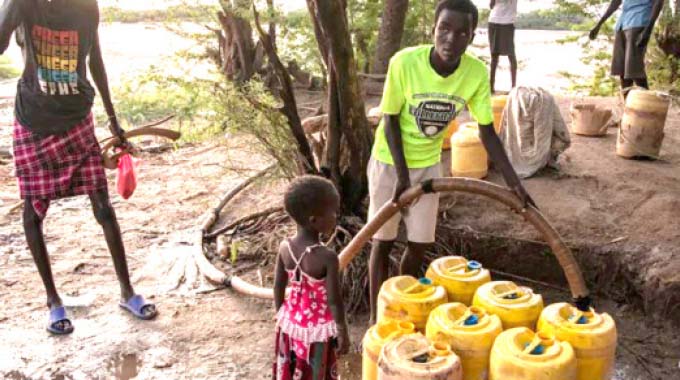
Drought in Kenya has reached dramatic levels, with millions of people affected by the lack of water and food. This phenomenon, which until a few years ago followed predictable seasonal cycles, has become increasingly frequent and intense.
Recent climate crises have worsened the living conditions of the inhabitants of arid and semi-arid regions, whose survival depends heavily on agriculture and livestock.
According to the United Nations, in this historical phase the Kenyan people are experiencing the worst water crisis in the last 40 years and millions of people do not have stable access to safe water sources. Rivers, lakes and aquifers are slowly drying up. In the northern areas of Kenya, women and children are forced to travel ever greater distances every day to collect unclean water from the subsoil, which can cause infections and diseases.
In the 2024 UN Climate Change Conference (COP29) held in Baku, Azerbaijan this year, Kenya reiterated the need for more financial support from developed countries to find adaptation solutions and help the country overcome such a difficult time.
Among the main outcomes of the conference was the “Baku Climate Unity Pact”, which includes new collective financial targets to support vulnerable countries and a roadmap for global climate adaptation. This agreement aims to strengthen the resilience capacity of all countries that, like Kenya, are the most affected by climate change – some of which are the least industrialised, and consequently, those with the least greenhouse gas emissions.
The results of COP29 highlight a strong global commitment to support the most vulnerable nations, but the main challenge remains to transform promises into concrete actions to mitigate the effects of drought and climate change on Kenya and other countries experiencing similar situations. —Al Jazeera



 Online Reporter