

 admin
admin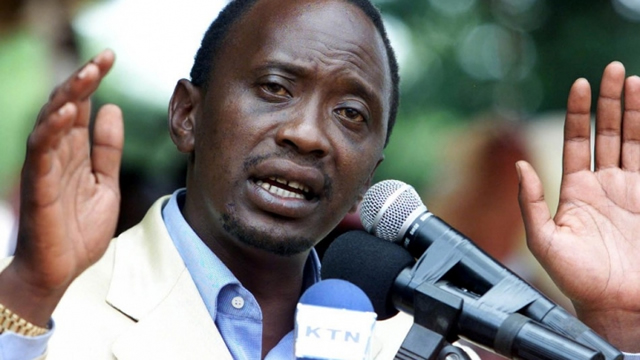
Uhuru Kenyatta, Kenya’s president, has said the al-Shabab assault that killed 148 people at a university is an “attack on humanity” and vowed to take harsh measures against what he called “extremists”.
Kenyatta also declared three days of national mourning on Saturday, in a televised speech delivered two days after four al-Shabab fighters stormed Garissa University College in the country’s east and shot students in their dormitories.
“My administration shall respond in the severest way possible to the attack and any other attack to us,” Kenyatta said.
“The time has come for us to be honest with ourselves and indeed each other. The radicalisation that breeds terrorism isn’t conducted in the bush at night. It occurs in the full glare of day in homes, in madrassas and in mosques with rogue imams.”
Saying the government needed cooperation from Kenyans to tackle the root of the problem, Kenyatta ruled out a caliphate by al-Shabab, which warned days after the attack that it would carry out even more assaults and that Kenyan cities will “run red with blood”.
The attack in Garissa started at dawn and was the deadliest on Kenyan soil since the 1998 bombing of the US embassy in the capital Nairobi, which killed more than 200 people.
Kenya’s interior ministry said the dead included 142 students, three policemen and three soldiers.
Kenyatta said that the planners and financiers of attacks like the one in Garissa town are “deeply embedded in our communities”.
He said the government must get the information and cooperation from parents, community chiefs and political as well as religious leadership to effectively combat “the terrorists. “We must ask the question: Where are the parents and the families of those who are radicalised, where is the community leadership, where is the political leadership? Where is the religious leadership?” Kenyatta said.
Kenya has suffered a series of attacks since 2011 when it sent troops to neighbouring Somalia to join African Union forces battling al-Shabab.
The deployment followed a spate of cross-border raids and attacks on Kenyan coastal cities blamed on al-Shabab, which also staged a siege on a shopping mall in Nairobi in September 2013, killing 67 people. During the attack on Garissa University, non-Muslims were singled out and shot by the assailants.
An eyewitness of the attack spoke of three female students he saw executed as they begged for mercy.
Reuben Mwavita, a 21-year-old student, said the three were kneeling in front of the gunmen, praying for help.
“The mistake they made was to say ‘Jesus, please save us,’ because that’s when they were immediately shot,” Mwavita told the Reuters news agency.
Meanwhile, Kenyans have begun three days of national mourning and dedicated Easter Sunday prayer services to the massacre victims.
Easter ceremonies across the country were due to be held in the memory of the students and security personnel killed in a country where 80 percent of the population is Christian, with flags flying at half-mast.
President Uhuru Kenyatta has declared three days of national mourning after the attack in the northeastern town of Garissa, near the border with Somalia.
In the capital city of Nairobi, one candle was lit in memory of each victim of the attack on Garissa University College in a vigil on Saturday.
Al-Shabab has warned of a “long, gruesome war” unless Kenya withdrew its troops from Somalia, and threatened “another bloodbath”.
Hours after al-Shabab’s warning, police in Garissa paraded four corpses of the gunmen piled on top of each other face down in the back of a pick-up truck followed by a huge crowd.
Police insisted the grim display was to see if anyone could identify the assailants, but some onlookers threw stones at the bodies as they passed, while others jeered and shouted at the dead.
In Nairobi’s ethnic Somali district demonstrators took to the streets protesting against al-Shabab, echoing Kenyatta’s call for unity in the country. — Al Jazeera



 Online Reporter