

 admin
admin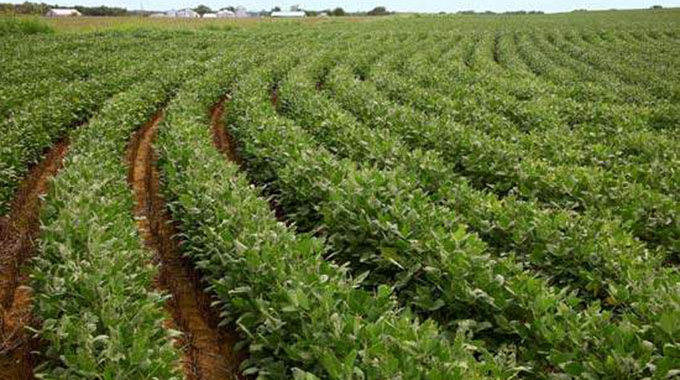
Fradreck Gorwe
Farmers should tap into good agronomic practices if they are to realise high productivity on their land, an agronomist has said. Speaking on Capitalk FM recently Horticulture Crop Consultant and Agronomist Ronald Rusere, deliberated on good farming practices that farmers should harness despite centrifugal issues like climate change or late onset of rains.
There are things that farmers can do to improve on land productivity without having to worry about expenses, he said, adding there was a need for effective manipulation of new farming technologies.
Among the common challenges that farmers face are issues to do with costs. Rusere identified costs as major constraints that hindered farmers this season, noting that seed prices were most expensive for smallholder farmers.
Apart from seeds, fertilisers and insecticides prices doubled in the market thereby making it difficult for farmers. “Some farmers ended up reducing hectarage,” he said.
To lessen the impact of challenges on productivity, farmers ought to harness good farming practices on the field.
“Good agronomic practices go hand in hand with good economics as well. If you adopt good agronomic practices you get better economic returns at the end and that’s where you get a higher profit margin,” said Rusere.
There is need for “planting early and planting effectively”.
According to the agronomist, planting early gives the farmer an opportunity to utilise all the growing days of the season. Planting early also goes an extra mile to avoid peak pest periods. Pests like fall armyworm attack late planted maize according to Rusere.
Besides giving crops a quick start and an even stand, early planting also results in good seed establishment in terms of moisture availability. However, in doing early planting, farmers must always be attentive to weather forecasts and climate patterns.
“You should not plant when the conditions are unsatisfactory. You should plant when the conditions are right, when there is enough water for seed to germinate. There has to be a balance but one should always use forecast,” said Rusere.
Given that weather forecast information dissemination can be hindered by demographics options are available to harness accessible and compatible means.
“In terms of dissemination of information, we should find other streams to disseminate information, not only via social media but even via SMSs (Send Messages) because there are farmers who are not on Facebook or twitter but can use only texts.
“It is ideal that there should be a scenario where farmers get access to this information because this is the most critical information which affects the whole season,” he said.
Climate change should not be a reason to drop early planting as a proper practice and harnessing staggered farming is critical.
Staggered planting results in problems of fall armyworm. Staggering crop planting can only be exercised when you have insurance.
Seasonal soil rotation is key and one of the important management decisions farmers can pursue without having to pay for anything.
The practice improves soil fertility and structure. Higher yields can be realised due to good soil structure. Examples include Soya bean-wheat rotation and soya bean-maize rotation. “Soya bean builds up soil fertility as it fixes nitrogen and can also improve soil structure.
“The follow up crop will have a higher yield because of soil structure that it is inheriting and in terms of the fertility as well.”
In respect to pest control through crop rotation, if there is a non-host among the crops, the life-cycle of the pest is dealt with.
Rotation deals with crop-specific weeds. Crop weed association is a common thing in farming according to the agronomist. Shamva grass and witch-weed for example, attack maize.
Growing the same crop year after year results in yield penalty in the long term. Farmers can diversify with other crops like vegetables. It is proper to do rotation every year.
The agronomist also mentioned other practices that include but not limited to irrigation.



 Online Reporter