Online Reporter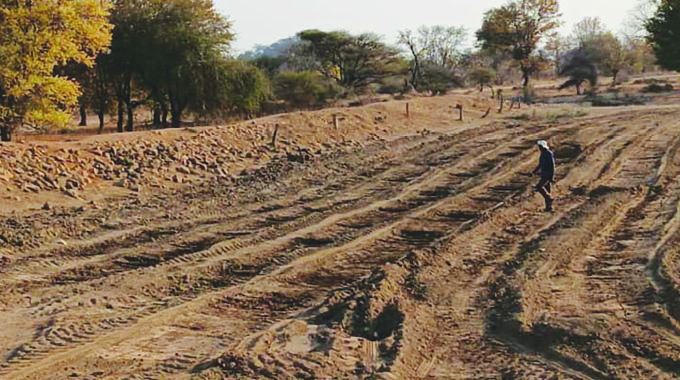
Sukulwenkosi Dube-Matutu, [email protected]
THE long-awaited rehabilitation of Kgobotwane Dam in Ntalale, Gwanda South, has breathed new life into the community after years of suffering due to siltation, which had drastically reduced the dam’s water-holding capacity.
Once fully de-silted, the dam will once again become a reliable water source for livestock in at least five villages and open doors for income-generating projects, giving renewed hope to residents who had endured years of water shortages.
The project is being spearheaded by the Brethren-In-Christ Compassionate and Development Services (BIC-CDS) under the Locally Led Indigenous Nature-Based Solutions for Climate Change Adaptation in Zimbabwe (LINCZ) initiative, which promotes climate resilience and biodiversity conservation.
For years, Kgobotwane Dam had been unable to hold water beyond four months, forcing villagers to depend on boreholes that would often run dry.
“The water shortage forced our livestock to travel long distances, and some never returned. We resorted to pumping from boreholes, but they dried up too, leaving us desperate,” said Ms Sethile Moyo, chairperson of the Kgobotwane Dam committee.
She said the community is now rallying behind the project, with some villagers volunteering their labour and being equipped with protective gear.
Ms Moyo added that once the dam is rehabilitated, villagers plan to establish irrigation schemes and introduce fish farming to create employment opportunities for youth, reduce crime and substance abuse, and improve food security.
“With the dam rehabilitated and filled with water, we envision opportunities for the community, especially the youth. Fishing, irrigation, and vegetable projects will help transform lives and boost livestock production,” she said.
Local farmer Mr Tsepo Dube echoed the sentiment, saying irrigation had always been a dream hampered by water scarcity.
BIC-CDS programme manager Mr Ndabenhle Ncube said the Kgobotwane Dam is part of a wider initiative targeting six dams across eight wards of Gwanda District.
“BIC-CDS currently operates in eight wards and as part of our initiatives, we also prioritise the conservation of water bodies, including dams, to promote sustainable water management and ecosystem health,” he said.
“Our aim is to enhance climate change adaptation in vulnerable communities. Improving access to water is critical to this. At Kgobotwane, we already have a scooper on site, and our goal is to complete the work soon.
Mr Ncube added that once desilting is complete, a borehole will be drilled to ensure villagers also have access to clean domestic water.
Although rehabilitation of other dams has been delayed by high water tables, Mr Ncube said the Kgobotwane project remains a beacon of hope for Gwanda South. — @DubeMatutu