Chronicle Editor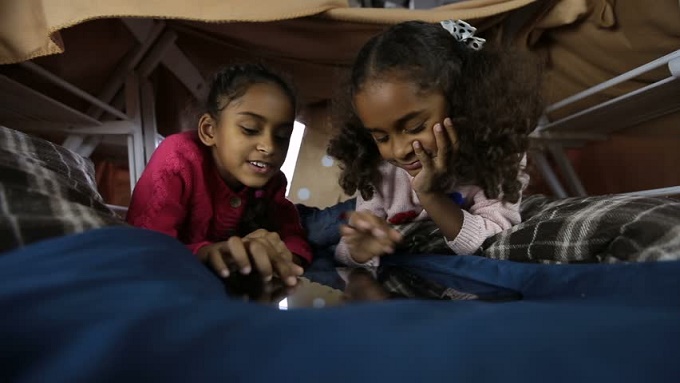
Raymond Jaravaza, Showbiz Correspondent
ANELE Moyo never imagined that spending a full month with her kids at home can be a nightmarish experience characterised by tantrums, constant fights, petty arguments and a lot of screaming.
Her idea of spending quality time with her children was a far-fetched fairytale of book reading, story-telling and peaceful afternoon naps. The Covid-19 induced 21-day lockdown has got Moyo wondering if she is the only parent on the brink of a mental breakdown caused by spending the day with restless children.
“As a working mother I don’t spend a lot of time with the kids and we only see each other early in the morning before school run and in the evenings. I work most weekends so the routine doesn’t change that much,” said Moyo.
She said the lockdown has however, completely changed the routine as she is locked up with the kids from morning until they retire to bed.
“The experience has been very revealing as I now know the characters of my children and how they relate to each other when at home,” said Moyo
She said trying to get her kids, aged seven, 11 and 15 years, to do one task or a single project for entertainment is akin to asking supporters of rival football teams to kiss and make up after a game.
“They fight over anything from toys to the television remote and just asking them to work together on anything, be it gardening or just playing together, is almost impossible. It’s the constant fights and screaming at each other that is so annoying,” she said.
Most parents are finding it easier to leave the children to decide how to occupy themselves and most resort to playing games on the Internet.
The Internet is however an uncomfortable occupation to some parents who do not want their children exposed to things they consider anti-social.
From unsavoury videos not meant for the innocent eyes, dangerous pranks that can leave a child with broken limbs if tried at home or school, to explicit photos, the Internet can be a headache for some parents.
For one Ntombizodwa Ngwenya-Tshabalala who has daughters aged 16 and 17, monitoring the children’s online activity is vital to safeguard them from the vices of the Internet.
“WhatsApp and Facebook are a no-go area after 7pm as the girls must concentrate on their school work. I check their phones and laptops to see what they have been up to and I know that kids are clever and might delete the activity history on their devices but as a parent, it’s a must duty to know what they have been up to,” said Ngwenya-Tshabalala.
Family time in the Ngwenya-Tshabalala household is spent watching family friendly movies, playing board games and doing household chores.
Sabelo Masango believes shielding children from the vices of the Internet alone is not the solution to safeguarding them from the true realities of the world.
Not talking about online risks won’t make the dangers go away, he reckons.
“There is a lot of bad stuff out there and eventually our kids will find out about them — either accidentally or on purpose and as such parents must talk to their kids. If you don’t talk to your kids, someone else will and there is no guarantee that it will be sound advice,” said Masango.
Child behaviour experts are of the opinion that having open and honest conversations is one of the best ways of safeguarding children against online predators, inappropriate content and cyberbullying.
It is advised that until the children are mature enough to make independent decisions pertaining to online activities, such conversations are vital.
Sex predators on the Internet targeting young and vulnerable kids are an everyday reality that parents whose kids have access to online content must be on the lookout for.
Experts warn that parents must talk to their kids at an early stage about unpleasant characters that lurk online such as sex offenders.
Primrose Bhebhe, a mother of a 14-year-old girl from Queenspark suburb says she totally agrees that children must be monitored.
“I think it’s important to let our kids know that we are concerned about their well-being hence we speak to them and also listen to them. It should not be the parent who does the talking but it should be a conversation between two people,” said Bhebhe.
It is also advisable to keep devices like the computer in a common area of the house as it is easier to monitor what kids are up to on the Internet.
Allowing kids to go to bed with their laptops or cellphones is a big No, according to experts. — @Raymond-Jaravaza



 Online Reporter