Online Reporter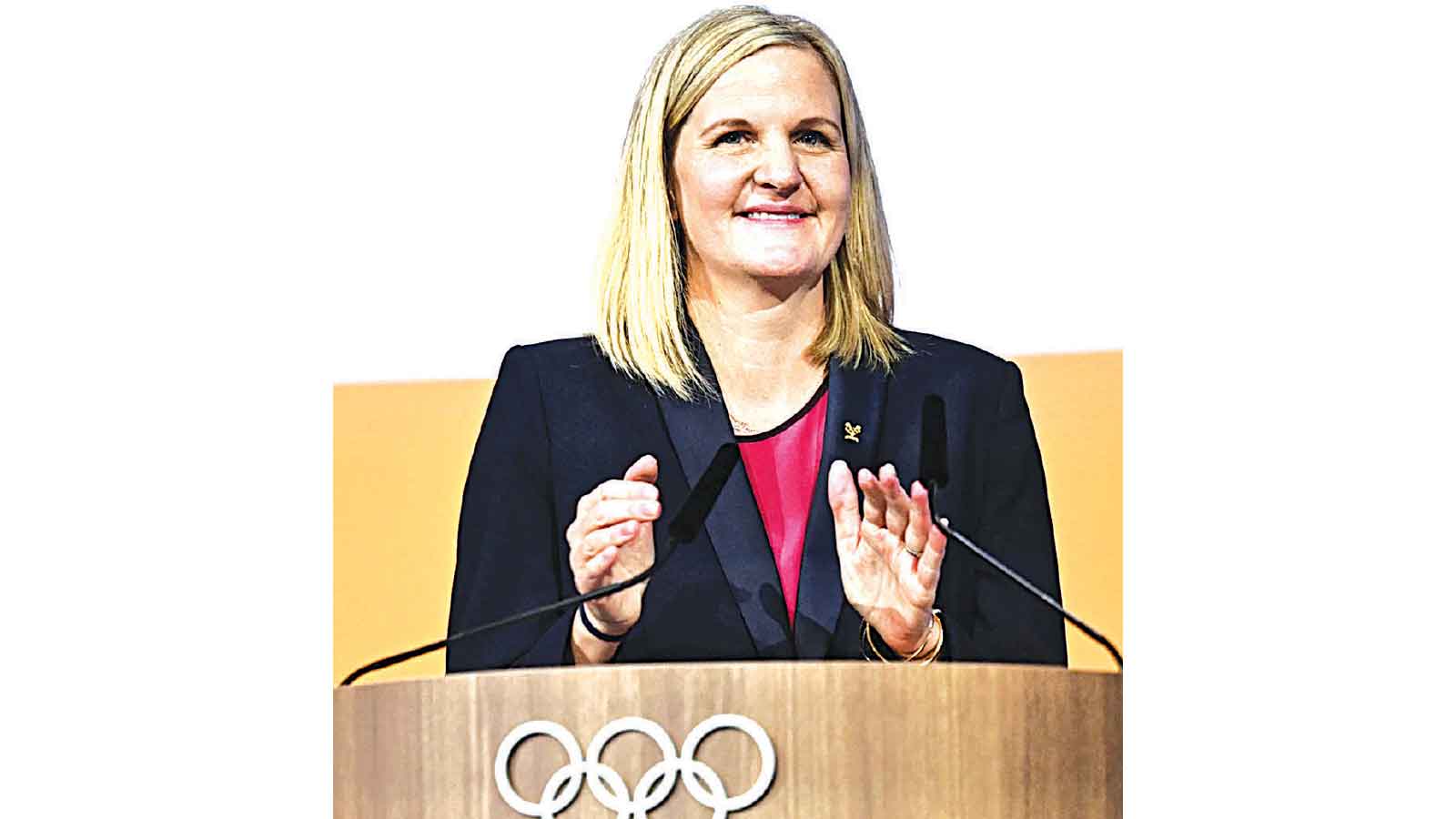
THE president of the International Olympic Committee, Kirsty Coventry, says she is fully aware of the responsibility that comes with being seen as a figure to look up to, both from her time as an elite athlete and now as head of the organisation.
In an appearance on IMD’s Leaders Unplugged podcast, seven-time Olympic swimming medallist from Zimbabwe, Coventry, spoke about her role as the IOC’s first female president and the first from Africa to hold the position, a milestone that signals a broader shift toward greater diversity and representation in global sports leadership.
“I am conscious,” she said, referring to the constant awareness of her influence within sport and beyond.
She recalled attending a forum where a National Basketball Association player delivered a keynote speech about the realities of being a role model.
“He was like, ‘What most athletes don’t recognise is that when they become an athlete, especially at a high-level elite platform, you no longer choose whether or not you’re a role model.
“Your choice is whether you’re going to be good or not so good.’”
Building on that idea, Coventry explained that public figures don’t get to opt out of being role models, their visibility already defines them as such.
Her own journey from Olympic champion to global sports leader illustrates how influence extends far beyond competition, shaping perceptions, inspiring younger generations, and contributing to wider social conversations around values, discipline, and accountability.
The 10th IOC president continued, “You’re going to make choices to be a positive role model, or you’re going to make bad life choices that are going to put you in the bucket of, ‘I don’t want my kid growing up like that’.”
She emphasised that success automatically places individuals in the spotlight, meaning their real control lies in the decisions they make every day.
In today’s digital era, where athletes and leaders are constantly visible through traditional and social media, those decisions are amplified and scrutinised more than ever before, leaving little separation between public and private life.
Her leadership comes at a time when the Olympic Movement is facing growing expectations around transparency, inclusion, and relevance to younger generations.
As president of the IOC, she is not only responsible for guiding the strategic direction of the organisation but also for embodying the values it promotes, including excellence, respect, and friendship.
Her background as one of Africa’s most successful Olympians, winning seven Olympic medals for Zimbabwe, gives her credibility in addressing athlete-focused issues, from mental health to fair competition and governance reform.
“Your choice has been made for you already because of your success, so your daily choice now is trying to make good decisions so that people see you as a positive role model, and not a negative role model.”
Her remarks highlight a broader truth that extends beyond sport: in positions of visibility and influence, being a role model is not optional, but being a good one is a decision shaped by everyday actions. — insidethegames.biz.