admin
admin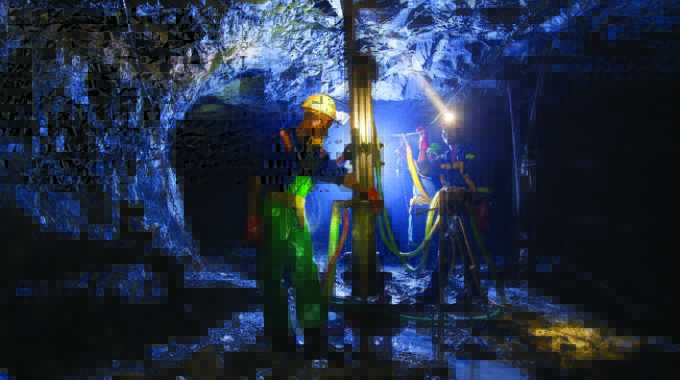
Oliver Kazunga
Senior Business Reporter
KUVIMBA Mining House (KMH) says its subsidiary,Shamva Gold Mine, requires US$150 million to set up processing facilities and transform the asset into a world-class resource.
The mining group is presently concurrently undertakingexploration and mining acitivties at the mine.
KMH actinggroup chief executive officer Engineer Trevor Barnard said in an interview “Currently, Shamvais running underground operations and we recognise the resource as significant,requiring further development.
“We are looking at a substantial capital investmentof up to US$150 million to construct the necessary infrastructure, includingprocessing facilities, for us to be able to process gold directly from there.”
Currently, the gold ore from Shamva is processed at Rebecca Gold Mine in Bindura, another subsidiary of KMH.
Shamva is producing 45 000 tonnes of ore per monthfrom underground operations, a trajectory last achieved in 1910.
The mine operates a conventional mine utilizing10-tonne locomotives and since 2020 Shamva has been producing an average of 520000 tonnes of ore annually.
KMH, a State-owned mining group and Zimbabwe’s biggest gold producer is targeting an 8 percent increase in output this year to 3 500 kilogrammes, underpinned by improvement in orevolumes and increased processing plant efficiencies. In the financial year ended March 31, 2024, the mining group whoseactive mines under the gold cluster are Freda Rebecca, Shamva, and Jena mines,produced 3 240kg.
In an interview during a tour of Freda Rebecca Gold Mine on Monday, KMHhead of the gold cluster Mr Patrick Maseva-Shayawabaya said: “For those threecompanies, we produced 3 240kg of gold for the year to March 2024.
In terms ofcontribution to production, Freda contributed about 70 percent of the 3 240kg.
“This year, also for those three companies we are also looking at goldproduction to be at about 3 500kg split as follows 70 percent from Freda,Shamva 20 percent and Jena 10 percent.
“The increase in terms of production we’re looking at essentially the volume of ore that we will process this year.
“There’s not much of a change but we are looking at a higher grade this year — we’re looking at improvement inefficiencies in the processing plants.”
The mining industry is one of the country’s major economic sectors, accounting for over 75 percent of the national export earnings while gold is Zimbabwe’s single largest export expected to contribute US$4 billion going forward, annually from about US$2,7 billion in 2018.
In 2022, the country produced a record 35,3 tonnes of the yellow metal while production last year declined to 30,1 tonnes due to operational challenges small-scale miners faced power constraints, among other challenges.
The Government has pledged to address the challenges facing the mining industry from which a gold target of 40 tonnes has been set this year.


 Online Reporter