

 admin
admin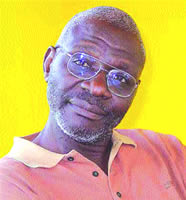
After a spell in teaching and Curriculum Development he proceeded to the Iowa Writers’ Workshop (USA) where he earned an MA in Creative Writing.
He developed an early interest in writing — and, conversely, reading, by the time he finished primary school he knew he wanted to be a writer. His first novel, Dew in the Morning, was written when he was 18 and later published in 1982.
This was followed by Farai’s Girls (1984), Child of War (under the pen name B. Chirasha, 1986), Harvest of Thorns (1989), Can we talk and other Stories, Tale of Tamari (1998), (2004) Chairman of Fools (2005), and Strife (2006).
Strife landed him the 2008 Noma award for literature. The novel Strife is a rich and densely written novel that explores the life of a large family growing up in Gweru whose father aspires to be an enlightened Christian man. He sees his children through school and college where they do well, but as adults, they are struck by a mysterious illness which hinders their personal development.
Chinodya’s work appears in numerous anthologies, including Soho Square (1992), Writer’s Territory (1999), Tenderfoots (2001), Writing Still (2004), Writing Now (2005) and the forthcoming Laughter Now.
He has also written children’s books, educational texts, training manuals and radio and film scripts, including the script for the award-winning feature film, Everyone’s Child. His books are read and studied worldwide.
He has also won many other awards for his work, including the Commonwealth Writers Prize (Africa Region) and a Noma Honourable mention for Harvest of Thorns, a Caine Prize shortlist for Can we talk. Most of his books have scooped the Zimbabwe Book Publishers Association Awards.
He has received many fellowships abroad and from 1995 to 1997 was Distinguished Visiting Professor in Creative Writing and African Literature at the University of St Lawrence in up state New York.
“My fiction seeks to explore and extend the borders of reality, to question and tease matters of identity, class and culture, the past and the present; to explore the human condition in the most interesting and sensitive way possible.
“Every time I put pen to paper I ask myself, ‘What can my writing do for me and for the world? How can I refine my voice? How can I shock my reader into reflecting on the subject of existence? What is existence anyway, and what is the truth, perceived and otherwise? Can I grab my reader by the collar and make him or her gasp: Gosh, I didn’t know it was possible to do this in a story, to write like this.’
“As a black writer I obviously and primarily seek to portray an African worldview, but I want my literature to speak to the world as a whole. My works are experiments on the effects of time and change and socio-economic pressures on humans, and human relationships tangled in the eternal quest for happiness and fulfilment.
“I perpetually seek a harmonious fusion of theme and style. I’d hate to write a single boring paragraph. I believe a good book should exalt the heart and mind of the reader and not punish him/her and that lazy, boring writers should be dragged out to the market place and flogged in public!’’
In an interview with Professor Annie Gagiano Chinodya said: “I write to echo maybe one of my favourite writers who is a Greek-American writer, his name is Harry
Mark Petrakis, and he says writing is a process by which we, by which the writer, revisits memories of suffering and refashions them and softens them and lyricises them and comes up with something which is more palatable, something which is more endurable.
“I think for me writing is like revisiting old pains, old memories, old troubles, old problems and doing something with them and coming up with something which is palatable, more digestible . . . swallowable, if you like. That is for me what writing is about. It’s about suffering and the artistic endeavour to create something possibly out of pain.”
Chinodya also believes that writing in any place or any language, or foreign language, is an act of repossession and reclamation.
“It’s a declaration of intent. I said last night that I read in the Queen’s language. I said I was a traitor, that I was a sell-out, but it’s not that simple. I think that this language was imposed upon us but for me it’s too late to apologise and I’m not apologetic anymore.
“I think I’ve lost my apology. (I’m very, very good in Shona or Ndebele and in Zulu and I want them to write!) For me the English language imposed itself upon me, and it’s now for me to impose upon the English language my thought process, my vision of existence, my values, my beliefs when using this language.”
People often say to me, “Do you think in Shona or do you think in English?” I’m not sure. I don’t know whether I think in ideas or I think in words, but I grow from two linguistic cultures — my Shona culture and my English culture and I cannot think without some kind of language, for me the language problem is not a problem. It’s an act of hybridisation, he told Professor Gagiano.
He believes authors should “write about what they know” adding that he hates to read books where the writer creeps around making one think that all the characters are plucked out of the sky and pasted onto the page with no conviction of there being any felt experience or any felt feelings.
All his books are painful, he told Prof Gagiano.
“I think all my books are painful portraits and I am very old fashioned. I believe in honest narrative. I believe in honesty and objectivity. That’s the best I can do. I probably can’t change things, but if I’m honest enough to describe a scene, describe a situation and I get you as readers thinking about it and talking about it, I want you to read my books and say, ‘Ah yes’ or, ‘I didn’t know it was possible to write like this, didn’t know it was possible to dare to write like this”.
I’ve written, some of my books you wouldn’t believe what I’ve written about, but it’s what I believe in. It’s what I can do as a writer to shock you, drag you by the neck and say: “Look at this, look at this, what do you think? And how do you respond to that?” It’s my “thang”. — African Success/weaverpresszimbabwe/HR.


 Online Reporter