admin
admin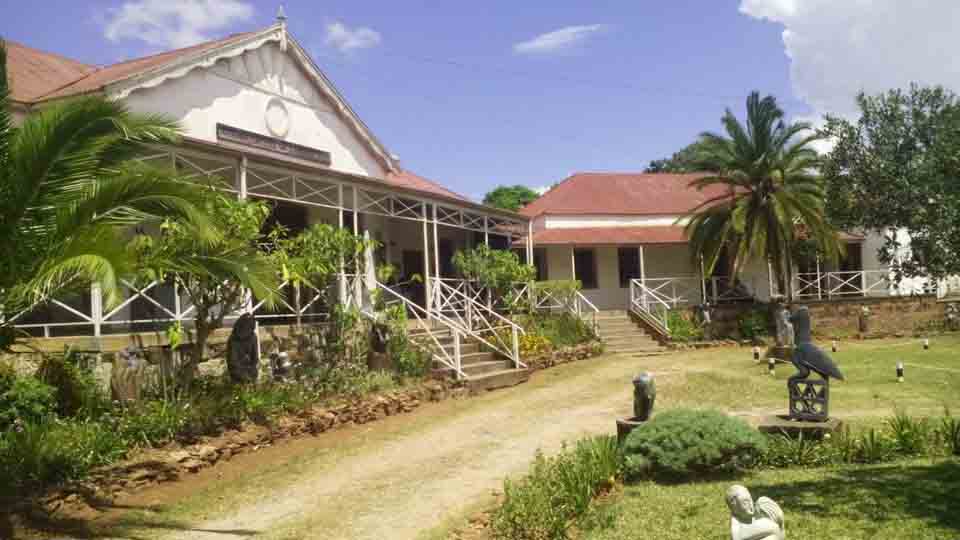
Liberty Dube
Tourism Correspondent
MANY have known it as the home for the National Gallery of Zimbabwe for years and recently, Women’s University in Africa joined in to occupy the Kopje House which is one of the historic buildings and a national monument found in Mutare.
The Kopje House Complex was started and completed in 1897.
Set out on a kopje, the building functioned as a hospital in the then Umtali, now Mutare, from August 1897 until March 1930.
The hospital then moved to its current location at Hospital Hill.
Between 1930 and 1934, the Kopje House Complex was largely abandoned and parts of the complex were later used as an old people’s home and Government offices between 1934 and 1938.
From 1938 to 1972, it became a temporary hostel for the then Umtali Boys’ High School.
In 1976, Umtali City Council took over the complex and many buildings were demolished.
The remaining ones were used by the Umtali Museum Scientific and Cultural Association for various activities.
The complex was later proclaimed a national monument.
The building material is mainly stone, brick, wood and corrugated iron. Various conversions and alterations have taken place, the main ones being in 1913, 1936-7 and 1976.
A little mortuary was set up on site and it still exists to this day, although it has a new use.
The mortuary was up on the hill behind the women’s ward and the dispensary, until 1926 when it ceased to be a mortuary.
A story is told from Mrs Margaret Stewart, a former resident of Umtali, involving her friend, Sister Harrison, who was nursing at Kopje House.
One night, Sister Harrison was accompanying stretcher bearers on the long trek to the mortuary and was carrying a hurricane lamp to light their way.
A donkey sleeping in the grass on the outside of the fence awakened and stood up.
The bearers dropped the stretcher bearing the corpse and ran for their lives.
Dr Wilson was the first Medical Superintendent of Kopje House Hospital around 1920s, while the matron was Miss Newcombe.
Miss Hunt became matron when Miss Newcombe retired and moved to Umtali Hospital in 1930.
With the intensification of work on the construction of the railway from Beira, many more patients were being brought to the hospital.
The place holds a critical historical and cultural significance and has played a critical role in championing arts as well as supporting artistes.
The place has numerous permanent exhibits which are well displayed in the gallery and surrounding grounds.
They occasionally offer local artists the much-needed opportunity to showcase their talents and display their work.
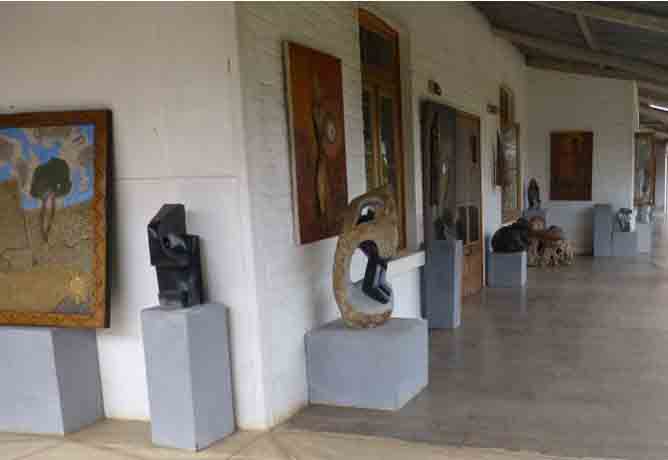
A visit to the place is worthwhile.
It is a cultural and tourism hub and has hosted visual and performing artists as well as culture enthusiasts from across the globe.
There is a gallery shop which is bright and cheerful with cushions, batiks, basket ware, beaded animals, jewellery and carvings attractively displayed.
National Gallery of Zimbabwe Manicaland regional director, Ms Elizabeth Muusha said: “The museum has the mandate to showcase Zimbabwean visual artists through exhibitions. In doing so, we market and give publicity to the cultural issues of the communities around Manicaland.
“This year, we have so far hosted several exhibitions by various groups of artists that include Black Narratives by Paidamoyo Sajeni, Embrace Equity – Hear my Story (Women Exhibition) by various women and Africa Beyond by Wada Collective group of artists, among others.
“Currently showing is Beyond the battlefield (National Gallery Mutare (NGM) permanent collection) that celebrates Zimbabwean icons in various fields, for instance, the social, economic, political, sports, arts and culture diversities.
“Visitors to NGM include local and international tourists. In support of the National Development Strategy (NDS1) under human development, NGM focuses on empowerment and improved livelihoods of youths through marketing and publicity of their art works.
“To achieve this, the organisation relies on both the local and international visitors. The gallery is re-engaging with both local and international visitors to support the visual artists by visiting and consuming their works. The gallery needs collaboration with all stakeholders,” said Ms Muusha.


 Online Reporter