Online Reporter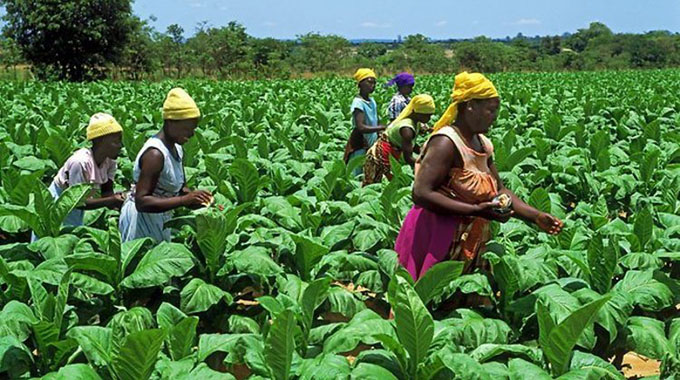
Dr Frank Magama
ZIMBABWE remains a dominant force in Africa’s tobacco industry, leading in flue-cured tobacco production on the continent and ranking fifth globally.
This growth has been largely driven by an influx of communal farmers into the lucrative sector following land reform.
Currently, over 134 000 farmers are growing the golden leaf in the country.
Using the right seeds
It is critically important for Zimbabwean tobacco growers to plant only locally produced seeds from Kutsaga Research for several interconnected reasons:
- Maintain the internationally sought-after flavour style of Zimbabwe tobacco;
- Biosecurity and pest/disease prevention;
iii. Exclusion of foreign pathogens — Imported seeds risk introducing quarantine pests/diseases not currently present in Zimbabwe such as Meloidogyne enterolobii, novel viruses and soil fungi. Kutsaga seeds are produced under strict phytosanitary controls within Zimbabwe’s ecosystem;
- Avoiding “resistance-breaking” strains — Foreign seeds may carry nematode/pathogen strains that overcome existing genetic resistance in Kutsaga varieties,
- Optimised agronomic performance;
- Local adaptation — Kutsaga varieties are specifically bred for Zimbabwean soils, climate, altitude and rainfall patterns. They deliver reliable germination, vigour, yield and quality under local stress conditions;
vii. Disease resistance — Kutsaga incorporates resistance to locally prevalent diseases strains (e.g. TMV, root knot nematodes, black shank, Fusarium wilt);
viii) Quality and market compliance;
- Curing and leaf quality — Kutsaga varieties are selected for compatibility with Zimbabwe’s flue-curing practices, ensuring the high leaf quality, colour and texture demanded by buyers (for example, China and the European Union).
- Meeting contract specification — Many export contracts require approved Kutsaga varieties to guarantee consistency and compliance with buyer standards.
- Supporting local research and sustainability;
xii. Local seed sales directly fund critical local research and development (R&D) into new varieties, pest management and sustainable practices, benefitting Zimbabwean growers;
xiii. Preserving genetic resources — Kutsaga maintains Zimbabwe-specific germplasm banks — a national strategic asset.
xiv. Regulatory and traceability compliance;
- Legal requirements — Zimbabwean law often mandates the use of certified seed for commercial tobacco. Kutsaga is the sole certified source;
xvi. Traceability: Using Kutsaga seed ensures full traceability from seed to export — crucial for quality assurance and market access.
How uncertified/illegal seed is produced
No standard way of seed production is followed. And the seed is kept below accepted seed storage standards.
This compromises the quality of the leaf produced by a huge margin.
Non-adapted foreign seeds risk poor establishment, disease susceptibility or rejection at auction, causing devastating financial losses.
Consistent quality from Kutsaga seeds maintains Zimbabwe’s premium position in global tobacco markets.
It protects your crop from unknown pests, ensures high yields of marketable leaf under Zimbabwean conditions, funds vital local research and safeguards the entire industry’s reputation and profitability.
Using uncertified or imported seeds is not just risky; it threatens individual livelihoods and Zimbabwe’s position as a top tobacco producer. Kutsaga’s seed is the foundation of the industry’s resilience.
The law is clear on this, saying varieties only approved by the Tobacco Industry and Marketing Board (TIMB), at the recommendation of Kutsaga, must be grown in Zimbabwe. The guiding law is the Tobacco Industry and Marketing Act (Chapter 18:20).
Any tobacco grown from a variety that has not been approved by TIMB must be destroyed.
Section 66 (1) of the Act stipulates that any such tobacco must be destroyed.
Impact of using illegal varieties
The country risks losing the internationally sought-after flavour of Zimbabwe tobacco.
Growing illegal varieties is tantamount to wholesale sabotaging of Zimbabwe’s enviable and prosperous tobacco industry.
Growers and merchants will inadvertently suffer financial losses through yield penalties, increased cost in pests and disease control and low value leaf crop (or filler styles).
The net effect is that, at household level, this compromises family income and food security and at national level, it results in low foreign currency receipts, and this goes against Government policies such as the Tobacco Value Chain Transformation Plan and its efforts towards a US$5 billion revenue crop.
Our unique tobacco attributes are safeguarded by proven and widely adapted locally bred genetics, as well as tested and approved foreign varieties.
Rigorous industry-wide testing protocols (including agronomic, chemical, smoke quality) guarantee the sought-after quality of all tobacco varieties bred locally or imported in Zimbabwe. Cultivating untested and unapproved tobacco varieties dilutes the signature quality and smoke the Zimbabwe-grown leaf is renowned for.
Loss of markets to competition such as Brazil becomes inevitable. International markets are clear with the quality of tobacco they require.
Thus, growers and merchants are urged to desist from cultivating and buying leaf from unprescribed varieties, respectively.
Adequate tobacco seed
We have sufficient seed to cover the 2025/2026 season and we have three- to five-year seed cover. The 2025/2026 season preparations, in terms of seed sales, are proceeding very well and by June 5, we were at 39 percent of the annual seed sales; that is a -1 percent less of where we were in the 2024/2025 season.
So, we are on course.
Product diversification
The response (to diversify, in line with the WHO Framework Convention on Tobacco Control) has been very positive and exciting, with growers embracing the opportunities offered by alternative crops such as industrial hemp and medicinal cannabis.
On the research front, towards the development and release of local varieties, significant strides have been made, starting with local germplasm collections and carrying out research trials to assess the best adapted genetics on course.
Below is a thorough breakdown and some background of the status quo.
- Legalisation and regulation: Zimbabwe legalised medicinal hemp cultivation in 2018 (Statutory Instrument [SI] 62 of 2018, amended by SI 110 of 2018), becoming one of the first African countries to do so.
- The Medicines Control Authority of Zimbabwe (MCAZ) regulates licensing for cultivation, processing and export. Strict requirements focus on security, traceability and THC limits (<1 percent for hemp, <0,3 percent THC for European Union (EU)-compliant industrial hemp) while the Agricultural Marketing Authority (AMA) regulates the production of industrial hemp.
- Kutsaga is involved in agronomic research to support the crop.
- Licensing and industry development:
- Dozens of licences have been issued to companies and large-scale commercial farmers for cultivation and processing (for example, Swiss Bioceuticals Limited, Precision Hemp Zimbabwe).
Most focus on export markets (EU, Canada, Australia) for pharmaceutical extracts (CBD), seeds and fibre.
- Infrastructure and investment:
- Progress is nascent but growing. Major investments are needed in processing facilities (for CBD extraction, fibre decortication), laboratories and secure logistics.
Some licensed players are establishing these, but scale remains limited.
- Knowledge and agronomic gaps:
- Cultivation of hemp is technically different from that of tobacco. Farmers need training on varietal selection, pest/disease management (especially fungal diseases in humid conditions), harvesting techniques for different end-uses (CBD versus fibre) and post-harvest handling.
Kutsaga is highly positioned to deliver quality training in hemp using the same model that has made tobacco successful.
Zimbabwe has laid the policy foundation for medicinal hemp and attracted large-scale investment, making tangible progress. However, translating this into widespread adoption by the majority of tobacco farmers (smallholders) faces significant economic and structural hurdles.
The response from smallholders is cautious interest hampered by accessibility challenges, while larger players are more actively engaged.
Full integration into the diversification strategy requires focused efforts to make the crop genuinely feasible for smaller-scale producers.
It is crucial for the nation to know that Kutsaga-approved hybrids unlock maximum yield potential, guarantee good quality and enhanced disease resistance, enabling growers to boost profitability. Economically, there is huge merit in adopting locally bred tobacco hybrids.
As the 2025/2026 season beckons, growers and contractors are encouraged to buy seed/seedlings from trusted and authentic outlets.
Kutsaga selling points are strategically located at all tobacco auction floors.
Genuine Kutsaga seed is unlikely to be sold by an individual, especially when outside Kutsaga approved outlets.
For your records, kindly ensure you receive an invoice/receipt and carefully store your seed packets after sowing, as this will help with record-keeping and potential future inquiries.
Above are excerpts from Agriculture Editor Obert Chifamba’s recent interview with Kutsaga Research Chief Executive Dr Frank Magama.