
Theseus Mauruki Shambare in VICTORIA FALLS
ZIMBABWEAN researchers are putting local scientific innovation on the global tobacco research map, with a Kutsaga study demonstrating how biofertilisers could help reduce greenhouse gas emissions without compromising tobacco productivity.
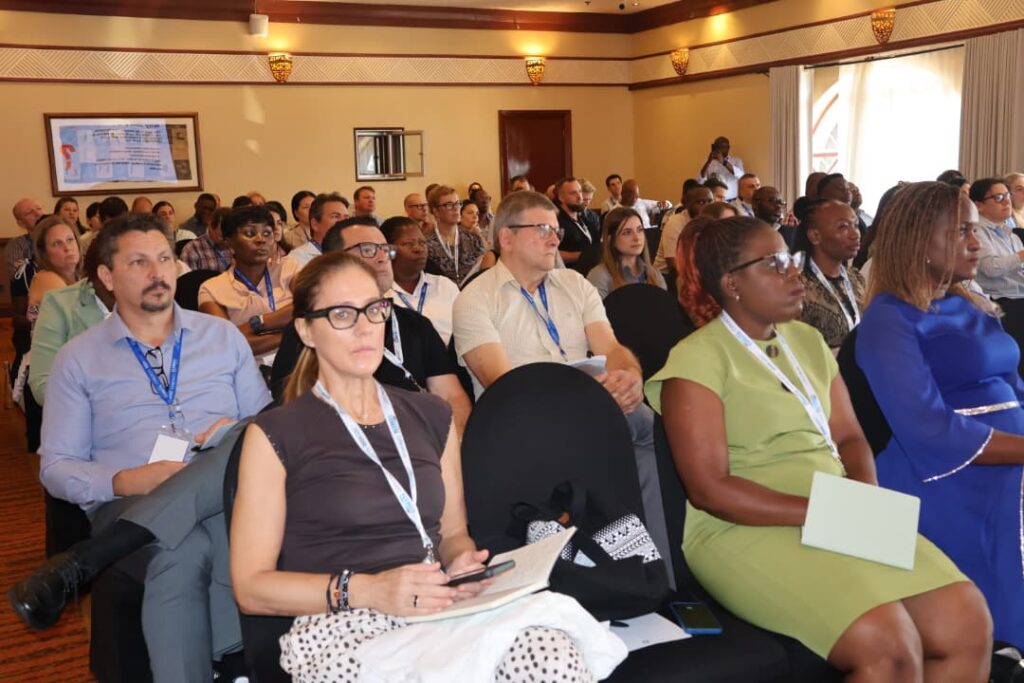
The findings, presented by Kutsaga Agricultural Research Officer specialising in Soil Chemistry, Ms Dadirai Chinamo, at the ongoing 70th Cooperation Centre for Scientific Research Relative to Tobacco (CORESTA) Congress in Victoria Falls, point to opportunities for making tobacco production more environmentally sustainable.
The study, titled Mitigating nitrous oxide emissions in tobacco cropping systems through biofertiliser use, assessed different combinations of chemical fertilisers and biofertilisers over the 2023 and 2024 growing seasons.
It found that combining 75 percent chemical fertiliser with 75 percent biofertiliser offered the most promising balance between crop productivity and emissions reduction.
“The best low emission compromise was the 75 percent chemical fertilizer combined with 75 percent of the biofertilizer, and it was lower in both seasons than the 100 percent chemical fertilizer,” said Ms Chinamo.
“When we combined or when we improved these two seasons together, there was a 31 percent reduction with this treatment where we had 75 percent of the chemical fertilizer and 75 percent of the biofertilizer.”
The research also assessed the effect of the treatments on saleable yields and leaf quality, with results showing that reduced chemical fertiliser application could maintain comparable production outcomes.
“We’re glad that reducing the chemical fertilizer by 50% and supplementing in the biofertilizer we got almost similar results with the 100 percent chemical fertilizer, meaning there was no penalty in terms of the yield.
“Across both seasons 2023 and 2024, there were no significant differences in terms of the quality across all the treatments,” she said.
Nitrous oxide is a potent greenhouse gas associated with agricultural soil management, particularly nitrogen fertiliser application.
The researchers observed increased emissions following the second application of ammonium nitrate, with higher fluxes recorded on ridges where fertiliser was applied.
However, Ms Chinamo said the findings needed further validation, as the trials were conducted on sandy soils and the influence of soil moisture and mineral nitrogen varied across treatments.
The study was undertaken by a Kutsaga research team that included Head of Sustainable Agriculture Dr Kumbirai Mateva, Executive Director for Research and Extension Dr Susan Dimbi and chief executive officer Dr Frank Magama.
Ms Chinamo’s presentation was part of a wider contribution by Zimbabwean scientists at the international congress.
Dr Magama outlined Kutsaga’s research priorities for climate-resilient tobacco production, while Dr Cleopas Chinheya presented on emerging and re-emerging plant health challenges affecting the crop.
“The presentations highlight Zimbabwe’s contribution to international scientific efforts to address climate change, crop health and the environmental sustainability of tobacco production,” said Dr Magama.