Online Reporter
Theseus Mauruki Shambare
THE Tobacco Research Board, trading as Kutsaga, has unveiled an ambitious five-year strategy anchored in commercialising research, diversifying revenue streams, and expanding support for farmers following Zimbabwe’s record-breaking 354 million kilogramme tobacco harvest.
The strategy, endorsed during Kutsaga’s 6th Annual General Meeting, aligns with the Government’s National Development Strategy 2 (NDS2) and seeks to position the institution at the centre of agricultural transformation by broadening its research beyond conventional tobacco to include associated crops, climate-smart technologies and high-value agricultural innovations.
Kutsaga chief executive officer Dr Frank Magama said the new direction marks a decisive shift in the institution’s role within the agricultural economy.
“Our strategy going forward is anchored on commercialising research outputs, diversifying our portfolio and ensuring that farmers benefit directly from innovations generated through our research system,” said Dr Magama.
Among the key initiatives is the development of alternative tobacco varieties, particularly shisha tobacco, which is already showing positive commercial promise.
Trials conducted by Kutsaga recorded prices of US$4,80 per kilogramme for shisha tobacco, substantially higher than the current average tobacco price of about US$2,60 per kilogramme, presenting new income opportunities for growers seeking to diversify production.
Dr Magama said the institution is scaling up farmer training programmes to support the crop’s adoption.
“We are positioning ourselves to equip farmers with the technical knowledge required for shisha tobacco production, including agronomic practices, curing methods and compliance with international quality standards,” he said.
The diversification agenda comes as Cabinet has approved principles to amend the Tobacco Research Act, paving the way for Kutsaga to expand its mandate beyond traditional tobacco research to cover manufactured tobacco products, associated crops, farmer extension services, capacity building and research advisory services.
Dr Magama said the proposed reforms will strengthen operational efficiency and align the institution with national governance frameworks.
“These legislative amendments will allow us to operate more effectively as a modern research institution while ensuring alignment with corporate governance and public finance management requirements,” he said.
Kutsaga said its contribution during the past year extended well beyond tobacco production.
The institution trained 13 234 tobacco growers and 1 117 extension officers, while producing and distributing more than 3,13 million horticultural seedlings and 1,5 million sweet potato seedlings, reinforcing Government efforts to boost food security, agricultural diversification and rural livelihoods.
Dr Magama said the expansion into horticulture and root crops reflects a deliberate shift toward strengthening food systems’ resilience.
“Our mandate is no longer limited to tobacco alone. We are actively supporting diversification and food security through seedling production and farmer capacity building programmes,” he said.
The institution also used major national platforms to showcase its growing portfolio of climate-smart technologies and agricultural innovations.
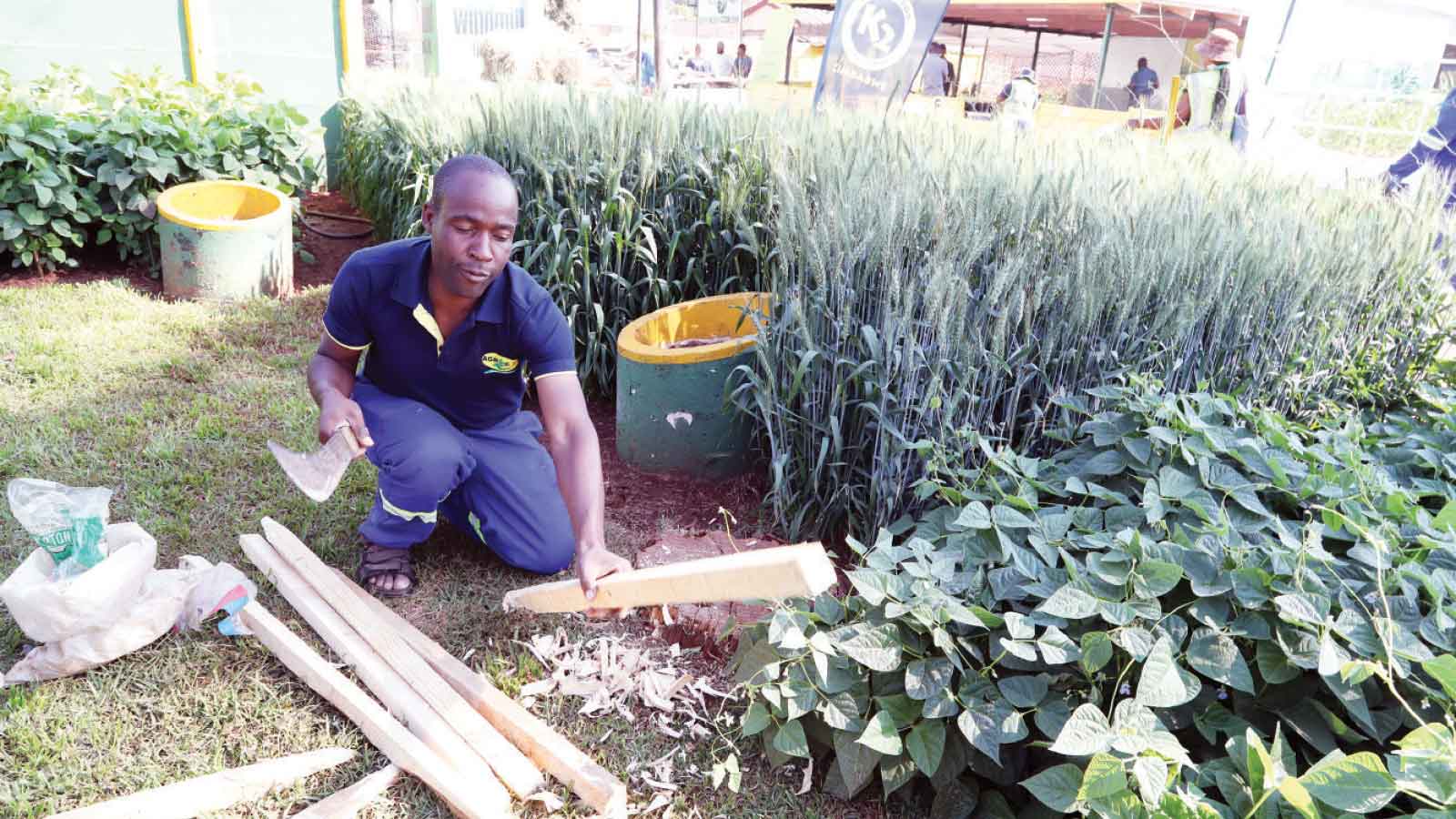
During this year’s Zimbabwe International Trade Fair in Bulawayo, Kutsaga exhibited innovations in tissue culture, climate-smart agriculture and sustainable farming systems, drawing attention from senior Government officials.
Further recognition came at the Agricultural Research Council Field Day, where Kutsaga won the Best Demonstration Plot Award and finished second in the exhibition category after showcasing improved sweet potato and Irish potato technologies.
Dr Magama said the institution is now intensifying efforts to strengthen resilience, safeguard infrastructure and improve financial sustainability under its 2026–2030 strategic plan.
“We are implementing corrective measures to safeguard infrastructure, improve financial sustainability and unlock new funding streams under our 2026–2030 strategic plan,” he said.