Chronicle Editor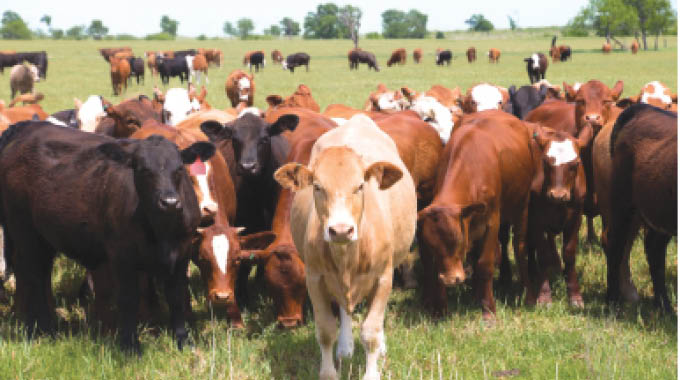
Judith Phiri in Zhombe
FARMERS in Zhombe, a communal area in Kwekwe District made close to US$51 000 from a cattle auction sale of 116 animals, a move meant to ensure that they get full value for their animals and are treated fairly on the markets.
Traditionally, farmers used to sell their cattle at their farm gates to middlemen or private buyers. The animals would be sold without weighing or grading and due to monopolistic tendencies of the buyers, the farmers were mere price takers with very low negotiating power.
On Thursday at the Zhombe-Joel Cattle Business Centre (CBC) 50 farmers comprising 42 men and eight women sold their cattle for a combined US$50 950 to MC Meats, Sabie Meats and private buyers during a CC Sales Livestock Auction. In an interview, Midlands provincial veterinary officer Dr Martin Sibanda said the public auctions allowed farmers to get full value for their animals.
“Most private cattle sales whereby buyers move around buying cattle from farms and villages, farmers suffer the most as middlemen pay them less. However, at public cattle sales various buyers bid ensuring that the farmers get full value for their animals and are treated fairly on the markets,” said Dr Sibanda.
He said at a public cattle auction such as the Zhombe-Joel CBC one, cattle are weighed, tagged and graded, hence farmers would benefit as buyers would then compete for those animals.
Dr Sibanda encouraged farmers to desist from selling their cattle for lower prices to middlemen who move around villages to prey on them, while at public cattle auction sales prices and payment terms were usually favourable due to competition.
He said: “The auction sale system is a proven marketing avenue for all classes of cattle and forms the pillar of organised open markets allowing economies of scale for buyers, compliance and eliminating some marketing expenses for farmers. Such public auctions also follow various regulations as both the farmers and buyers have a movement permit, unlike some private cattle sales.”
Dr Sibanda cautioned farmers from selling their cattle at private cattle sales as he said these were sometimes contributing to livestock diseases through uncontrolled movements and doing transactions without prior animal inspection. He said as buyers move from one village to the other without a movement permit, they would also move cattle with certain disease to another place.
“In the event that an outbreak happens, it would then become difficult to trace back where the disease could have originated from and difficult to identify which other areas would have been affected because most of these middlemen that hold private cattle sales would not be having a movement permit and the animals would not have been inspected,” added Dr Sibanda.
One of the farmers who participated at the auction sale, Mr Jabulani Nduna from Ward 16 in Zhombe said the amount he got for his beast was impressive.
“I recently bought this bull but it was weak so l had to pen fatten it before selling it. Before pen fattening the offer l got from buyers that would move around the village was US$200. When l brought it here for the auction it weighed 540kg and l got US$460,” said Mr Nduna.
He also said that he saved money as he had used farm formulated feed to pen fatten his cattle, as most villagers could not afford commercial feed.
Mr Nduna said after the training they received from the Beef Enterprise Strengthening and Transformation (BEST) project, farmers were capacitated on how to formulate on-farm feeds to supplement their cattle including the practice of growing fodder.
“Since BEST came to Zhombe there has been improvement in our cattle rearing practices. We were taught how to formulate our own feed with the right quantity of nutrition to pen fatten our cattle. These farm-made feeds are low cost and nutritious compared to the commercial feed,” he said.
Zhombe-Joel CBC chairman Mr Emmanuel Mutodza said the number of cattle being brought to the auctions kept on rising showing that farmers were satisfied with the money they were getting from the buyers.
“Cattle for the auction are coming from every part of this district and even from those farmers in the peri-urban. For the first auction which was done here farmers brought 48 cattle, 72 cattle for the second one and 120 for the third one. This shows that for each auction, the numbers continue to grow which is a reflection that farmers are happy with the buyers who are offering competitive prices,” said Mr Mutodza.
He said although they were facing various challenges particularly with police clearance, farmers were starting to boycott selling cattle to middlemen.
The BEST project established a CBC at Zhombe-Joel after the infrastructure had been vandalised. The project mobilised the communities and refurbished the idle infrastructure to which is now a hub for cattle business.


 Online Reporter