


 malvernmugadzikwa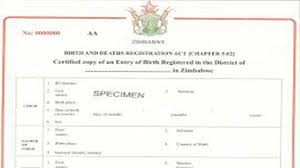
Theseus Shambare in MUTASA
TRADITIONAL leaders, child protection committees (CPCs) and development partners in Mutasa district have raised concern that the lack of birth certificates for children could hinder the attainment of Vision 2030.
Vision 2030 aims to transform Zimbabwe into an upper middle-income economy by the year 2030.
Mutasa district, a community influenced largely by Apostolic sects, has many children without proper documentation.
Also, the community has been affected by rampant gender-based violence (GBV), early marriages and restricted access to healthcare.
“Without a birth certificate, children are effectively invisible to the State,” said Headman Sanyamandwe (Mr George Chidawanyika).
“This not only denies them access to education and healthcare but also hinders their social and economic inclusion, which is crucial for national development.”
The lack of birth certificates, he said, poses a significant challenge to the Government’s efforts to track progress on key development indicators such as child mortality, school enrolment and poverty reduction.
“Accurate data on the population is essential for effective planning and resource allocation,” he said. Mrs Winnie Nyatsanza, a community childcare worker (CCW), said birth certificates are a fundamental human right.
“They provide children with legal identity and access to a range of essential services. Without them, we risk leaving behind a generation of marginalised and disadvantaged individuals,” she said.
In response, the Ministry of Public Service, Labour and Social Welfare, in partnership with UNICEF and the Swedish International Development Agency (SIDA), has rolled out mobile registration campaigns and community-based programmes to assist families in obtaining birth certificates.
In 2024, the campaigns enabled over 800 children to get birth certificates in Mutasa district.
“For many families, obtaining a birth certificate seemed like an impossible task,” said Mr Leonard Gohwa, another CCW.
“Through this initiative, we have been able to break down those barriers, ensuring that every child gets the recognition they deserve.”
Mr Misheck Nyazika, also a CCW, highlighted the importance of community engagement.
“We work closely with families to explain why birth certificates matter,” he said.
This programme fosters strong multi-stakeholder collaboration, with the Ministry of Local Government at its center. Key partners include the Ministry of Public Service, Labour and Social Welfare, the Ministry of Primary and Secondary Education and the Ministry of Health and Childcare, each contributing their respective expertise.
Once beneficiaries are identified, the Civil Registry will be engaged to issue essential documentation. Upon receipt of these documents, UNICEF will then disburse funds to support the programme.



 Online Reporter