onlinemedia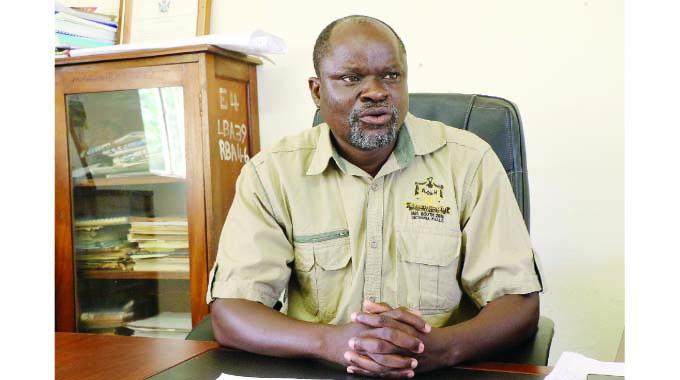
Mashudu Netsianda
Bulawayo Bureau
Government has kick-started work towards the establishment of two new irrigation schemes in Binga District near Lake Gwayi-Shangani, with a master plan and an Environmental and Social Impact Assessment for 200 hectares of land already underway.
This development follows a 2022 Cabinet decision granting Binga rights to draw water from Lake Gwayi-Shangani.
The move was part of a broader strategy to transform the semi-arid district into a food-secure area by utilising the vast water resources from the country’s third-largest inland water body after Lake Mutirikwi and Tugwi-Mukosi.
Of the 69-kilometre lake pushback stretch, 52 kilometres will be located within Binga District, while the remaining 17 kilometres fall under the Gwayi area in Hwange District.
Lake Gwayi-Shangani, a flagship project under the National Matabeleland Zambezi Water Project, is expected to be a game changer in addressing perennial water shortages in Matabeleland.
First mooted in 1912, the project is finally nearing completion under the Second Republic, with the lake set to be linked to Bulawayo through a 245km pipeline that will permanently ease the city’s water challenges while also spurring agricultural and industrial growth.
Binga District Development Coordinator, Mr Land Kabome, said the two envisaged irrigation schemes, each covering 100 hectares, will be vital in improving household food security and local livelihoods.
“To enhance food sufficiency, Binga District was offered two irrigation schemes, each measuring 200 hectares close to the Gwayi-Shangani project site,” he said.
“Work is underway to facilitate the project, including the drawing up of a master plan as well as an Environmental and Social Impact Assessment.”
The Government is also remodelling the Bulawayo Kraal Irrigation Scheme, another massive project in Binga. So far, 250 hectares of the 15 000-hectare scheme have been cleared and tilled.
The scheme is now under the management of the Agricultural and Rural Development Authority (Arda), after years of being run by the Department of Irrigation.
At Bulawayo Kraal, significant progress has been recorded.
The main pump house has been completed, booster pumps installed and preparations are being made for sunflower production both under irrigation and dry land farming to support cooking oil manufacturing in line with the rural industrialisation agenda.
“It is expected that sunflowers will be produced both under irrigation and dry land farming to sustain the production of cooking oil as part of the rural industrialisation development agenda,” said Mr Kabome.
He noted that land clearing of 100 hectares is ongoing, with Zimbabwe National Water Authority (Zinwa) engineers already on site inspecting the pipeline, pump house engines, night storage and pivots.
However, Mr Kabome highlighted the need for additional equipment such as disc ploughs, tractors, polythene paper for night storage and new fencing.
The irrigation projects come as part of broader Government efforts to accelerate development in Binga District.
In March 2021, Cabinet approved a package of key infrastructure interventions, including the rehabilitation of roads, the construction of a vocational training centre, a civil registry office, a nursing school, the refurbishment of Binga Hospital’s mortuary, the rehabilitation of the district airstrip and the setting up of a border post, among other projects.
President Mnangagwa has repeatedly emphasised that the Second Republic is committed to uplifting Binga, an area that for decades was marginalised in terms of development.
The current interventions, aligned with the National Development Strategy 1 (NDS1), prioritise the completion of stalled projects while rolling out new ones aimed at transforming livelihoods and stimulating economic growth in the district.
Treasury has since pledged to release US$5 million towards the construction of the Lake Gwayi-Shangani every month until the completion of the project.
The Government’s monthly disbursement arrangement is expected to expedite construction works.
The project involves construction of the Lake Gwayi-Shangani, 10MW mini-hydro power station, 252km pipeline with six booster stations from the dam to Cowdray Park in Bulawayo, 220ML/day Cowdray Park water treatment plant and communities along the pipeline can establish irrigation schemes on 10 000ha.
The height of the wall is 39 metres out of 72m. With a planned holding capacity of 634.27 million cubic meters, the project is now 72 percent complete. Zinwa is collaborating with engineers from China International Water and Electric Corporation.
At any given time, approximately 350 workers are on site, with capacity to increase to 620 as efforts intensify to complete the project.



 Online Reporter