admin
admin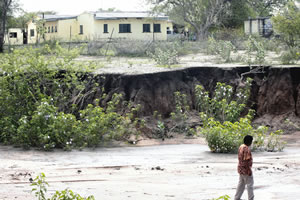
shelter from the blistering Gokwe sun which can be as hot as 40 degrees Celsius.
Today, the sun is beating down mercilessly, suggesting it has decided to hover in the upper extremity, making the women a sweating and stewing mass without much reprieve from the shade of the tree.
The women have been told to form one big group so that they can have their contraceptive injection shots administered at once.
So they sit here, chatting loudly amongst themselves.
Inside the clinic, a manifestly small facility for the patients here – and more importantly – the community around, the air is suppressing and clammy.
Those who have other health concerns make their way into the clinic where they are attended to by two nurses who are as diligent as they are patient.
Their industriousness is responsible for the conveyor belt movement of patients and sooner or later, the women waiting outside for the contraceptive shots will be attended to.
It will be a great relief to the women most of whom have walked long distances of up to 30km to reach the clinic from surrounding villages such as Manyure, Hotsiye, Madzivazvido, Chirisa and Magehe.
However, it remains a matter of time before the clinic and the tree become no more as the clinic sits precariously on the edge of a huge gully that has been eating into the Zhomba catchment area.
It might mean that some have to walk bigger distances as the option of relocating the clinic has been considered.
Over the years, the gully which is about 75 metres wide – and increasing every second through headward and lateral erosion – has been gnawing at the land around.
The stern threat that the gully is presenting to the clinic which was built in the 1980s, represents the worst of land degradation in this part of the country which is a result of nature and human activity.
One of the eye-catching features of this district is its multifarious array of rivers that do not have water running but are choked in siltation.
To lose the clinic is enough a prospect to excite a cold shudder in the community.
“We have not been able to reclaim the gully because of lack of co-operation among villagers,” bemoans Bainosi Ncube Mukwavira “B” village head.
He is also a general hand at the clinic and has been here for the last 10 years since he transferred from Gokwe District Hospital.
He explains: “Some people do not want to volunteer either their labour or scotchcarts or even lend a dollar to the process. We have no money and there have not been any donors to help us.”
(“Donor” is such a favourite word here, as the people are very much inclined to open their hands for alms from the outside world.)
Ncube attributes land degradation to the “overpopulation” of people and animals.
A UNDP-funded project “to reverse land degradation with focus on reclaiming Zhomba gully” by 2007 noted that land degradation is “a result of unplanned settlements in the catchment, inherent poor soil structure, deforestation and uncontrolled animal movements”.
The nurse in charge at the clinic, one Sister Moyo, feels the siege of the marauding natural force of the eroding gully.
But she, too, is powerless in the face of the onslaught, just as she is not empowered to speak to the Press on a matter that will affect her stay among these villagers she diligently serves.
Everyone feels powerless to arrest the situation.
There are a number of reasons for this.
An elementary learner of Geography will see that the condition of the area suggests such a situation would occur inevitably.
With the sparse Mopani bushes, this part of the country is bereft of grass cover which would help stem the flow of rain water.
Therefore, sheet erosion is an everyday experience in the face of downpours.
Wind, thus unhindered, presents another vehicle for soil erosion as it also ferret from the surface.
The result is that the face of the area is cruelly riddled with ravines of different kinds, shape and extent.
The biggest problem, though, is the soil type of the area.
A 2008 study conducted by the University of Zimbabwe and the Minister of Agriculture notes that the predominant sodic soils are the downfall of Zhomba.
Says the report: “The soils in this area vary from sialic, litho soils to sodic of which the sodic soils are predominant. The sodic soils are inherently unstable and prone to gulling as well as extensive and severe sheet wash erosion.”
While the UNDP project claimed to have had land degradation reduced in Zhomba by 75 percent by year 2007 through gully reclamation activities; levels of siltation reduced in surface water sources like the Sengwa River; and catchment properly conserved and protected and biodiversity improved through planting of indigenous trees, little on the ground suggest so.
In fact, the area is environmentally moribund as ever.
It is now up to the Environmental Management Agency which has declared it is going to be the proverbial knight in shining armour.
Mr Steady Kangata, spokesperson of EMA, told The Herald that plans are afoot to halt the Zhomba gully and to bring closure to the scourge of environmental degradation in the area.
“The project is on the cards and at the moment we are seeking expert engineering opinion,” Said Mr Kangata.
“The sodic soils present a challenge as they easily collapse. We are looking at the basic gully reclamation methods such as gabion blocks and stone checks.”
Gabion blocks are wire frames or cages containing stones put across a gully to ensure stability.
He explained that when there are these checks in place across the gully when rains come its velocity is reduced resulting in silt deposits hence the closing of the gully.
EMA will work with the World Wide Fund.
Although the extent of the Zhomba gully seems daunting, it is within the power of individuals and communities to stop formation of gullies or to reclaim them.
One Australian journal prescribes such methods as diverting water from the gully head, reducing subsurface water flows by planting trees like eucalyptus, installing drop structures, keeping stock out, ensuring vegetable cover and good tillage practices as some of the measures.
Reshaping the gully and preventing new gullies is another measure to stop the scourge of gullying.
The journal advises against the use of solid objects such as old drums, tyres, car bodies, concrete or rubbish as these concentrate water flows and remove soil from gully walls and floor.



 Online Reporter